PuffsaurusPuffsaurus
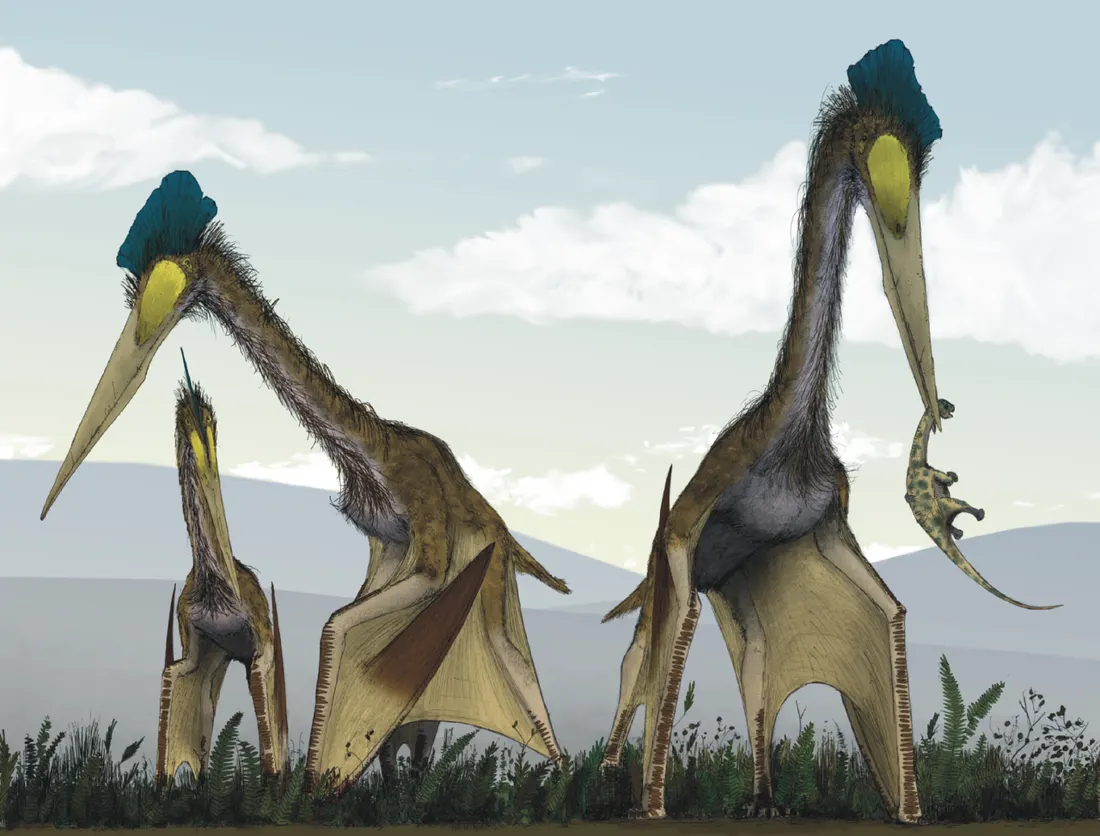
Giant Quetzalcoatlus pterosaurs, as tall as giraffes, walking on a prehistoric prairie
Types of Dinosaurs

Flying Dinosaurs

Meet the amazing reptiles that ruled the prehistoric skies, from tiny insect-catchers to giants as big as airplanes, and find out which dinosaurs could really fly.

Quick Answer

The “flying dinosaurs” most people think of are really pterosaurs (TEH-roh-sores), flying reptiles that lived at the same time as dinosaurs. Famous ones include Pteranodon and giant Quetzalcoatlus. Pterosaurs were dinosaur cousins, not dinosaurs. The only true flying dinosaurs are birds and their feathered ancestors!

What Were the Flying Dinosaurs?

Pterosaurs were the first animals with backbones to fly, millions of years before birds or bats. They lived from about 228 to 66 million years ago, soaring over the heads of dinosaurs like T. rex and Triceratops.

They came in all sizes. Some were as small as a sparrow, and others were as big as a small airplane! Most had long beaks, and many had colorful crests on their heads. Instead of scales or feathers, many were covered in a fuzzy coat of hair-like fibers.

Wait, Pterosaurs Weren't Dinosaurs?

Finger wings

A pterosaur's wing was a sheet of skin stretched from one super-long fourth finger down to its legs. Birds' wings are made of feathers.

Different legs and hips

Dinosaurs stood with their legs straight underneath their bodies. Pterosaurs' hips and legs were built differently.

A separate branch

Pterosaurs and dinosaurs shared a common ancestor, so they're close cousins, like lions and tigers, but not the same family.

💡 Same with the sea: giant swimming reptiles like Mosasaurus and plesiosaurs weren't dinosaurs either. Dinosaurs lived on land!

7 Amazing Flying Reptiles

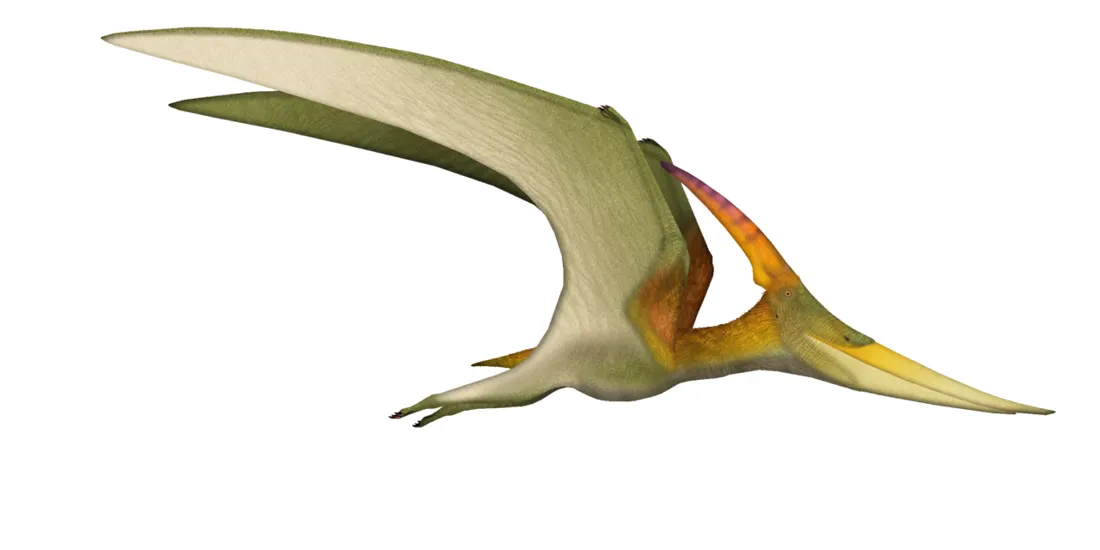
Illustration of Pteranodon in flight with a long backward-pointing head crest

1. Pteranodon

Say it: teh-RAN-oh-don · Means: “Wings and no teeth”

Wingspan
Up to about 20 ft (6 m)
When
About 85 million years ago
Where
North America (Kansas)

⭐ The most famous “flying dinosaur.” It had no teeth and a long head crest, and it swooped over the sea to catch fish.
A group of giant Quetzalcoatlus walking on a fern prairie, as tall as giraffes

2. Quetzalcoatlus

Say it: KET-sal-koh-AT-lus · Means: “Named after Quetzalcoatl, a feathered serpent god”

Wingspan
About 33–36 ft (10–11 m)
When
About 68 million years ago
Where
North America (Texas)

⭐ One of the biggest flying animals ever, with wings as wide as a small airplane. Standing up, it was as tall as a giraffe!

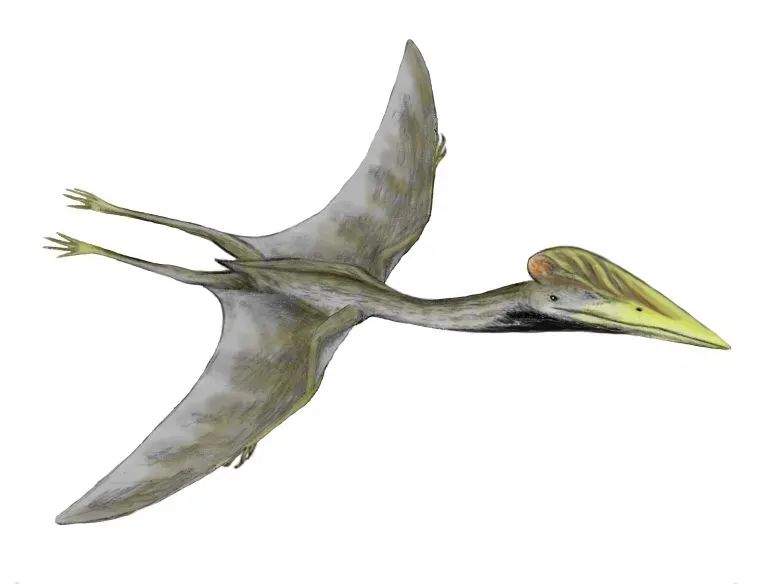
Illustration of Hatzegopteryx flying with wide wings and a big beak

3. Hatzegopteryx

Say it: HAT-zeh-GOP-ter-ix · Means: “Hațeg wing (a place in Romania)”

Wingspan
About 33 ft (10 m)
When
About 66 million years ago
Where
Europe (Romania)

⭐ A giant with an extra-wide, strong skull. On its island home it may have been the top predator, even hunting small dinosaurs.

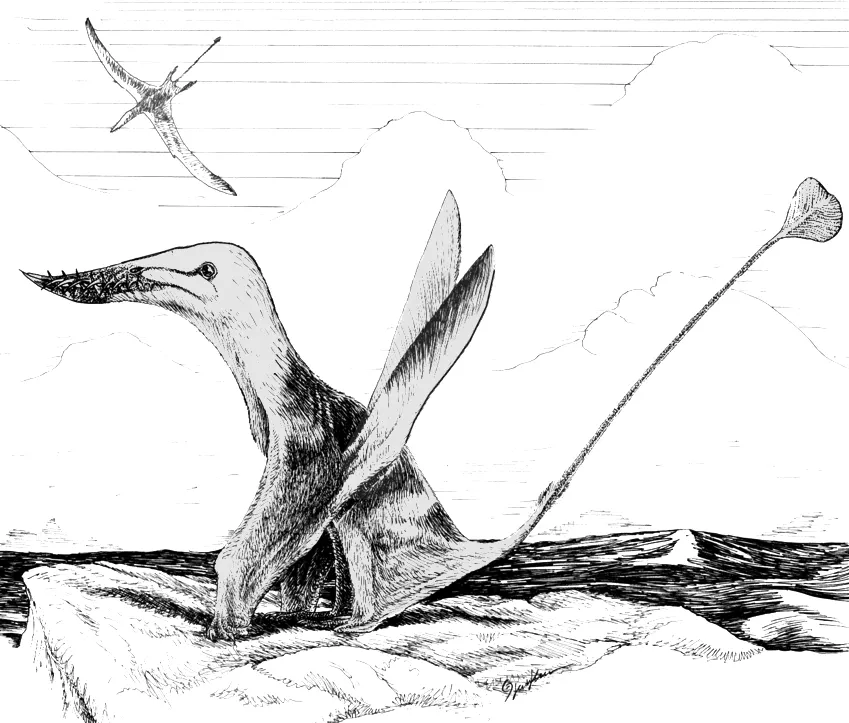
Drawing of Rhamphorhynchus with a long tail ending in a diamond-shaped vane

4. Rhamphorhynchus

Say it: RAM-foh-RINK-us · Means: “Beak snout”

Wingspan
Up to about 6 ft (1.8 m)
When
About 150 million years ago
Where
Europe (Germany)

⭐ Its long tail ended in a diamond-shaped flap, like a kite. Its forward-pointing teeth were perfect for snatching slippery fish.

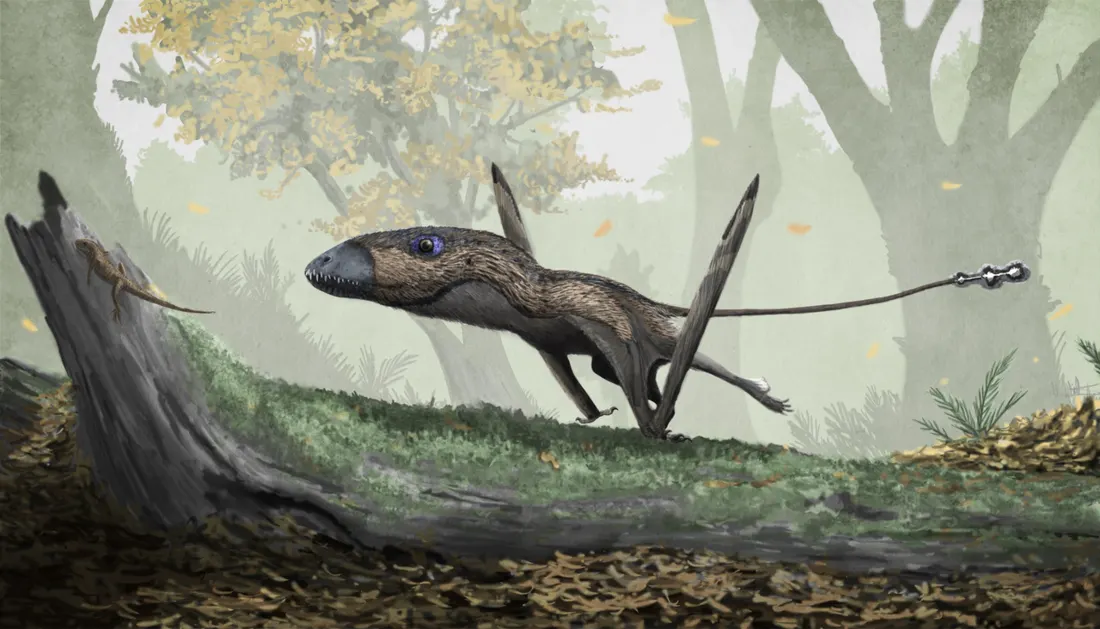
Dimorphodon climbing on a fallen log in a forest

5. Dimorphodon

Say it: dye-MOR-foh-don · Means: “Two-form tooth”

Wingspan
About 4.5 ft (1.4 m)
When
About 195 million years ago
Where
Europe (England)

⭐ It had a big, puffin-like head and two kinds of teeth. Its first fossil was found by the famous fossil hunter Mary Anning in 1828.

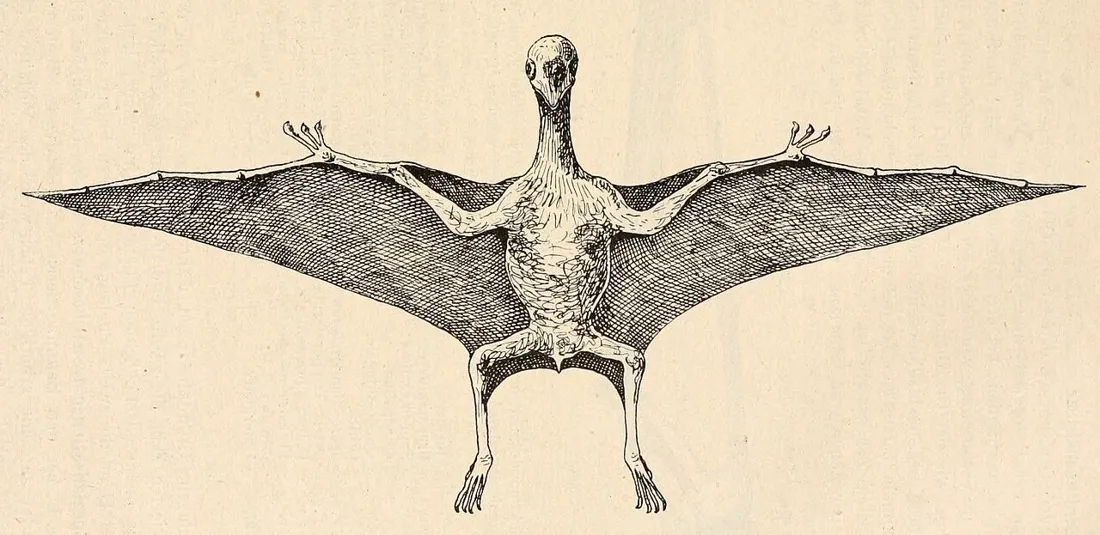
Old scientific drawing of Pterodactylus with its wings spread

6. Pterodactylus

Say it: TEH-roh-DAK-tih-lus · Means: “Winged finger”

Wingspan
About 3.5 ft (1 m)
When
About 150 million years ago
Where
Europe (Germany)

⭐ The very first pterosaur ever discovered. It's where the nickname “pterodactyl” comes from, which people now use for all pterosaurs.

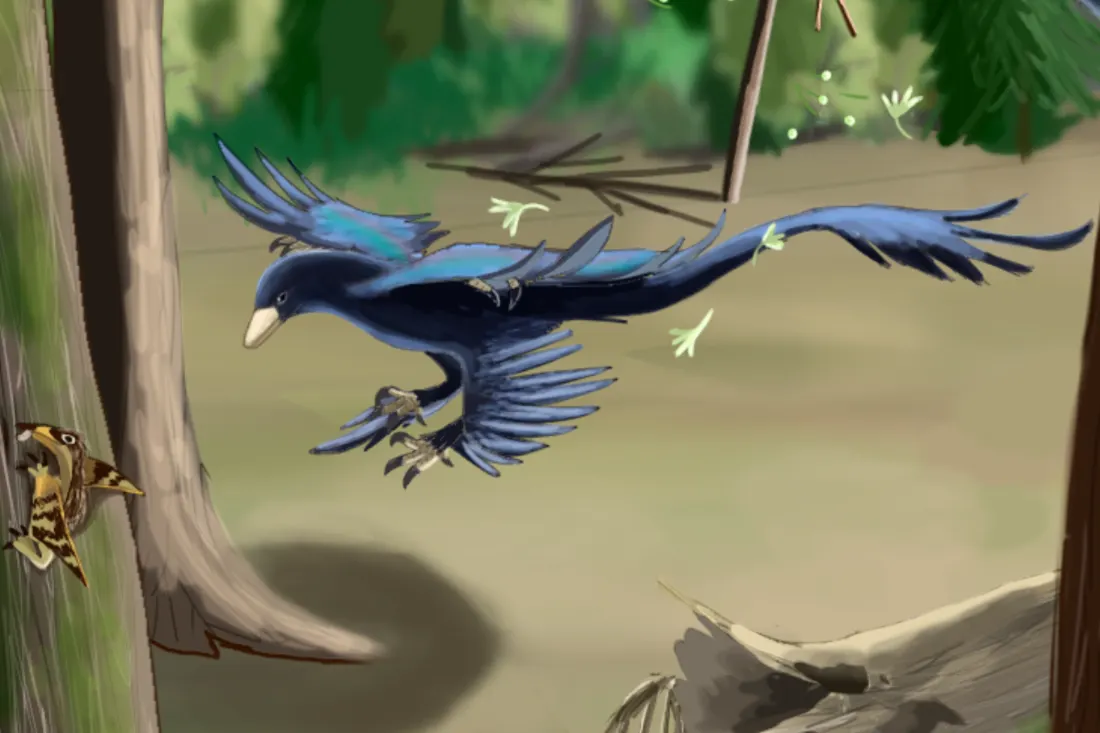
A tiny Nemicolopterus in a forest being chased by a feathered Microraptor

7. Nemicolopterus

Say it: NEM-ih-koh-LOP-ter-us · Means: “Hidden flying forest dweller”

Wingspan
About 10 in (25 cm)
When
About 120 million years ago
Where
Asia (China)

⭐ One of the tiniest pterosaurs ever found, with wings about as wide as a sparrow's. It probably perched in trees and ate insects.

The Real Flying Dinosaurs: Birds!

Some small, feathered meat-eating dinosaurs grew wings and took to the air. Their descendants are the birds flying around today, which means birds are living dinosaurs. Meet two of the first feathered flyers:

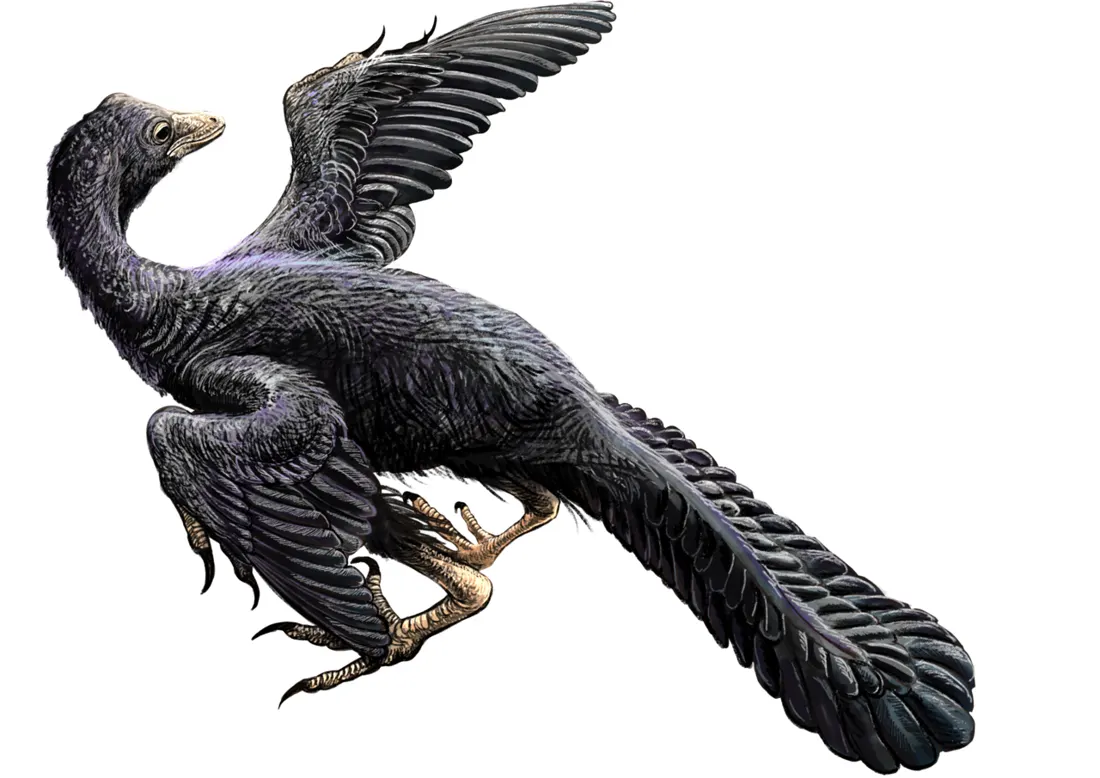
Illustration of feathered Archaeopteryx with wings and a long feathery tail

1. Archaeopteryx

Say it: AR-kee-OP-ter-ix · Means: “Ancient wing”

Wingspan
About 1.5 ft (0.5 m)
When
About 150 million years ago
Where
Europe (Germany)

⭐ About the size of a raven, with feathered wings, but also teeth, claws and a bony tail. It's one of the first bird-like dinosaurs.

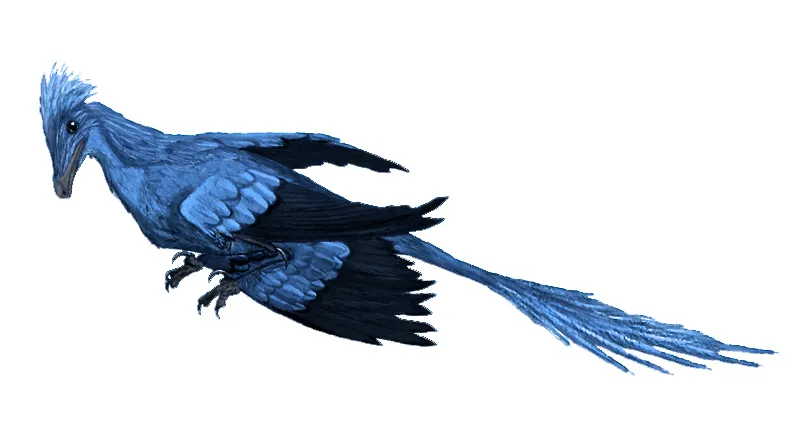
Illustration of Microraptor gliding with feathered wings on its arms and legs

2. Microraptor

Say it: MY-kroh-RAP-tor · Means: “Small thief”

Wingspan
About 3 ft (0.9 m)
When
About 120 million years ago
Where
Asia (China)

⭐ A crow-sized dinosaur with feathered wings on its arms AND legs, like a four-winged glider. Its feathers were shiny black, like a crow's!

🐦 Look up! Every pigeon, owl and eagle you see is a real flying dinosaur.

How Big Were Their Wings?

Wingspan means the distance from one wingtip to the other. Here's how these flyers compare with a bald eagle and a small four-seat airplane. Sizes are scientists' best estimates.

Nemicolopterus
10 in
Archaeopteryx
1.5 ft
Pterodactylus
3.5 ft
Dimorphodon
4.5 ft
Rhamphorhynchus
6 ft
🦅 Bald eagle
7 ft
Pteranodon
20 ft
Hatzegopteryx
33 ft
Quetzalcoatlus
35 ft
✈️ Small airplane
36 ft

How Did Pterosaurs Fly?

Super-light bones

Their bones were hollow and filled with air, with walls as thin as a playing card in some giants. Light bones made flying easier.

A four-leg jump

Scientists think pterosaurs launched by pushing off with their arms and legs together, like a pole-vaulter springing into the air.

Soaring on the wind

Big pterosaurs probably soared on warm air and sea breezes, like albatrosses and vultures do today, flapping only now and then.

Frequently Asked Questions

What are flying dinosaurs called?

The flying reptiles people call “flying dinosaurs” are pterosaurs (TEH-roh-sores). Many people call them pterodactyls. They were close cousins of dinosaurs, but not dinosaurs themselves. The only true flying dinosaurs are birds and their feathered ancestors.

Why aren't pterosaurs dinosaurs?

Pterosaurs are on a different branch of the reptile family tree. Their wings were made of skin stretched from one super-long finger, and their hips and legs were built differently from dinosaurs'. Dinosaurs stood with their legs straight under their bodies.

What was the biggest flying dinosaur?

The biggest flying reptiles were Quetzalcoatlus and Hatzegopteryx, with wingspans of around 33 to 36 feet (10 to 11 meters), as wide as a small airplane. Quetzalcoatlus was as tall as a giraffe when standing on the ground.

Is a pterodactyl a dinosaur?

No. Pterodactylus is a pterosaur, a flying reptile that lived alongside dinosaurs. It was the first pterosaur ever discovered, which is why “pterodactyl” became the nickname for all of them.

Are there any flying dinosaurs alive today?

Yes, birds! Birds are living dinosaurs that evolved from small, feathered dinosaurs. Every bird you see flying is technically a flying dinosaur. Pterosaurs, however, all died out 66 million years ago.

What did flying reptiles eat?

Most ate fish they scooped from the sea, like Pteranodon and Rhamphorhynchus. Tiny ones like Nemicolopterus probably ate insects, and giants like Quetzalcoatlus likely walked on the ground snapping up small animals, a bit like a giant stork.

Keep exploring: find out how we know dinosaurs were real, meet the giant long neck dinosaurs, or see all the types of dinosaurs.

Image credits (via Wikimedia Commons): Pteranodon by TotalDino (CC BY 4.0); Quetzalcoatlus by Mark Witton and Darren Naish (CC BY 3.0); Hatzegopteryx by Nobu Tamura (CC BY 3.0); Rhamphorhynchus by Jaime A. Headden (CC BY 3.0); Dimorphodon by Mark P. Witton (CC BY 4.0); Pterodactylus by Othenio Abel, 1919 (public domain); Nemicolopterus and Microraptor scene by Lai bou shi (CC BY 4.0); Microraptor by Matt Martyniuk (CC BY 3.0); Archaeopteryx by DataBase Center for Life Science (CC BY 4.0).

Does your little one love dinosaurs? 🦕

Explore our dinosaur-themed nursery rhymes and kids' songs!