
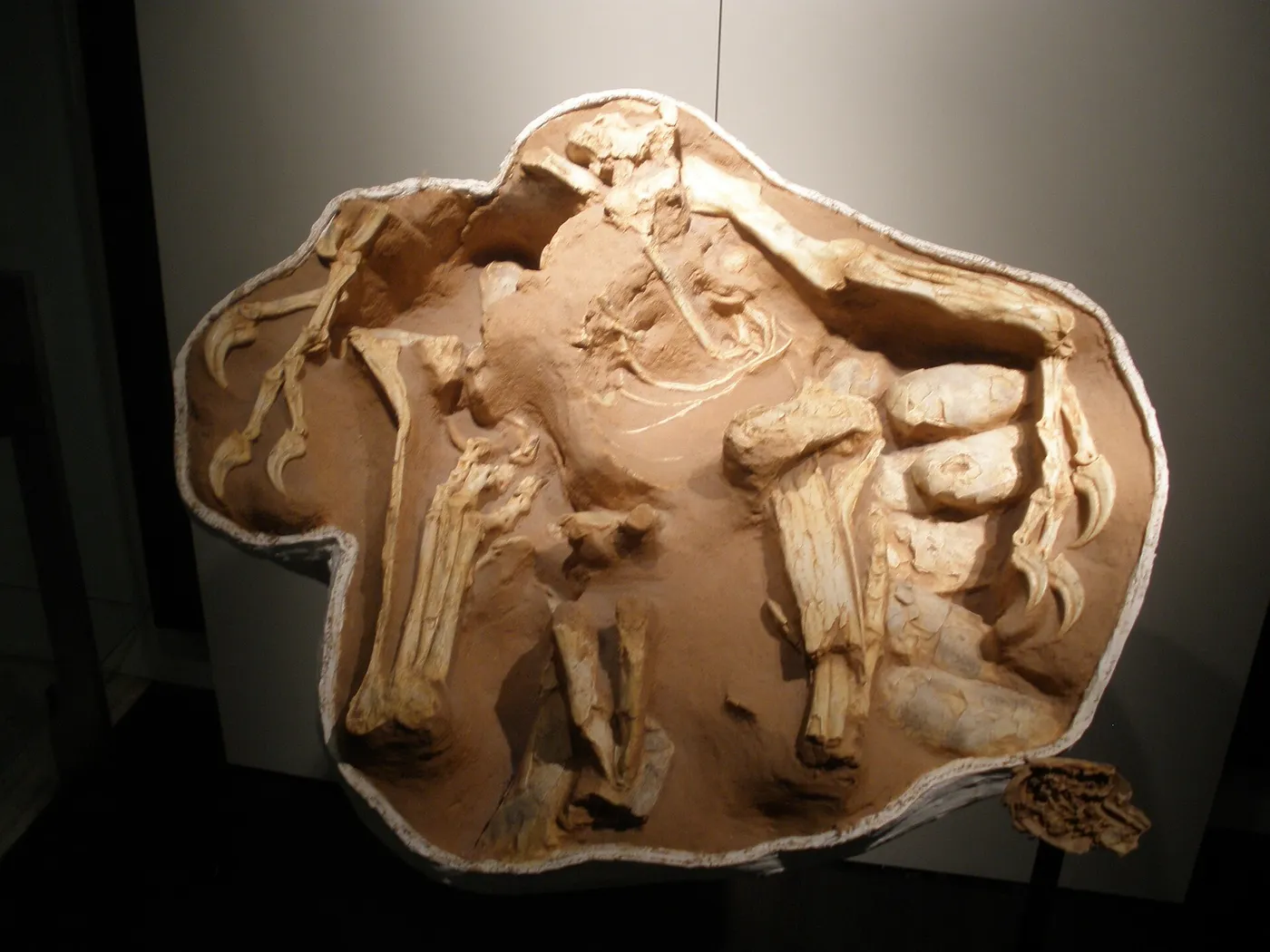
Citipati: the parent that sat on its eggs
Say it: SIT-ih-PAH-tee
⭐ This feathered dinosaur was buried by a sandstorm while sitting on its eggs in Mongolia. Its arms are spread over the nest to keep the eggs warm and safe, exactly like a mother hen.
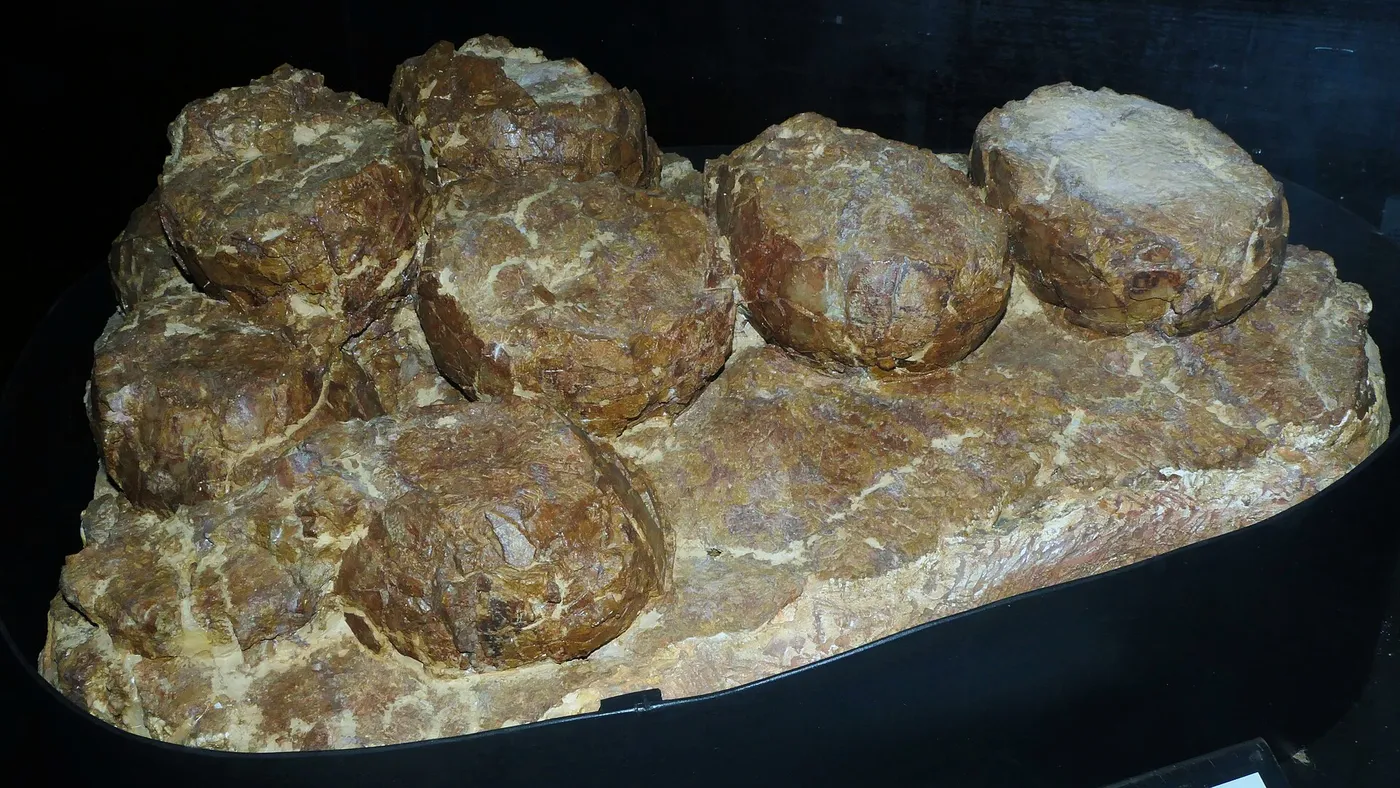
Every dinosaur, even mighty T. rex, started life inside an egg. How big were dinosaur eggs, what did their nests look like, and how long did babies take to hatch? Let's crack it open!
Quick Answer
All dinosaurs laid eggs. Most dinosaur eggs were smaller than you might think: even giant long-necks laid round eggs about the size of a grapefruit. The biggest dinosaur eggs ever found were up to 60 cm (2 feet) long. Dinosaurs laid their eggs in nests, many parents looked after them, and babies took about 3 to 6 months to hatch.
You might picture a dinosaur egg as big as a beach ball. In fact, even the biggest dinosaurs laid quite small eggs. A Brachiosaurus-sized long-neck dinosaur weighed as much as several elephants, but its round eggs were only about 15 to 20 cm across.
Why so small? An eggshell has tiny holes so the baby can breathe. A giant egg would need a very thick shell, which would let in too little air and be too hard for the baby to break. So big dinosaurs laid lots of small-ish eggs instead of one enormous one.
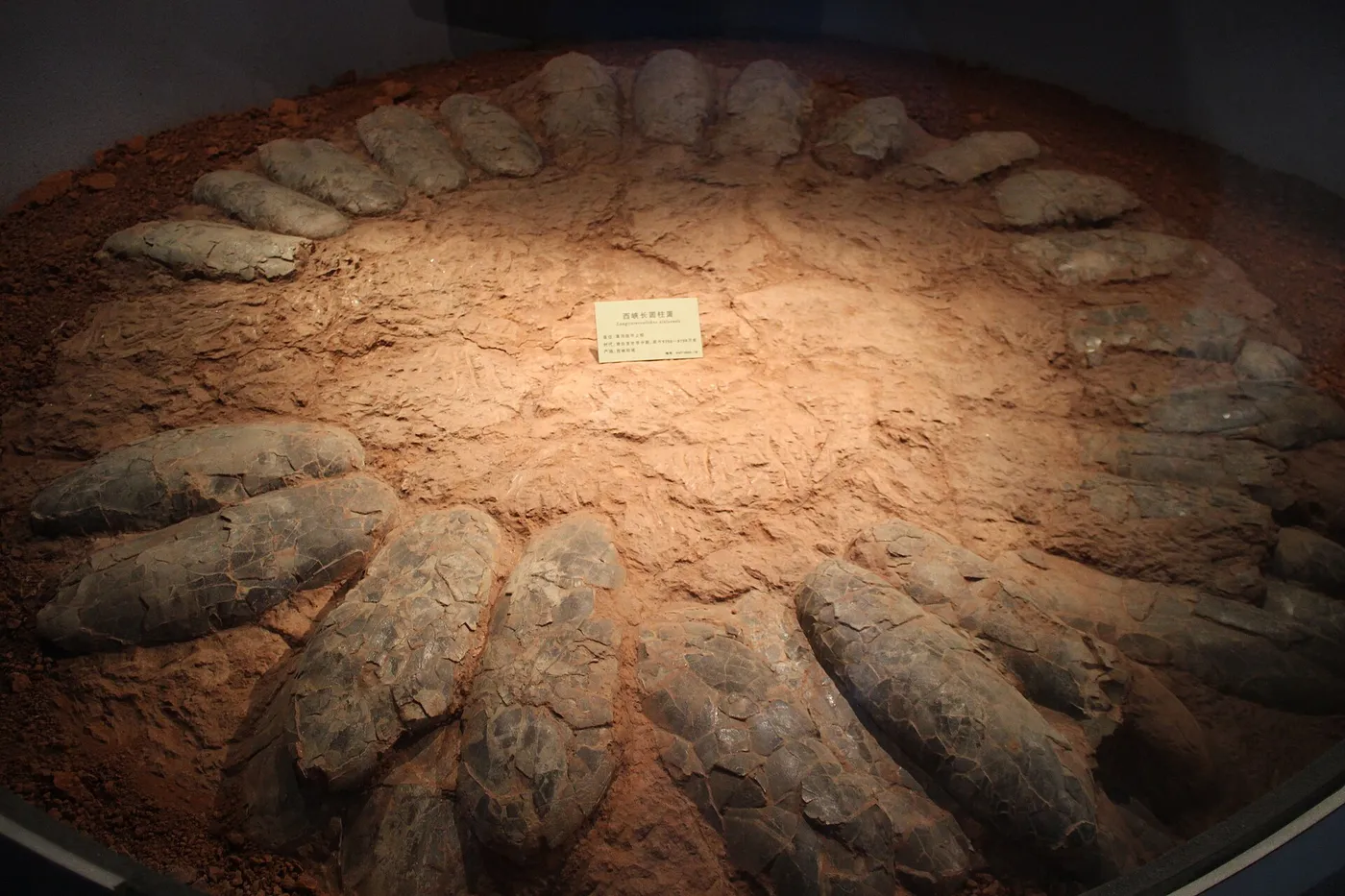
The record holders are long, thin eggs called Macroelongatoolithus (say it: MAK-roh-ee-LONG-gah-toe-LITH-us), up to about 60 cm long. They were laid by giant, feathered, bird-like dinosaurs. You can see a whole nest of them in the photo below.
📏 Egg Sizes, Drawn to Scale
about 6 cm
about 15 cm, the biggest egg alive today
round, about the size of a grapefruit or small melon
long and thin, up to about 60 cm (2 feet)!
Every dinosaur hatched
From tiny Compsognathus to giant Argentinosaurus, every dinosaur started life by cracking out of an egg.
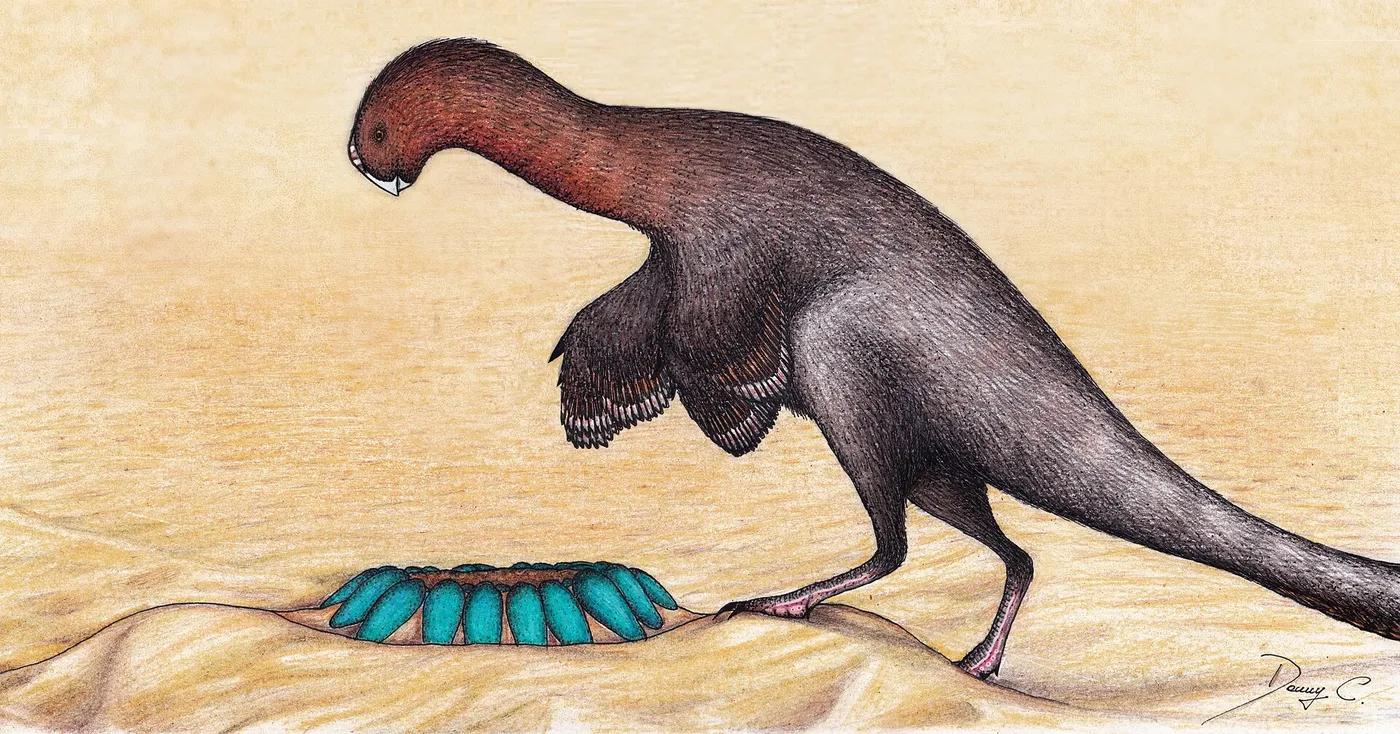
Some eggs were blue-green
In 2018 scientists found color chemicals in fossil eggshells. Some dinosaurs, like Heyuannia, laid blue-green eggs, a bit like a robin's.
Round or long
Long-necks and duck-bills laid round eggs. Oviraptors and other meat-eaters laid long, pointy eggs, more like a bird's.
Some shells were soft
The very first dinosaur eggs may have been soft and leathery, like a turtle's. Hard shells came later.
Smaller than you think
Even 30-meter-long dinosaurs laid eggs not much bigger than a grapefruit. Their babies had a LOT of growing to do!
A record-breaking collection
The Heyuan Museum in China holds a Guinness World Record for the biggest collection of dinosaur eggs: more than 10,000!
Dinosaurs didn't just drop their eggs and walk away. Many dug nests in the ground, and some covered their eggs with sand or rotting plants to keep them warm, like crocodiles do today. Others sat on their eggs, just like birds (which are living dinosaurs!).
Bird-like dinosaurs often laid their long eggs in pairs, arranged in a big ring with an empty space in the middle where the parent sat.
Say it: SIT-ih-PAH-tee
⭐ This feathered dinosaur was buried by a sandstorm while sitting on its eggs in Mongolia. Its arms are spread over the nest to keep the eggs warm and safe, exactly like a mother hen.
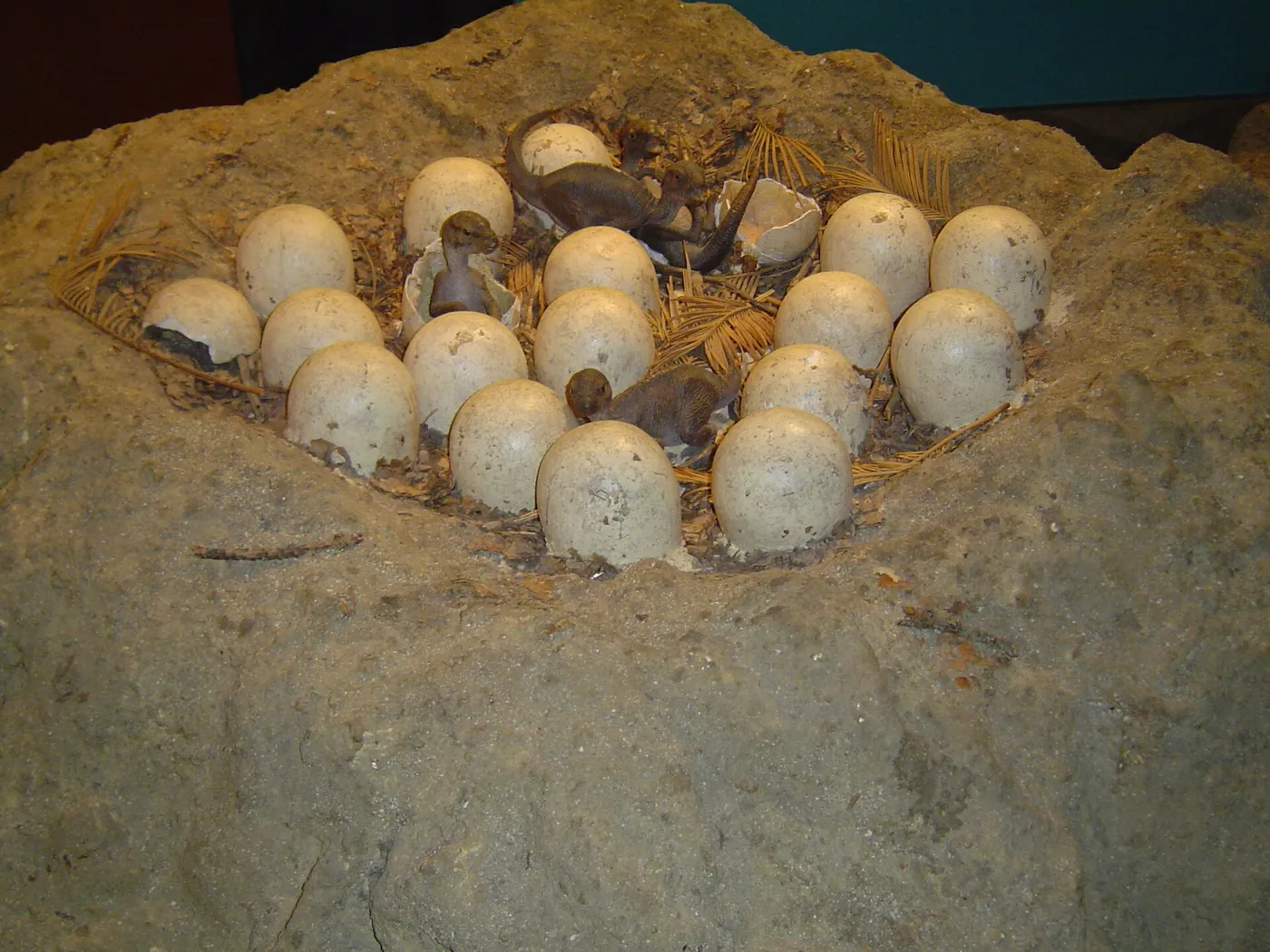
Say it: MY-ah-SOR-ah
⭐ In 1978, in Montana, scientists found whole nesting grounds of this duck-billed dinosaur, with eggs, babies and grown-ups together. The babies stayed in the nest while their parents brought them food.
In 1923, explorers in Mongolia's Gobi Desert found some of the first dinosaur eggs ever recognized. Lying right next to them was the skeleton of a small dinosaur. Scientists guessed it had been caught stealing the eggs, so they named it Oviraptor, which means “egg thief.”
Seventy years later, scientists found a baby dinosaur inside one of those same kinds of eggs, and it was an Oviraptor's relative! Then they found fossils like Citipati sitting on their nests. The “egg thief” was really a loving parent protecting its own eggs. The name stuck anyway, so poor Oviraptor is still called a thief today.
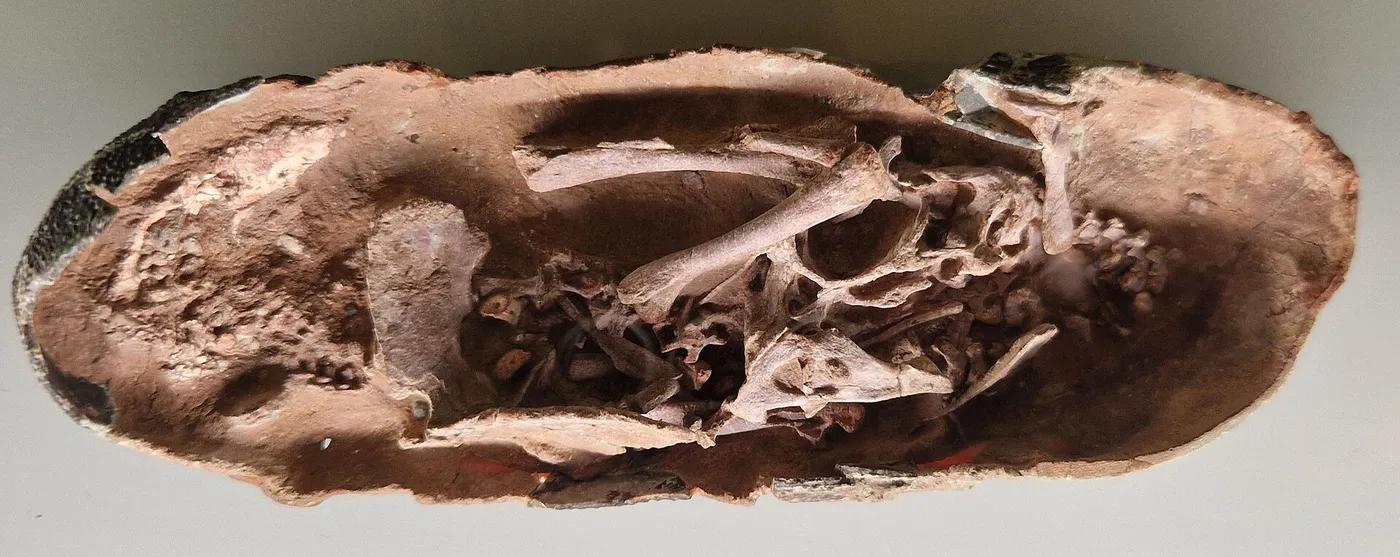
Sometimes a fossil egg still has a tiny baby dinosaur (an embryo) inside. These are some of the rarest and most exciting fossils of all.
In 2021, scientists in China revealed “Baby Yingliang,” a bird-like dinosaur curled up inside its egg with its head tucked under its body, exactly the way a chick gets ready to hatch. It was about to hatch more than 66 million years ago.
In Argentina, a place called Auca Mahuevo is covered with thousands of long-neck dinosaur eggs. Some babies inside were so well preserved that scientists could see their scaly skin.
By counting daily growth lines in the teeth of babies inside eggs, scientists worked out that dinosaur eggs took about 3 to 6 months to hatch. A chicken egg takes just 3 weeks!
Make a pretend dinosaur egg your little paleontologist can “hatch” at home:
Tip for parents: do this on a tray or outside, and keep an eye on little ones with the salt and toy hammer. Prefer a ready-made kit? See our best dinosaur toys.
Yes! As far as scientists know, every dinosaur hatched from an egg. No dinosaur gave birth to live babies the way mammals do. Birds, which are living dinosaurs, still lay eggs today.
Most dinosaur eggs were surprisingly small. Round eggs of giant long-neck dinosaurs were about 15 to 20 cm across, like a grapefruit or small melon. The biggest dinosaur eggs ever found are long, thin eggs up to about 60 cm (2 feet) long, laid by giant bird-like dinosaurs called oviraptorosaurs.
An egg's shell has tiny holes that let air in for the baby. A really huge egg would need a very thick shell, which would let in too little air and be too hard for the baby to break. So even the biggest dinosaurs laid fairly small eggs and had many babies.
Scientists counted daily growth lines in the teeth of baby dinosaurs still inside their eggs. They found that Protoceratops eggs took about 3 months to hatch, and Hypacrosaurus eggs took about 6 months. A chicken egg takes only 3 weeks!
It depended on the dinosaur. Many laid a clutch of about 10 to 30 eggs at a time, and some long-neck dinosaurs laid up to about 40. Laying lots of eggs helped because many eggs and babies were eaten by predators.
Not yet! T. rex certainly laid eggs, but no egg has been found that scientists can say for sure belonged to a T. rex. Maybe a young fossil hunter reading this will find the first one.
No. Over millions of years, the inside of a fossil egg turned into stone or filled with rock, so there is nothing alive left inside. Toy “hatching dinosaur eggs” are a fun way to pretend, though!
Dinosaur eggs have been found on almost every continent. Famous places include the Gobi Desert in Mongolia, Egg Mountain in Montana (USA), Auca Mahuevo in Argentina, and Heyuan in China. The first eggs to be recognized as dinosaur eggs were found in Mongolia in 1923.
Image credits (via Wikimedia Commons): Macroelongatoolithus nest, Henan Geological Museum, by Gary Todd (CC0); titanosaur eggs (Megaloolithus, the eggs at the top of the page) by Taxon34 (CC BY-SA 4.0); Citipati on its nest by Ghedoghedo (public domain); Maiasaura nest model, Natural History Museum London (public domain); Heyuannia and eggs by Danny Cicchetti (CC BY-SA 4.0); oviraptorosaur egg with embryo, Naturhistorisches Museum Bern, by DagdaMor (CC BY 4.0). Images were resized for the web.
Does your little one love dinosaurs? 🦕
Explore our dinosaur-themed nursery rhymes and kids' songs!