
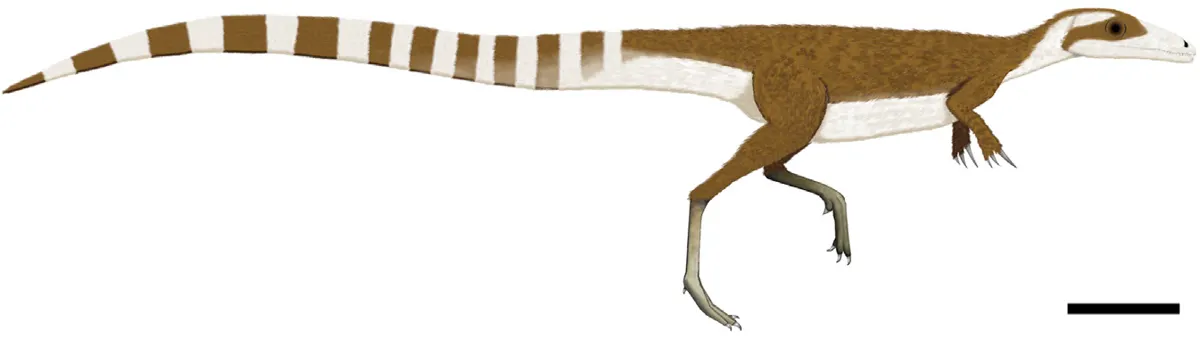
Sinosauropteryx
Say it: SY-noh-sor-OP-ter-ix
⭐ Found in China in 1996, the first non-bird dinosaur discovered with feathers. Scientists even worked out its colors: ginger with a striped tail, like a raccoon!
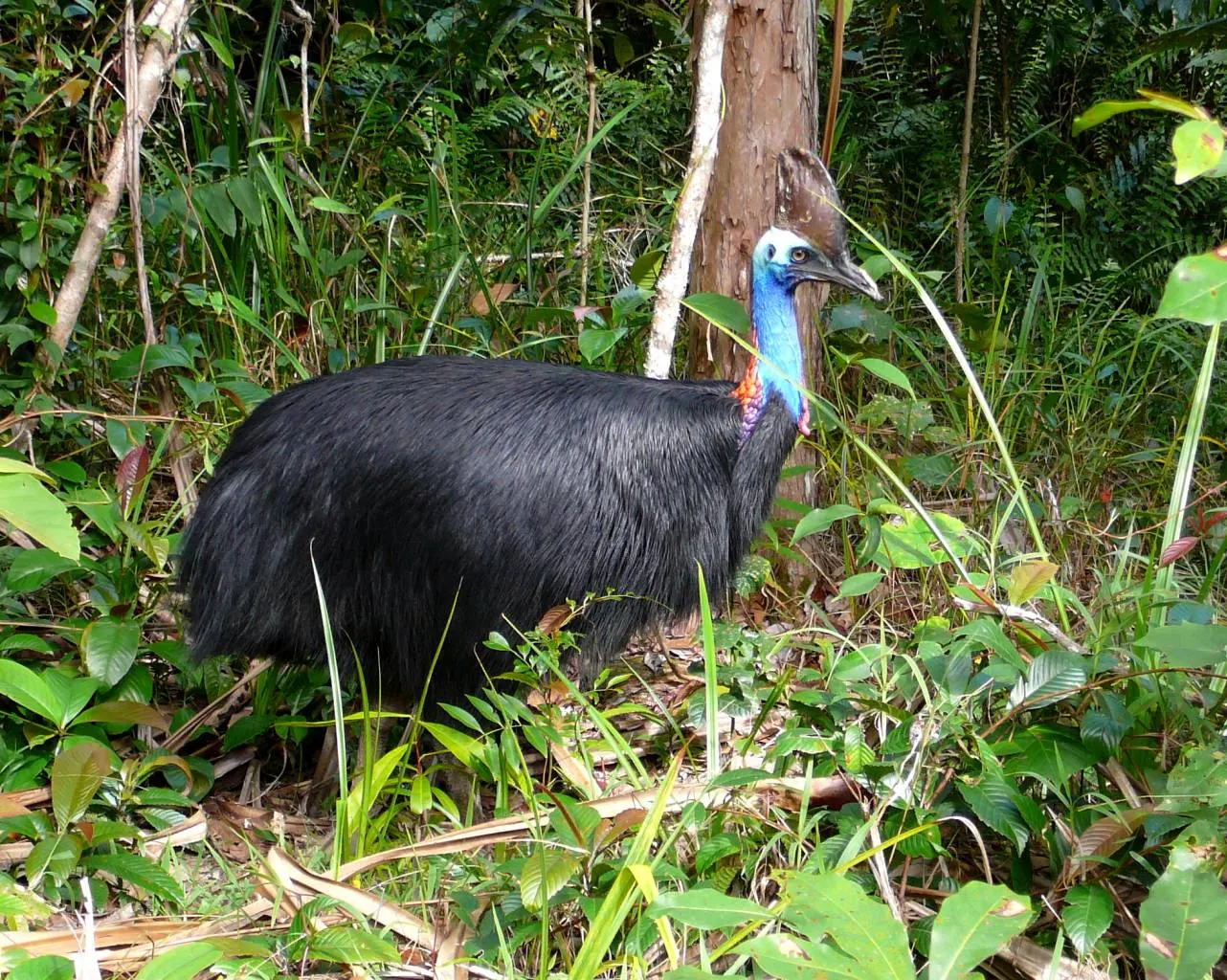
Yes, really! The pigeon on the sidewalk and the chicken on the farm are living dinosaurs. Discover the clues that prove it, and meet the feathered dinosaurs that link them to T. rex.
Quick Answer
Yes, birds are dinosaurs! They evolved from small, feathered, meat-eating dinosaurs called theropods, the same family as T. rex and Velociraptor. When the asteroid hit 66 million years ago, birds were the only dinosaurs to survive, which makes them the living dinosaurs of today.
It doesn't just mean birds came from dinosaurs. It means birds are dinosaurs, the same way you are still part of your family even though you're a new generation.
Scientists sort dinosaurs into two big groups: avian dinosaurs (birds) and non-avian dinosaurs (all the others, like Triceratops and Brachiosaurus). The non-avian dinosaurs are extinct, but the avian dinosaurs are thriving, with about 11,000 kinds of birds alive today.
🌳 The Dinosaur Family Tree (simplified)
Feathers
Hundreds of fossils show non-bird dinosaurs with feathers, from fuzzy down to full wing feathers. Even Velociraptor had them!
Wishbones
The wishbone you pull at Thanksgiving is also found in meat-eating dinosaurs like T. rex and Velociraptor.
Hollow, air-filled bones
Birds and many dinosaurs had light, hollow bones connected to air sacs for super-efficient breathing.
Three-toed feet
Look at a chicken's foot, then a T. rex footprint. Both walk on three main toes, on two legs.
Eggs & nests
Fossils show dinosaurs like Citipati sitting on their nests with their arms spread over the eggs, just like a mother bird.
Sleeping like a bird
A little dinosaur called Mei long was fossilized asleep with its head tucked under its arm, the same way birds sleep today.
Say it: SY-noh-sor-OP-ter-ix
⭐ Found in China in 1996, the first non-bird dinosaur discovered with feathers. Scientists even worked out its colors: ginger with a striped tail, like a raccoon!
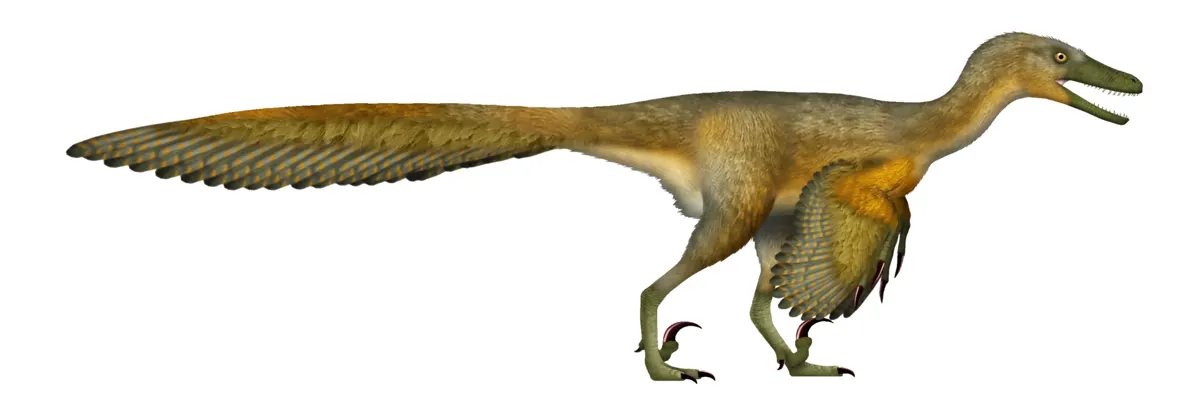
Say it: veh-LOSS-ih-RAP-tor
⭐ Real Velociraptors were turkey-sized and feathered. Their arm bones have little bumps where wing feathers attached, just like a bird's.
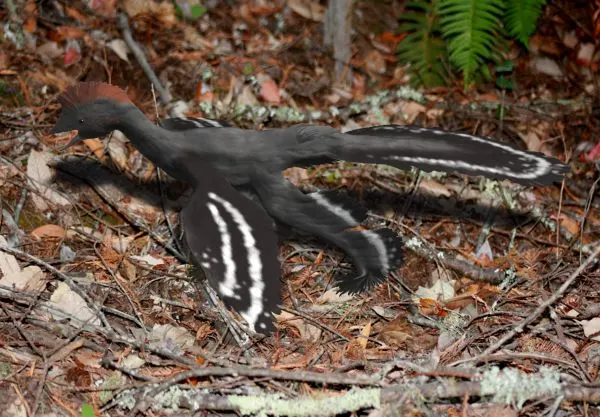
Say it: ANN-kee-OR-niss
⭐ A pigeon-sized dinosaur with feathered arms AND legs. It was the first dinosaur whose whole-body colors were worked out: black and white with a red crest.
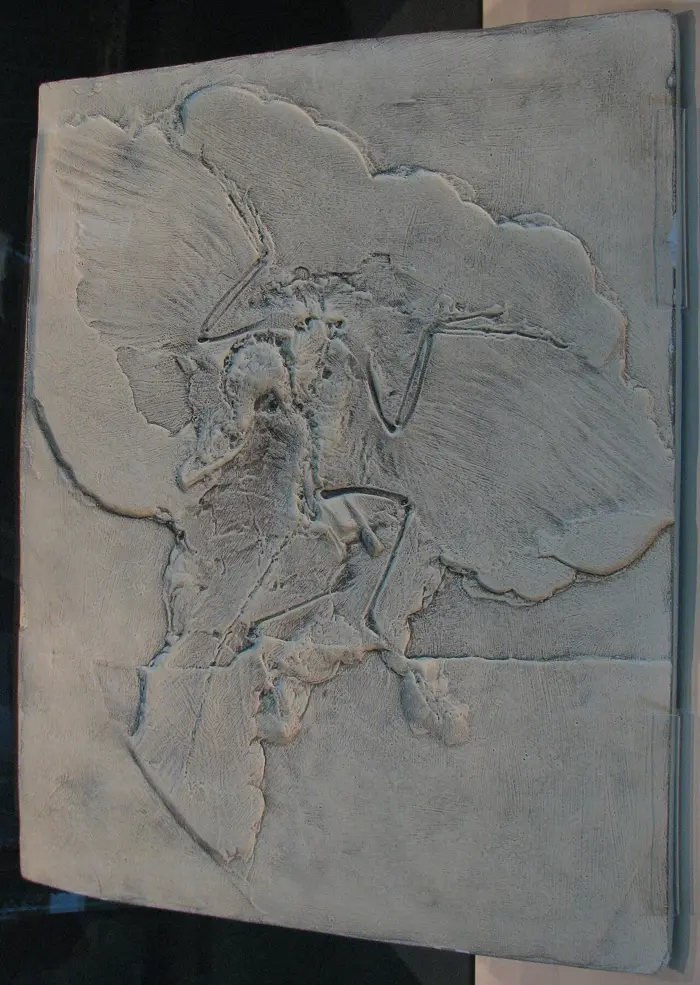
Say it: AR-kee-OP-ter-ix
⭐ Found in Germany in 1861, about 150 million years old. It had wings and feathers like a bird, but teeth, claws and a bony tail like a dinosaur.
Cassowary
A huge, flightless bird with a dagger-like claw on each foot and a bony crest on its head. It looks like a dinosaur because it is one!
Chicken
Scaly feet, three toes, walks on two legs and lays eggs. Chickens are distant cousins of T. rex.
Hoatzin
A South American bird whose chicks have little claws on their wings to climb trees, just like early bird-dinosaurs.
Shoebill
A giant, still, staring stork with a huge beak. Bird lovers often call it the most dinosaur-looking bird alive.
When a giant asteroid hit Earth 66 million years ago, the sky went dark and most plants died. The big dinosaurs needed huge amounts of food and couldn't survive.
Some birds made it because they were small, could eat seeds that lasted through the dark winter, and could fly to find food and shelter. Read the whole story in When Did Dinosaurs Go Extinct?
Head outside or to a park and look for living dinosaurs. For each bird you spot, check off the dinosaur clues:
Tip for parents: pigeons, ducks and chickens are perfect for little ones because they stay still long enough to look closely at their feet!
Yes! Scientists agree that birds are dinosaurs. They evolved from small, feathered, meat-eating dinosaurs called theropods, the same group as T. rex and Velociraptor. Scientists call birds “avian dinosaurs” and all the others “non-avian dinosaurs.”
Yes, they're distant cousins! Both are theropod dinosaurs. A chicken is not a descendant of T. rex, though. Birds evolved from small feathered theropods, a different branch of the family.
Every bird is equally a dinosaur! But some, like the cassowary, emu and ostrich, look especially dinosaur-like with their big legs, scaly feet and fierce claws.
No. Crocodiles are close cousins of dinosaurs, not dinosaurs themselves. In fact, crocodiles and alligators are the closest living relatives of birds after other birds!
No. Pterosaurs were flying reptiles on their own separate branch, and they all died out 66 million years ago. Birds came from feathered dinosaurs that learned to fly in a completely different way.
When the asteroid hit 66 million years ago, the birds that survived were small, could eat seeds and many other foods, and could fly or hide to find shelter. The big dinosaurs needed too much food to survive the long, dark winter.
Image credits (via Wikimedia Commons): Southern cassowary by Dave Kimble (public domain); Sinosauropteryx by Fiann M. Smithwick and Robert Nicholls (CC BY 4.0); Velociraptor by TotalDino (CC BY 4.0); Anchiornis by Nobu Tamura (CC BY 3.0); Archaeopteryx cast (public domain).
Does your little one love dinosaurs? 🦕
Explore our dinosaur-themed nursery rhymes and kids' songs!