
When Did Dinosaurs Go Extinct?
About 66 million years ago, something from space changed Earth forever. Find out what happened to the dinosaurs, who survived, and why some dinosaurs are still flying around today.
Quick Answer
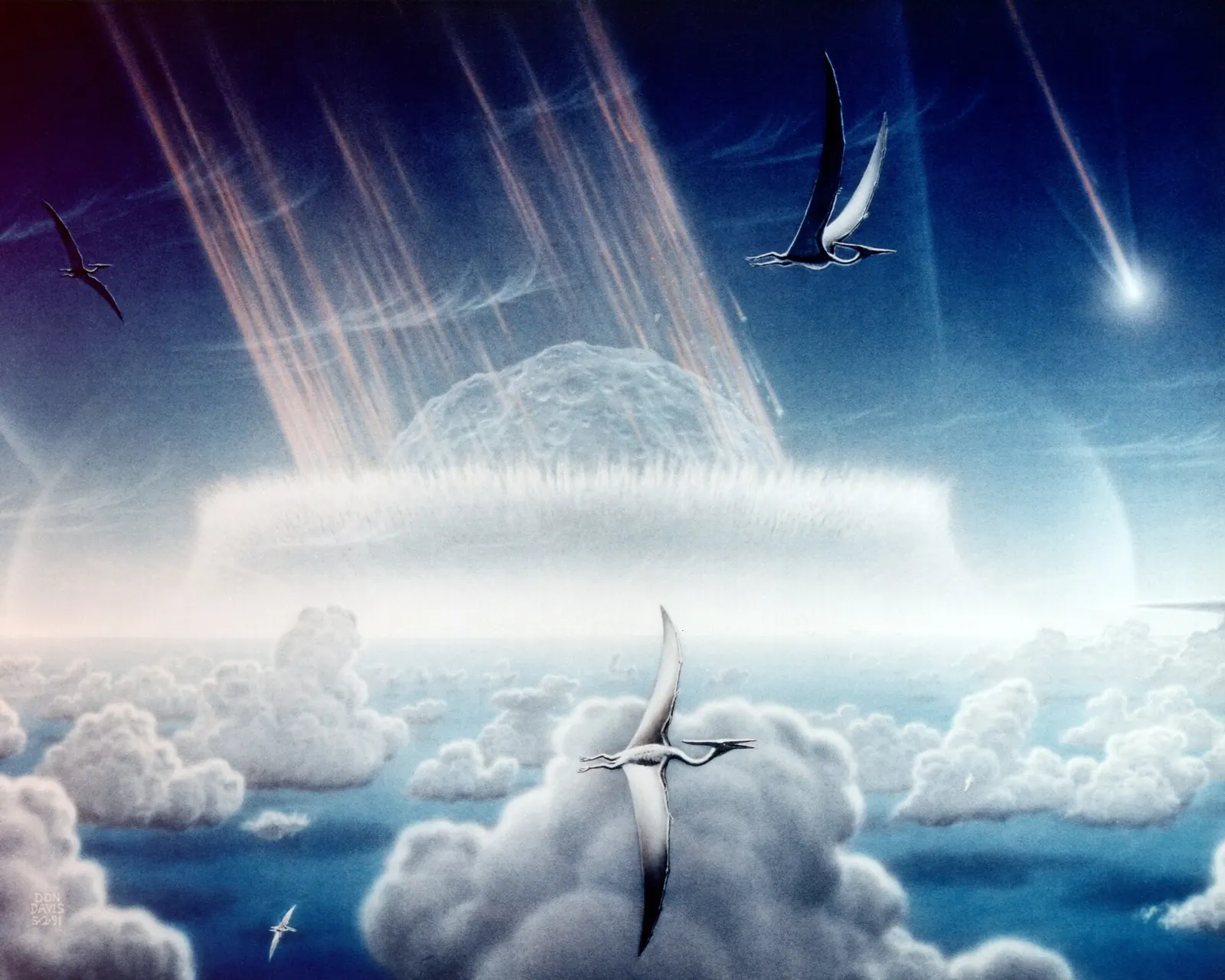
Dinosaurs went extinct about 66 million years ago, at the end of the Cretaceous Period. A giant asteroid about 6 miles (10 km) wide crashed into Earth near Mexico, causing fires, tsunamis and a long, dark winter. All the giant dinosaurs died, but some small feathered dinosaurs survived and became birds.
How Long Ago Is 66 Million Years?
66 million years is so long it's hard to imagine! Here's one way to picture it. Imagine squeezing the whole 4.5-billion-year history of Earth into one 24-hour day:
10:47 PM
The first dinosaurs appear
11:39 PM
The asteroid hits and the giant dinosaurs disappear
11:59:54 PM
The first humans appear, just 6 seconds before midnight!
Dinosaurs ruled the land for about 165 million years, hundreds of times longer than humans have existed. Some of the very last dinosaurs alive were T. rex, Triceratops and Ankylosaurus.
What Happened? The Day the Dinosaurs Died
The first seconds
An asteroid about 6 miles (10 km) wide slams into Earth near what is now Mexico, faster than a speeding bullet. It blasts out a crater about 90 miles (150 km) wide.
Minutes later
A huge blast wave, a flash of heat and giant earthquakes spread out from the crash. Hot rock is thrown high into the sky.
Hours later
Enormous tsunami waves race across the oceans. Falling hot rock sparks wildfires in many places.
Months to years later
Soot and dust spread around the world and block out much of the sunlight. Earth turns dark and cold, a long “impact winter.”
After that
Without sunlight, many plants die. Then the plant-eaters go hungry, and then the meat-eaters. The giant dinosaurs can't survive.
How Do Scientists Know It Was an Asteroid?
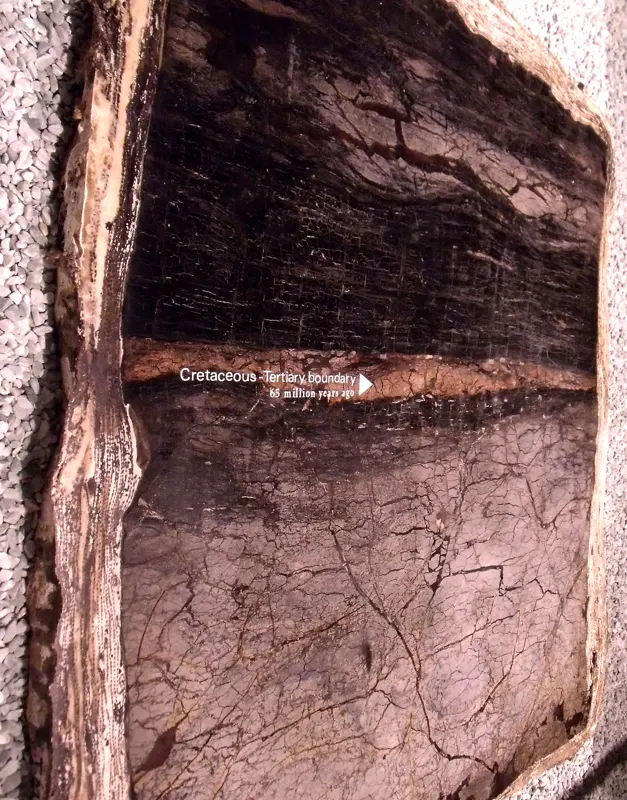
In 1980, scientist Luis Alvarez and his son Walter found a clue in the rocks: a thin layer of clay full of a metal called iridium. Iridium is rare on Earth but common in asteroids. The layer appears in rocks all over the world, at exactly the time the dinosaurs disappear.
Dinosaur fossils are found below this line, but never above it. In 1991, scientists confirmed the crash site: a giant buried crater called Chicxulub (CHEEK-shoo-loob) under Mexico's Yucatán Peninsula.
Around the same time, huge volcanoes in India called the Deccan Traps were pouring out lava and gas for thousands of years, which was already changing the climate. Most scientists think the asteroid was the knockout blow.
What Survived the Asteroid?
About 3 out of every 4 kinds of living things disappeared. The survivors were mostly small animals that could hide, burrow, live in water or eat many different foods.
Birds
the dinosaurs that made it!
Small mammals
our tiny ancestors
Crocodiles
could go a long time without food
Turtles
safe in water and mud
Frogs & salamanders
hid in water and burrows
Lizards & snakes
small and good at hiding
Insects
many kinds lived on
Plants
seeds and roots waited for the sun
What didn't make it:
- All dinosaurs except birds
- Pterosaurs (flying reptiles)
- Giant sea reptiles like Mosasaurus
- Ammonites (shelled sea creatures)
- Any land animal bigger than a medium-sized dog
What Happened After the Dinosaurs?
With the giant dinosaurs gone, small mammals had a chance to grow and spread. Over millions of years they became horses, whales, elephants, monkeys and, much later, people.
🐔 The dinosaurs never fully left! Birds are the descendants of small feathered dinosaurs, so every bird you see is a living dinosaur.
Frequently Asked Questions
How long ago did dinosaurs go extinct?
The giant dinosaurs went extinct about 66 million years ago, at the end of the Cretaceous Period. Scientists call this the K–Pg extinction.
What killed the dinosaurs?
Most scientists agree a giant asteroid, about 6 miles (10 km) wide, hit Earth near Mexico's Yucatán Peninsula. Its fires, tsunamis and long, dark winter wiped out most life. Huge volcanic eruptions in India, called the Deccan Traps, were also changing the climate around the same time.
Did all the dinosaurs die?
No! The giant dinosaurs died, but some small, feathered dinosaurs survived. They became today's birds, so dinosaurs are still with us.
How long did dinosaurs live on Earth?
Dinosaurs ruled the land for about 165 million years, from roughly 230 million years ago until 66 million years ago. Humans have only been around for about 300,000 years.
Were there humans when the dinosaurs died?
No. The first humans appeared about 300,000 years ago, more than 65 million years after the giant dinosaurs disappeared.
Where did the asteroid hit?
It hit near the Yucatán Peninsula in Mexico. Its crater, called Chicxulub (CHEEK-shoo-loob), is about 90 miles (150 km) wide and is now buried deep under rock and the sea.
Could an asteroid hit Earth again?
Big asteroid hits are extremely rare. Scientists at NASA track asteroids near Earth, and in 2022 the DART mission showed we can nudge an asteroid off course by crashing a spacecraft into it.
Image credits (via Wikimedia Commons): asteroid impact painting by Donald E. Davis for NASA (public domain); K–Pg boundary photo by Mike Beauregard (CC BY 2.0).
Does your little one love dinosaurs? 🦕
Explore our dinosaur-themed nursery rhymes and kids' songs!