Meet the plant-eating dinosaurs, from horned Triceratops and armored Ankylosaurus to duck-billed dinosaurs with hundreds of teeth, and find out how they stayed safe from T. rex.
✅
Quick Answer
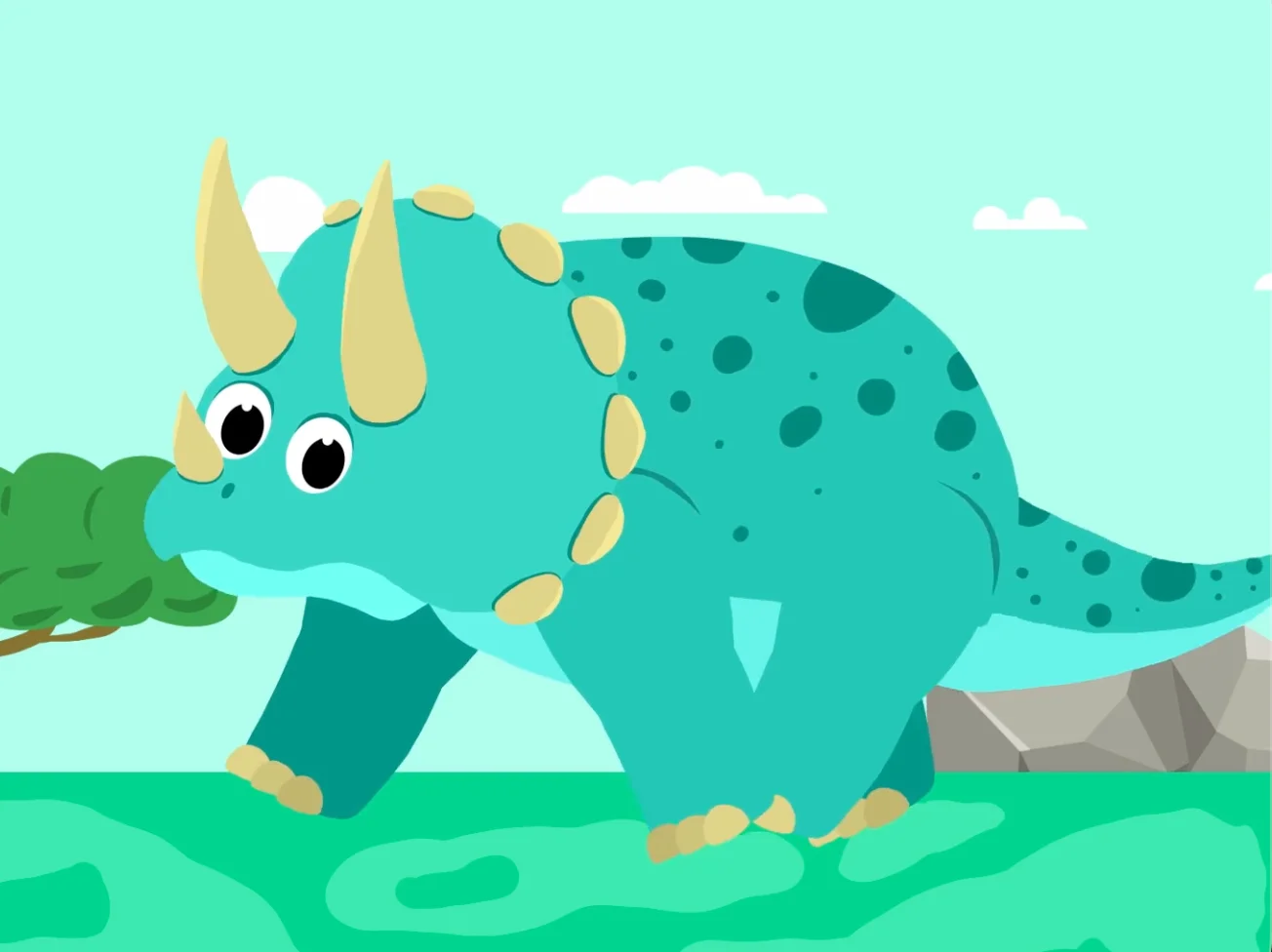
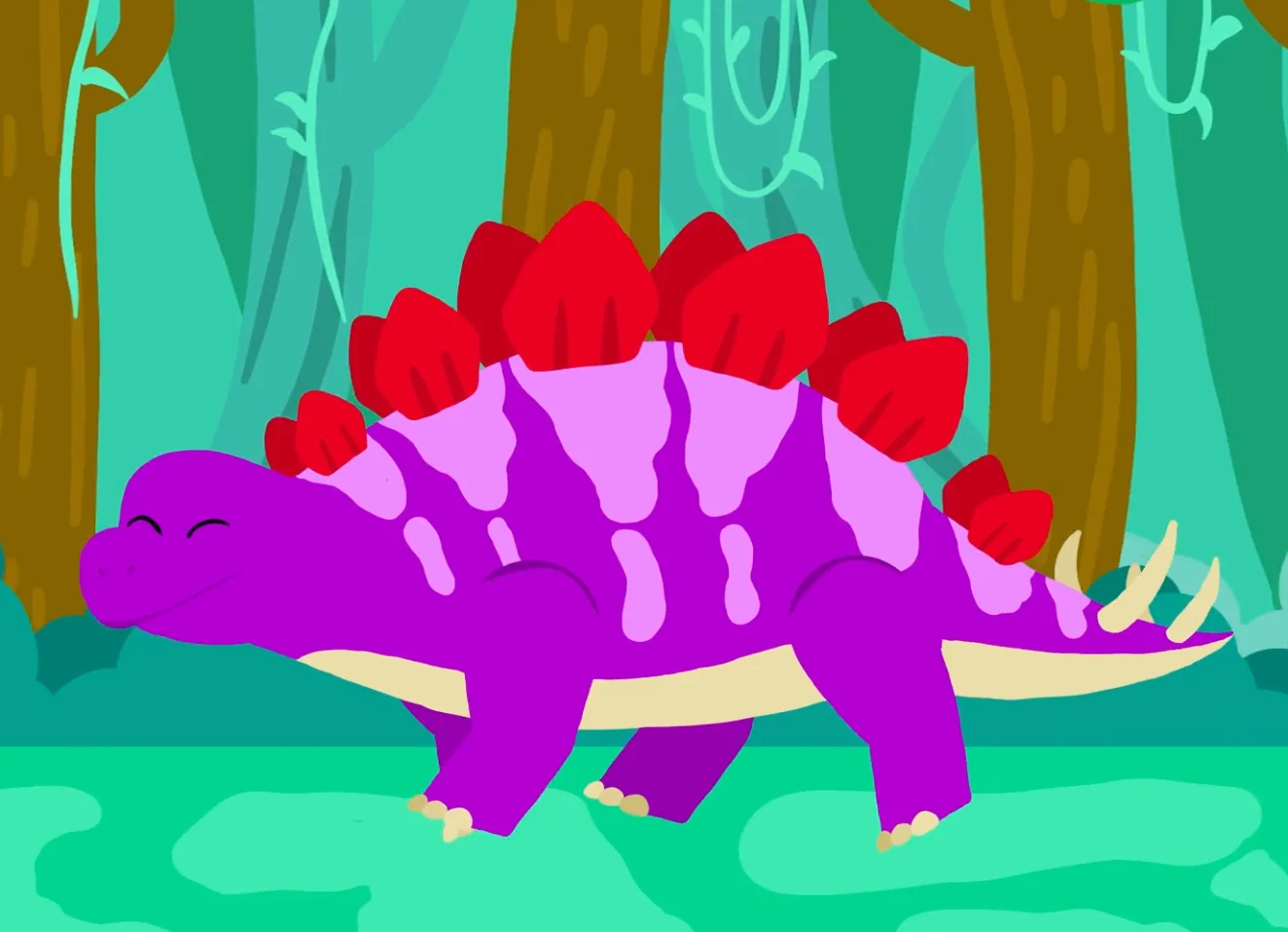
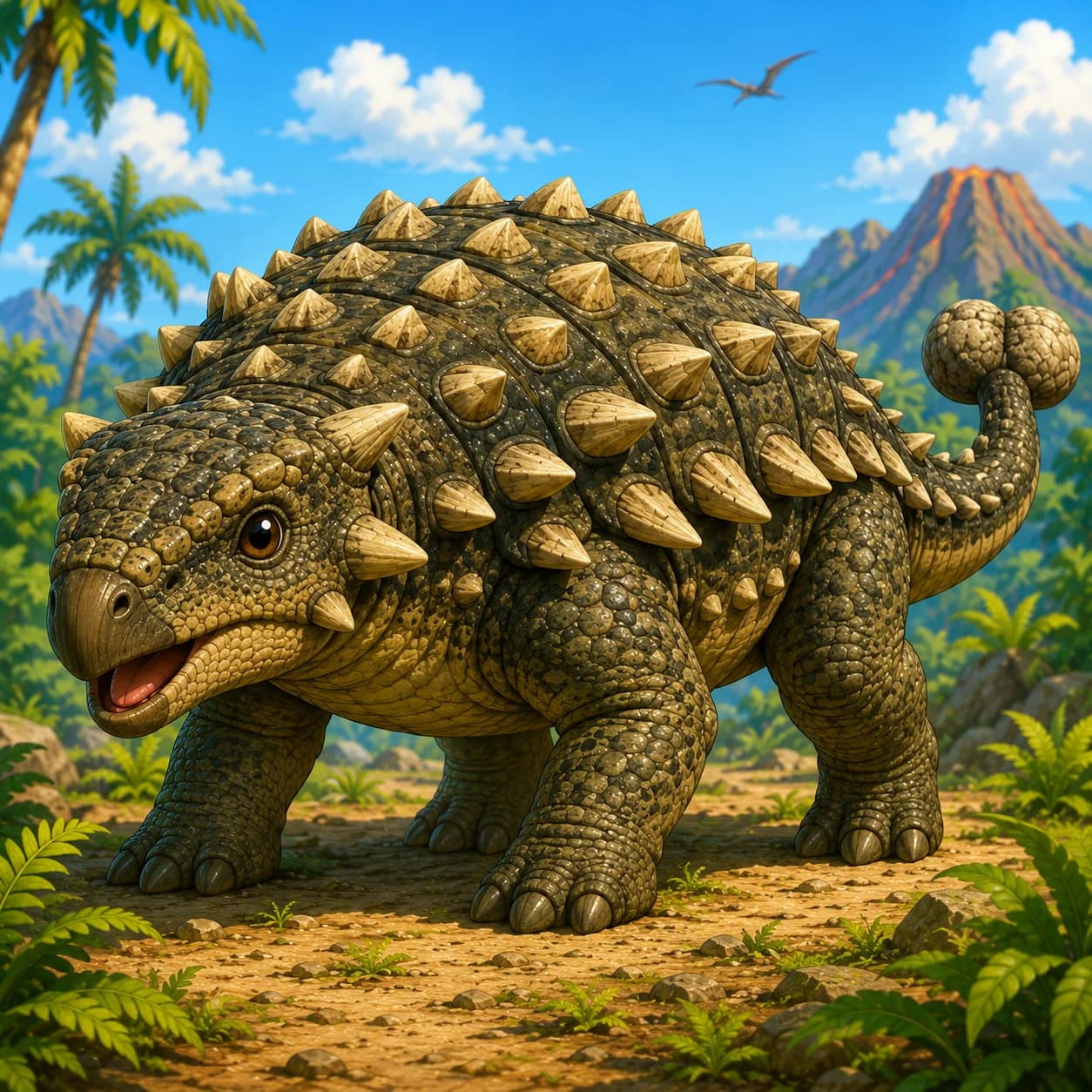
Herbivore dinosaurs were dinosaurs that ate plants, not meat. Most kinds of dinosaurs were herbivores! Famous ones include Triceratops, Stegosaurus, Ankylosaurus, duck-billed Edmontosaurus and giant long-necked Brachiosaurus. They munched ferns, conifer trees and cycads, and they used horns, armor, size and big herds to stay safe.
What Is a Herbivore Dinosaur?
Herbivore (HER-bih-vore) means “plant-eater.” A herbivore dinosaur ate leaves, stems, seeds and fruit. Dinosaurs that ate meat are called carnivores, and ones that ate both are called omnivores.
Plant-eaters were everywhere in the age of dinosaurs. They included the biggest animals ever to walk on land, tank-like armored dinosaurs, horned dinosaurs, and duck-billed dinosaurs that roamed in herds of thousands. Meat-eaters like T. rex get the most attention, but there were many more plant-eaters, just like there are many more zebras than lions today.
How Can You Tell a Dinosaur Ate Plants?
Scientists can't watch dinosaurs eat, so they look for clues in fossils. Here's what gives a plant-eater away:
🦜
A beak
Many plant-eaters had a tough, toothless beak at the front of the mouth for snipping leaves, like a turtle.
🦷
Leaf-shaped teeth
Instead of sharp, curved fangs, they had flat or leaf-shaped teeth for chopping and grinding, often hundreds of them.
🪨
Belly stones
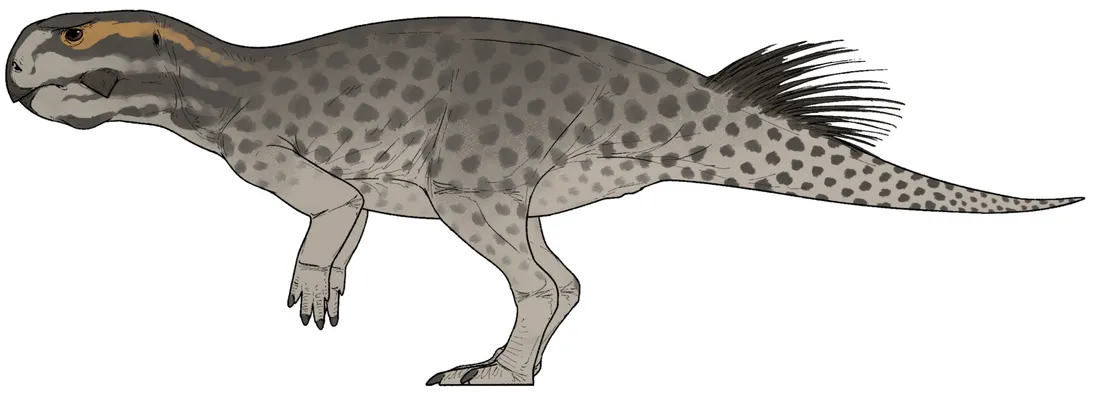
Some, like Psittacosaurus, swallowed small stones that helped mash tough plants inside their tummies.
🫃
A big belly
Plants are hard to digest, so plant-eaters needed a long gut and a wide, round body to hold it all.
💡 Fossil poop helps too! Scientists have found bits of wood, leaves and even a little grass inside fossilized dinosaur droppings.
What Did Herbivore Dinosaurs Eat?
Dinosaur salad looked very different from ours. For most of the dinosaur age there were no grassy lawns and no flowers. Here's what was on the menu:
🌿
Ferns
Soft, leafy and everywhere on the ground.
🌲
Conifer trees
Pines, redwoods and spiky monkey puzzle trees.
🌴
Cycads
Palm-like plants with tough, stiff leaves.
🍃
Ginkgo leaves
Fan-shaped leaves from a tree that still grows today.
🎋
Horsetails
Tall, jointed stems that grew near water.
🌸
Flowering plants
These showed up later, near the end of the dinosaur age.
🥬 What about dinosaur kale? That leafy green gets its name from its bumpy, dino-skin-looking leaves, but real dinosaurs never ate it. Find out more on our dinosaur kale page, with easy snacks to try with kids.
The Main Kinds of Plant-Eating Dinosaurs
🦕
Long-necked giants
Sauropods
The biggest animals ever to walk on land, reaching treetops with super-long necks.
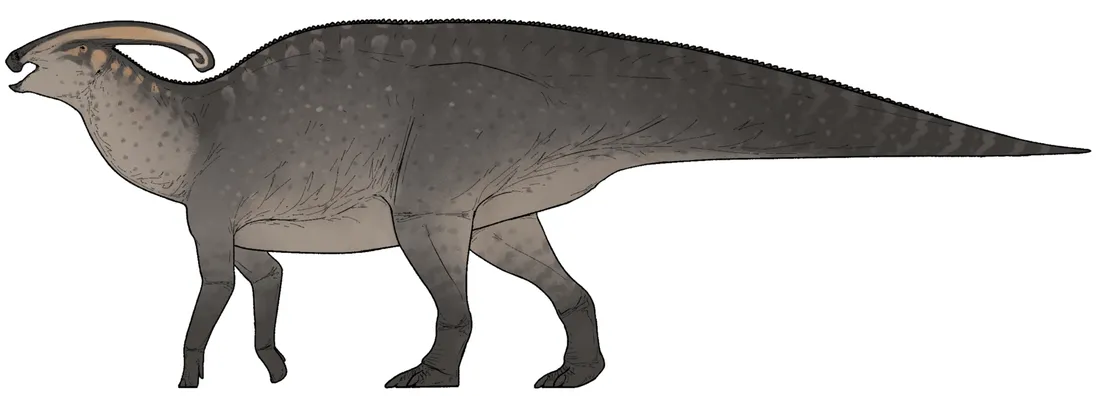
Say it: PAR-uh-sore-OL-oh-fus · Means: “Near crested lizard”
Length
About 31 ft (9.5 m)
When
76–73 million years ago
Where
North America
🌿 Its long, hollow head crest worked like a trumpet. Scientists think it blew deep, booming calls to talk to its herd.
Iguanodont
6. Iguanodon
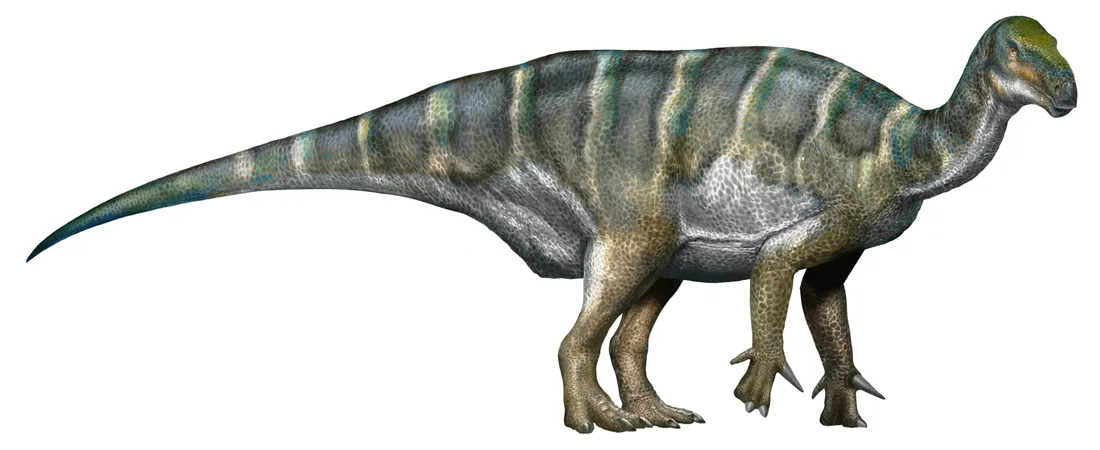
Say it: ig-WAN-oh-don · Means: “Iguana tooth”
Length
About 33 ft (10 m)
When
126–122 million years ago
Where
Europe
🌿 One of the very first dinosaurs ever named, in 1825. Scientists first put its big thumb spike on its nose, like a rhino horn!
Dome-headed dinosaur
7. Pachycephalosaurus
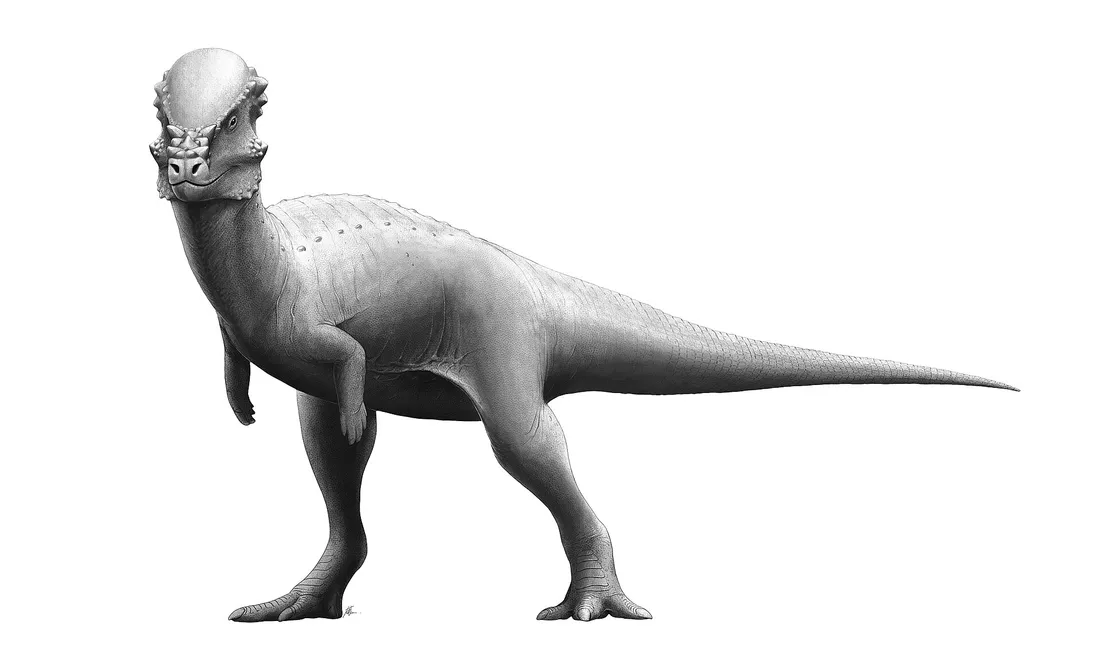
Say it: PAK-ee-SEF-uh-loh-SORE-us · Means: “Thick-headed lizard”
Length
About 15 ft (4.5 m)
When
70–66 million years ago
Where
North America
🌿 The bone on top of its head was up to 10 inches (25 cm) thick. It may have head-butted rivals, and it probably ate leaves, seeds and fruit.
Duck-billed dinosaur
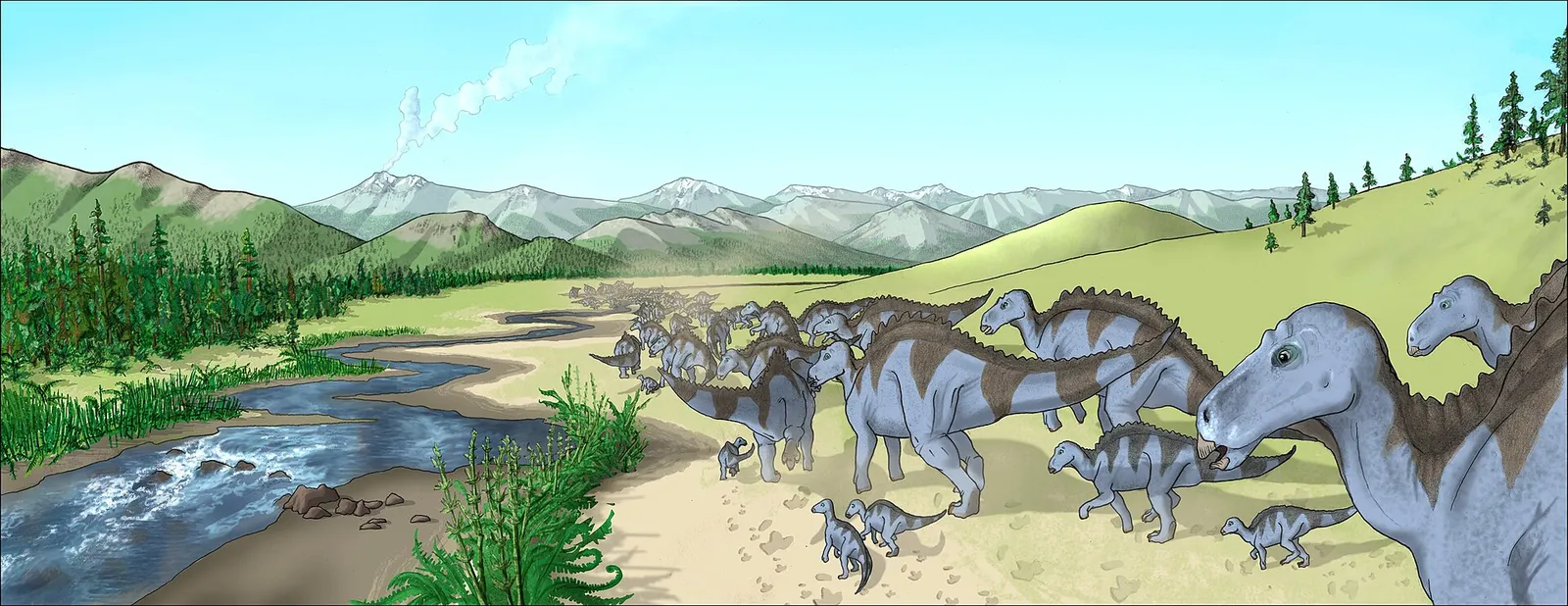
8. Maiasaura
Say it: MY-uh-SORE-uh · Means: “Good mother lizard”
Length
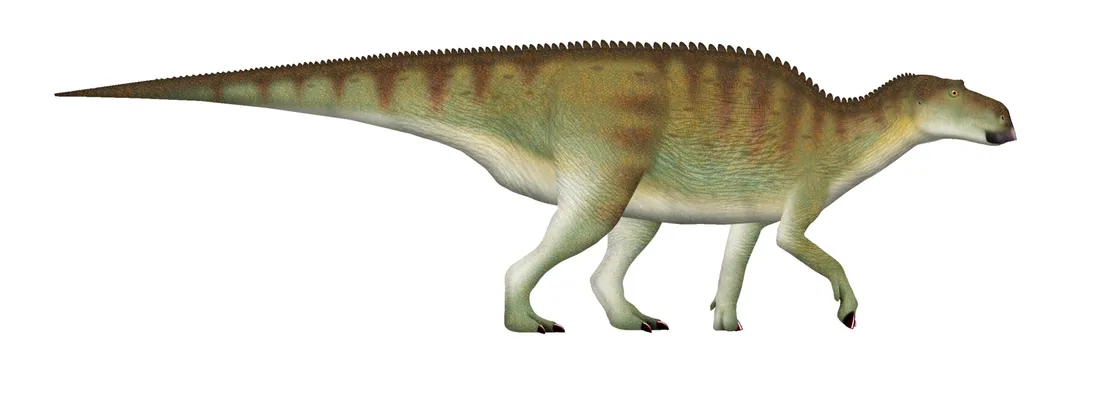
About 30 ft (9 m)
When
About 76 million years ago
Where
North America (Montana)
🌿 Scientists found whole nesting grounds with eggs and babies. The little ones probably stayed in the nest while parents brought them food.
Early horned dinosaur
9. Psittacosaurus
Say it: SIT-ak-oh-SORE-us · Means: “Parrot lizard”
Length
About 6.5 ft (2 m)
When
126–101 million years ago
Where
Asia
🌿 A small plant-eater with a beak like a parrot's. It swallowed little stones that helped mash food in its tummy, and it had bristles on its tail.
Surprise plant-eater
10. Therizinosaurus
Say it: THER-ih-ZIN-oh-SORE-us · Means: “Scythe lizard”
Length
About 30 ft (9 m)
When
About 70 million years ago
Where
Asia (Mongolia)
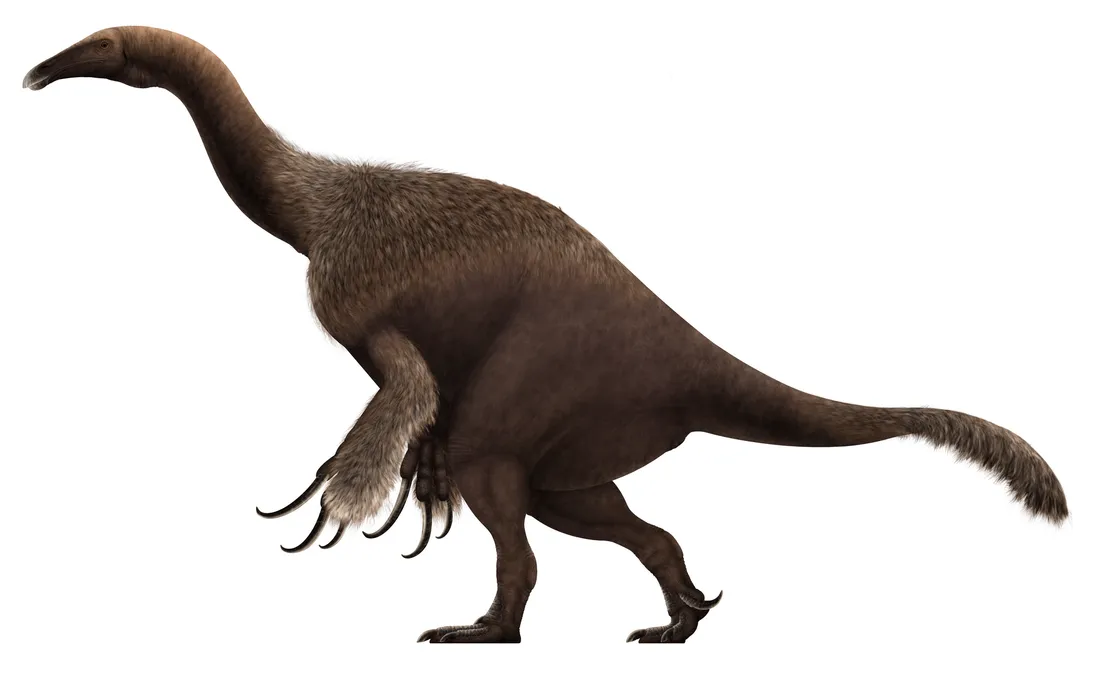
🌿 A cousin of meat-eaters like T. rex that ate plants instead! It used claws about 3 ft (1 m) long to pull branches toward its mouth.
How Big Were Plant-Eating Dinosaurs?
Plant-eaters came in every size. Here's how long they were from nose to tail, next to a school bus and the giant long-necked Argentinosaurus. Sizes are scientists' best estimates.
Psittacosaurus
6.5 ft
Pachycephalosaurus
15 ft
Ankylosaurus
26 ft
Stegosaurus
30 ft
Triceratops
30 ft
Parasaurolophus
31 ft
Iguanodon
33 ft
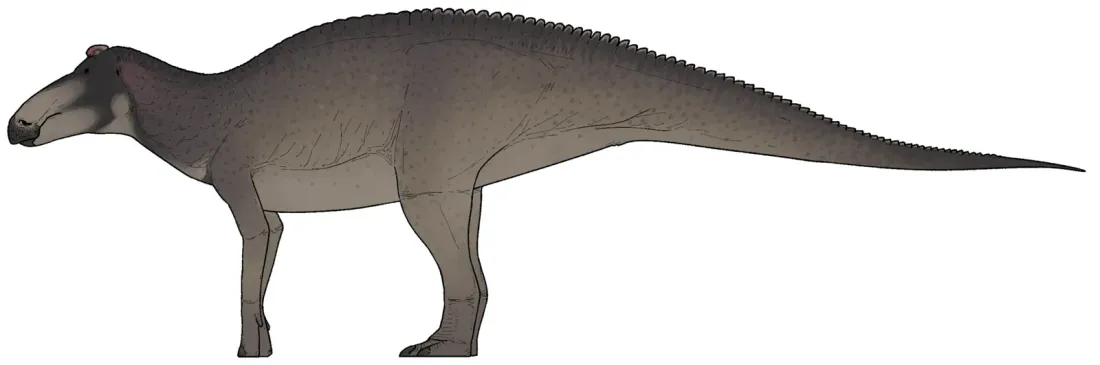
Edmontosaurus
39 ft
🚌 School bus
40 ft
Argentinosaurus
115 ft
How Did Plant-Eaters Stay Safe?
Plant-eaters shared their world with hungry meat-eaters like T. rex and Allosaurus. They couldn't fight with sharp teeth, so they found other ways to stay safe:
🐘
Living in herds
Many walked together in big groups, like Maiasaura and Edmontosaurus. More eyes meant someone would spot danger.
🛡️
Armor and weapons
Horns, bony armor, tail clubs and tail spikes made them a painful meal. Ankylosaurus was almost impossible to bite.
📏
Being huge
Grown-up sauropods were so big that even T. rex-sized hunters left them alone.
💨
Running fast
Smaller plant-eaters had long legs and could sprint away from danger.
📣
Warning calls
Crested dinosaurs like Parasaurolophus may have honked loud alarms to warn the herd.
🥚
Lots of babies
Many laid big nests of eggs, so even if some babies were caught, others grew up.
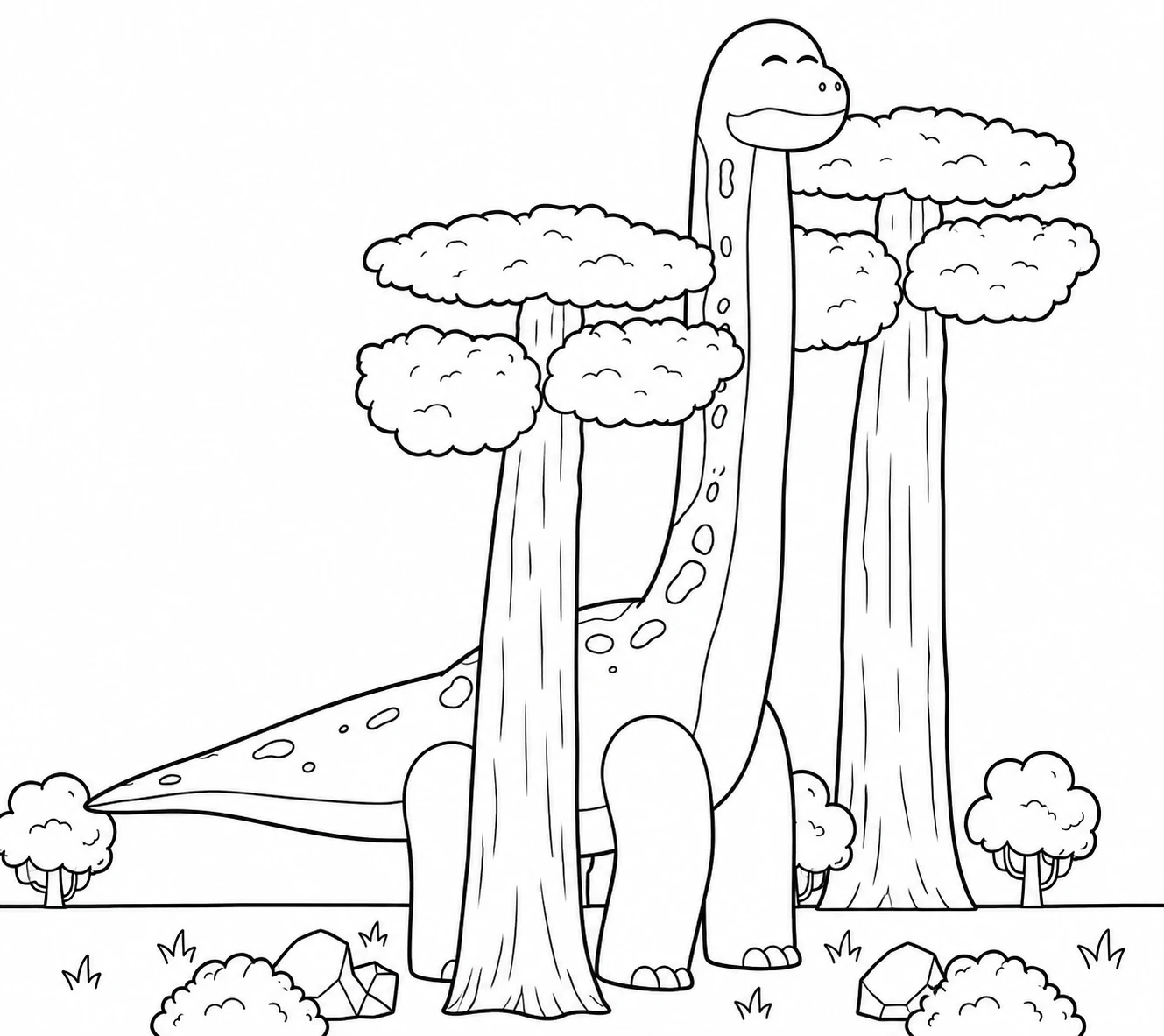
Free Herbivore Dinosaur Coloring Pages
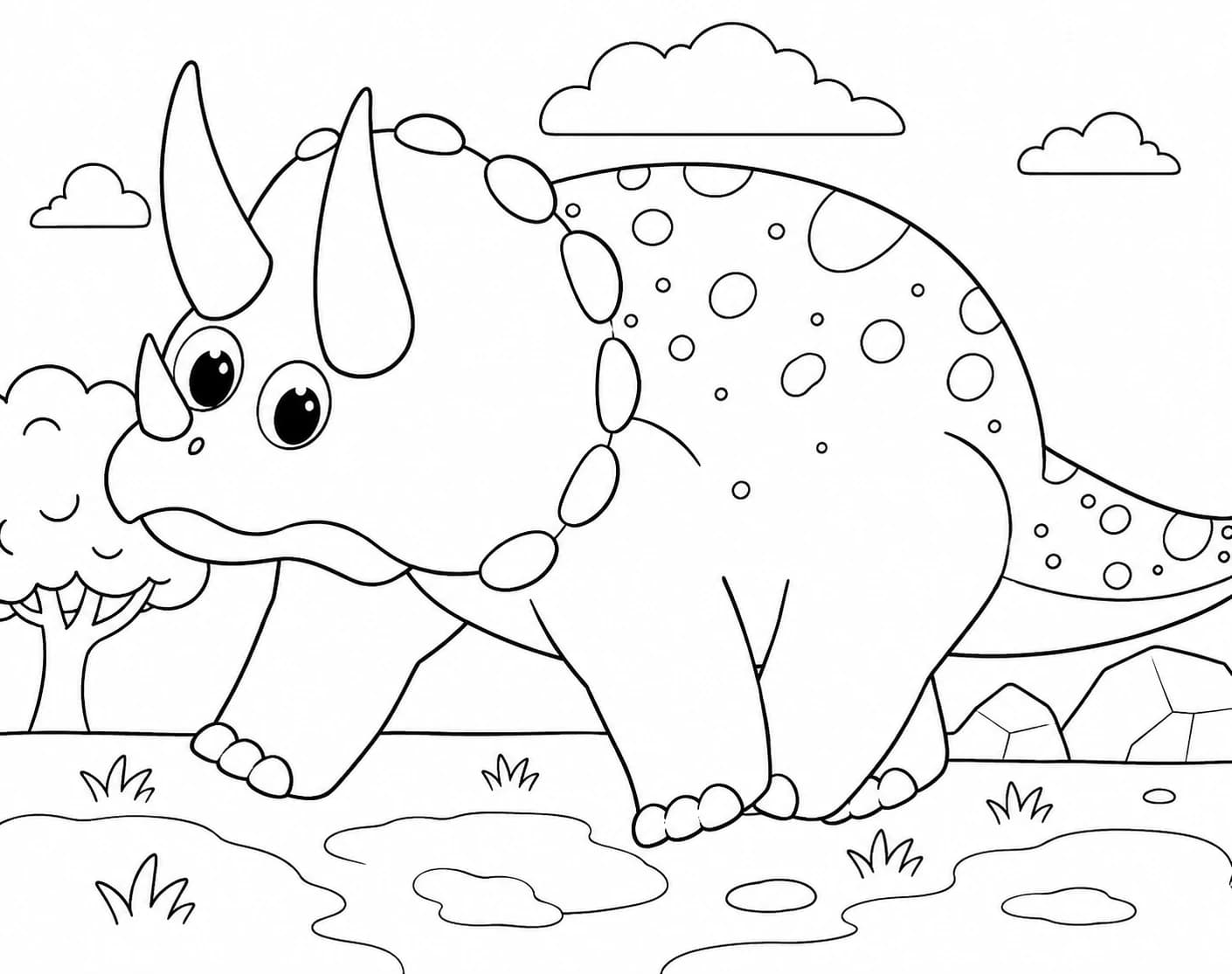
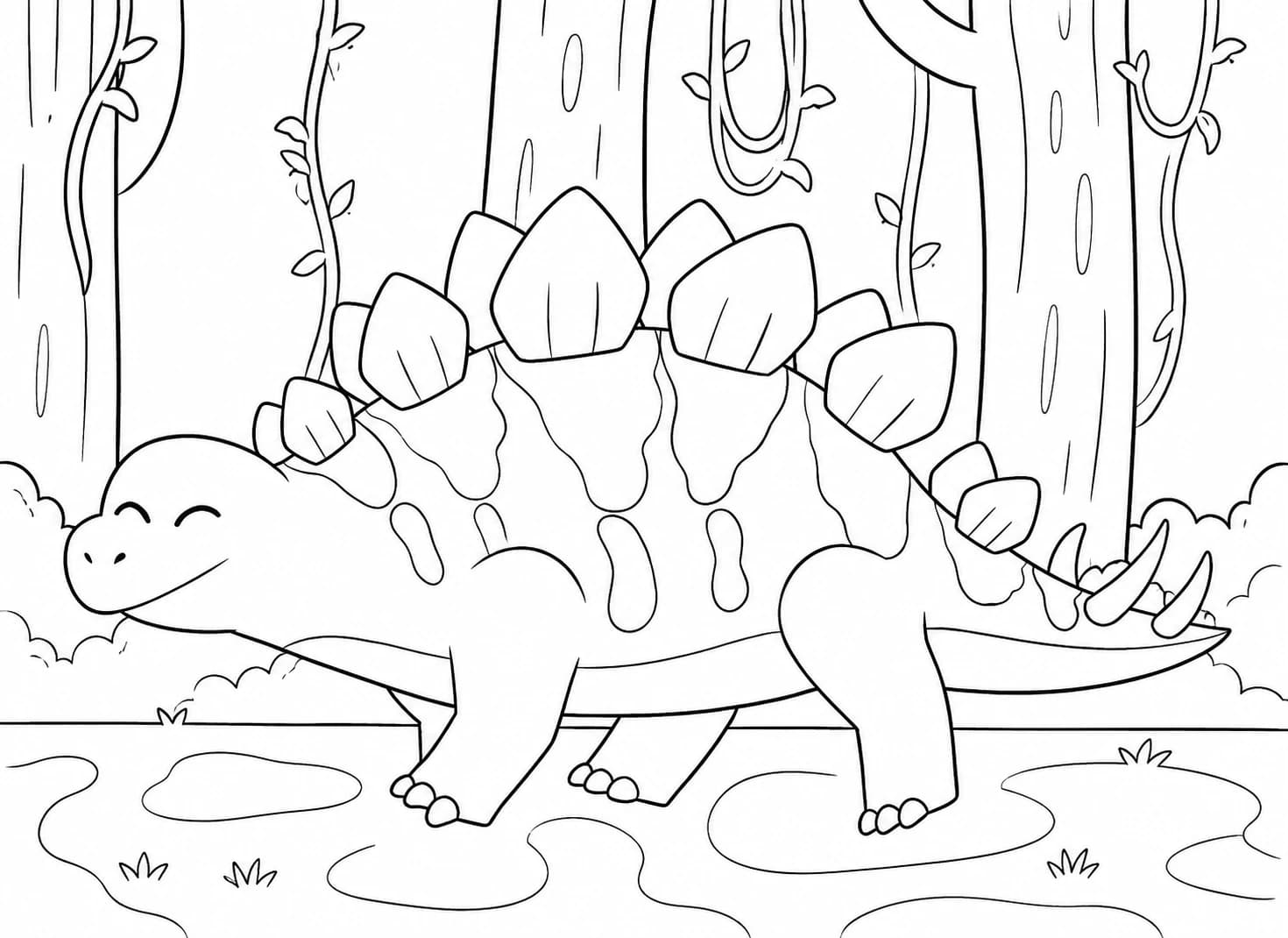
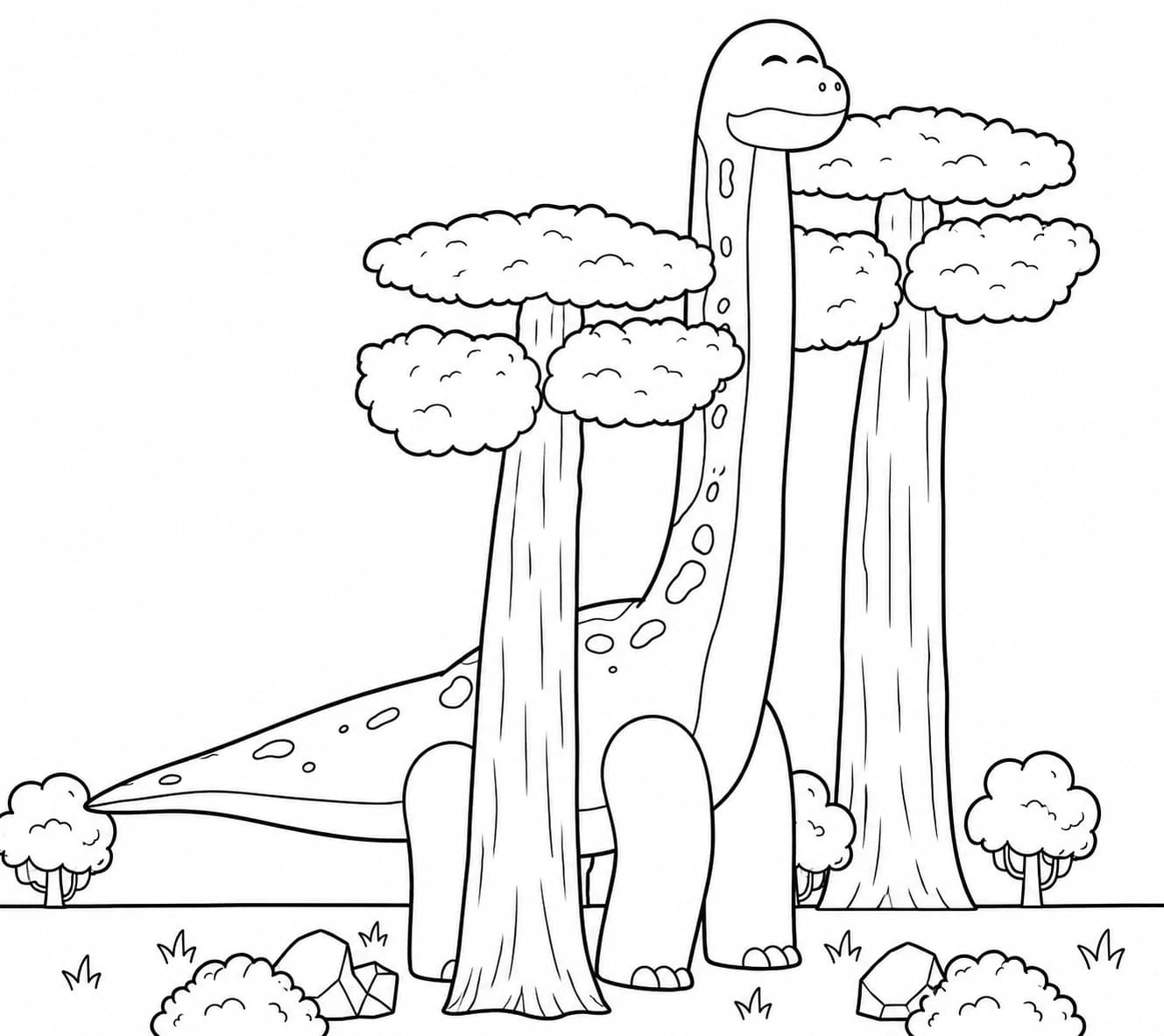
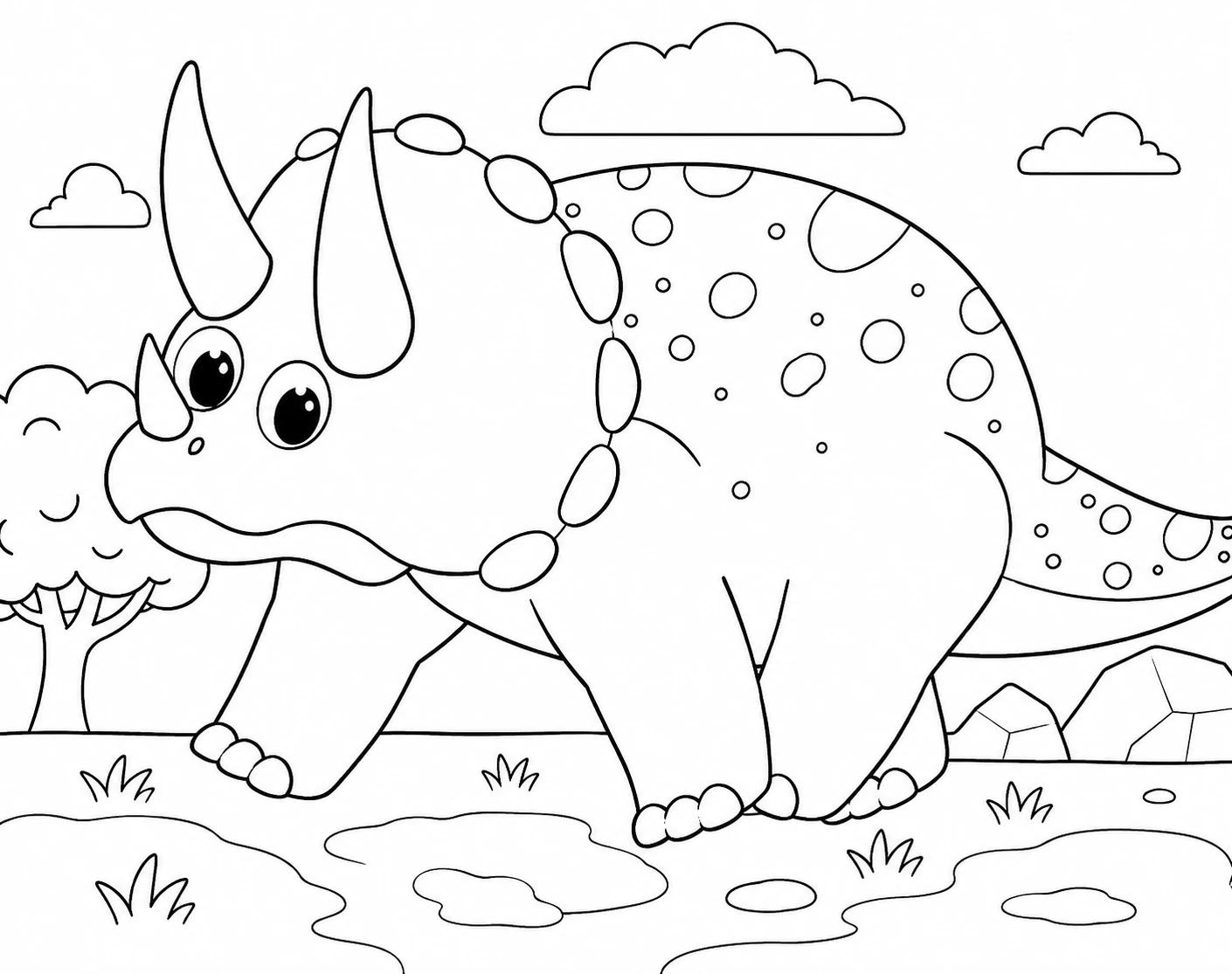
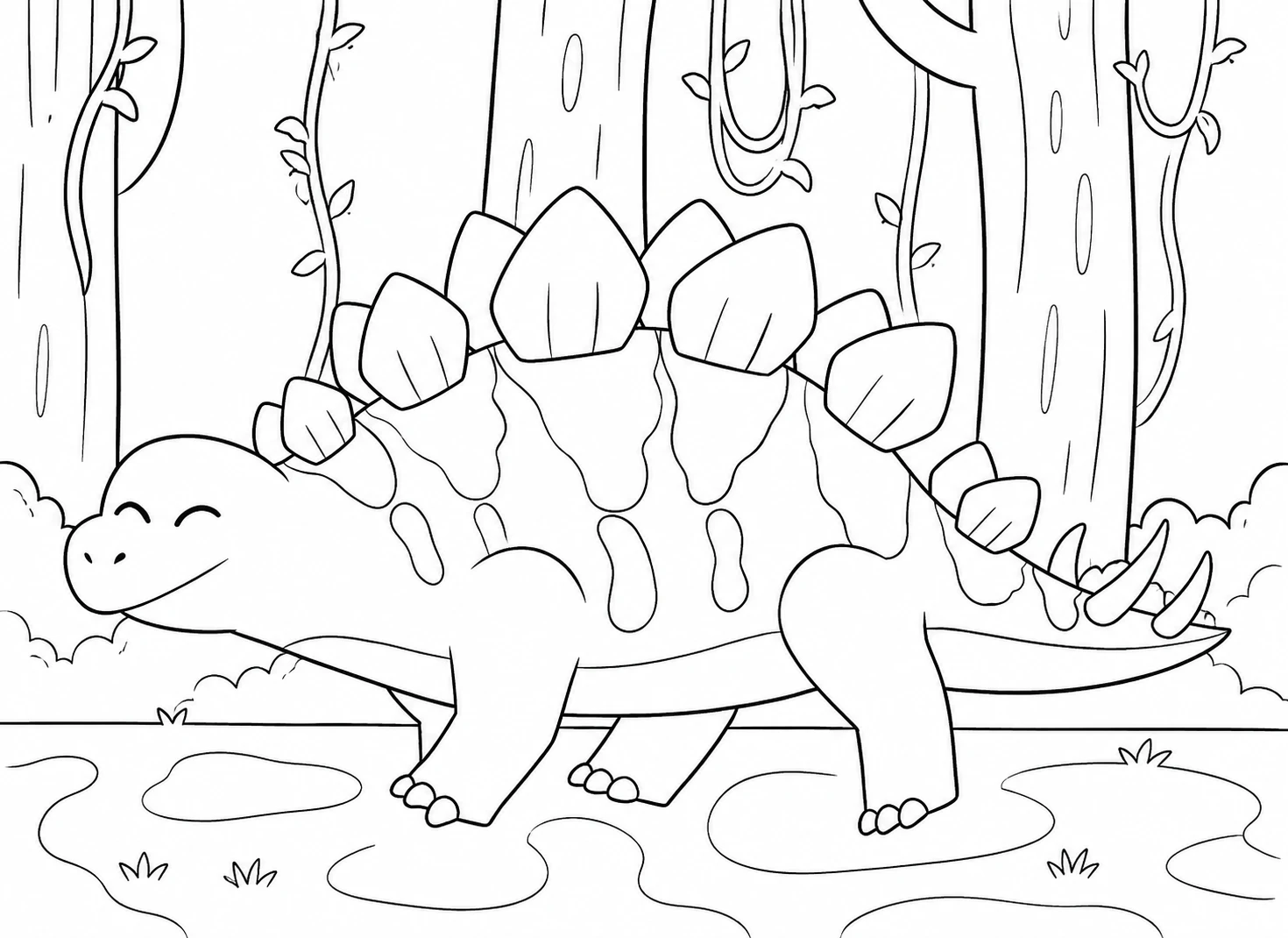
Print a plant-eating dinosaur to color in. They're free for personal and classroom use.
A herbivore dinosaur is a dinosaur that ate plants instead of meat. Famous herbivores include Triceratops, Stegosaurus, Ankylosaurus, Brachiosaurus and duck-billed dinosaurs like Edmontosaurus. Most kinds of dinosaurs were plant-eaters.
What did herbivore dinosaurs eat?+
They ate ferns, horsetails, conifer trees like pines and monkey puzzles, cycads, ginkgo leaves, and later flowering plants. There were no big grassy fields for most of the time dinosaurs lived, although a few kinds of grass had appeared by the end.
What was the biggest herbivore dinosaur?+
The biggest were long-necked sauropods like Argentinosaurus and Patagotitan, which grew to about 115 to 120 feet (35 to 37 meters) long. They were the biggest land animals that ever lived, and they were all plant-eaters.
Which plant-eating dinosaur had the most teeth?+
Duck-billed dinosaurs and horned dinosaurs had hundreds of teeth stacked in rows called dental batteries. When one tooth wore out, a new one moved in. Nigersaurus had around 500 teeth arranged like a lawnmower.
How did plant-eating dinosaurs protect themselves?+
They used horns, armor, tail clubs and tail spikes, grew to giant sizes, ran away fast, and lived in big herds where many eyes could watch for danger.
Are there any herbivore dinosaurs alive today?+
Birds are living dinosaurs, and some of them mostly eat plants, like geese, which munch on grass, and parrots, which eat seeds and fruit. So yes, you can still see plant-eating dinosaurs in a park!
Image credits: Triceratops, Stegosaurus and Ankylosaurus are original Puffsaurus artwork. Via Wikimedia Commons: Maiasaura herd by Debivort (CC BY-SA 3.0); Edmontosaurus by Connor Ashbridge (CC BY 4.0); Parasaurolophus by Connor Ashbridge (CC BY-SA 4.0); Iguanodon by Davide Bonadonna (CC BY 4.0); Pachycephalosaurus by Fred Wierum (CC BY 4.0); Maiasaura by TotalDino (CC BY 4.0); Psittacosaurus by Connor Ashbridge (CC BY 4.0); Therizinosaurus by PaleoNeolitic (CC BY 4.0).
Does your little one love dinosaurs? 🦕
Explore our dinosaur-themed nursery rhymes and kids' songs!