PuffsaurusPuffsaurus
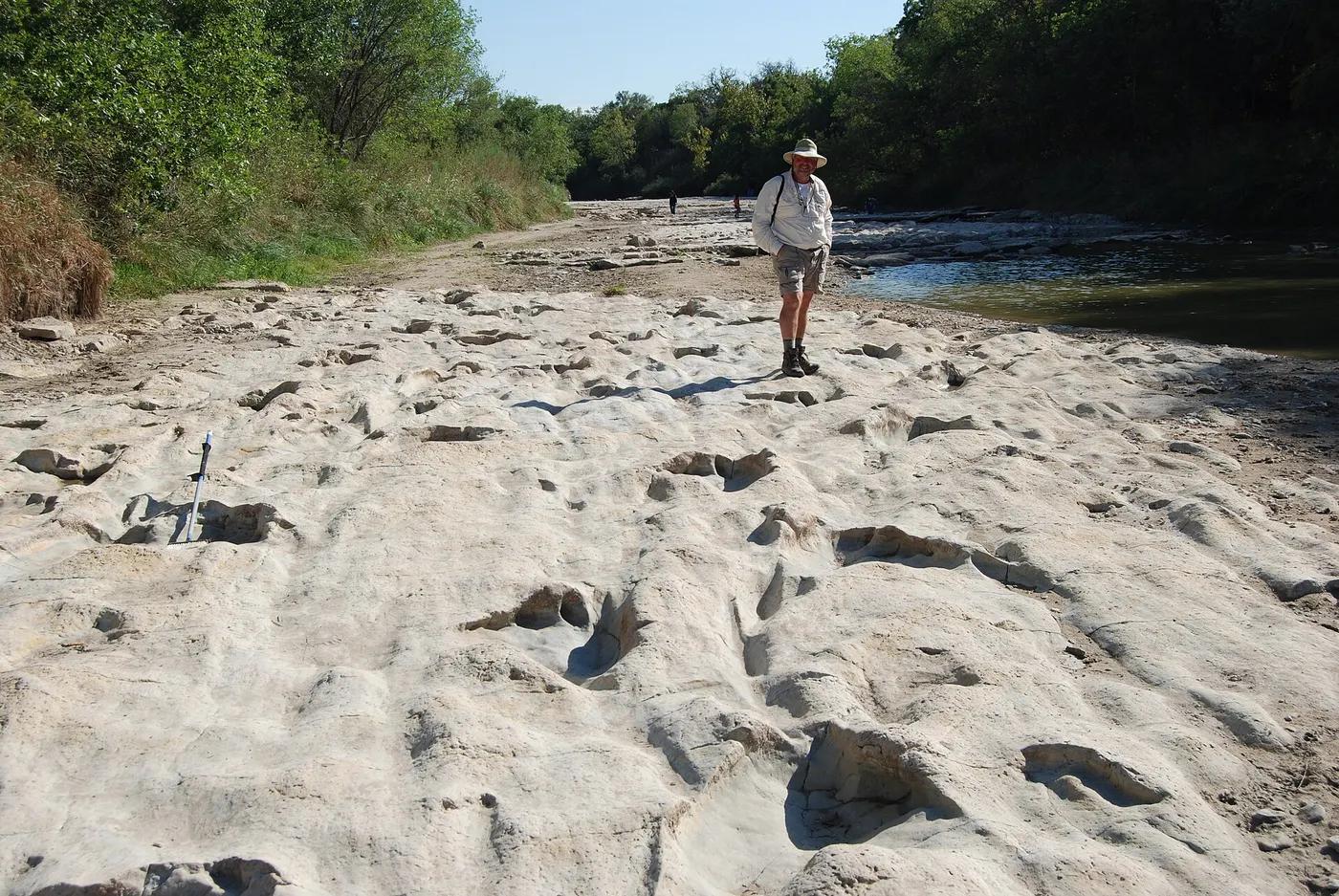
A man standing beside big three-toed dinosaur footprints in the dry riverbed of the Paluxy River, Texas
Ask Puffsaurus

Dinosaur Footprints

Long ago, dinosaurs squished through the mud, and some of their footprints are still here today, turned to stone. Let's follow the tracks and find out what they tell us!

Quick Answer

Dinosaur footprints are real fossils, made when dinosaurs stepped in soft mud that later turned to stone. They have been found at more than 1,500 places on every continent except Antarctica. Scientists call them trace fossils, and they use them to work out how fast dinosaurs moved, whether they traveled in herds, and even whether they swam.

Why Are Footprints So Special?

A dinosaur had only one skeleton, but it could leave millions of footprints in its life. That's why footprints are found in many places where no dinosaur bones have ever turned up.

Bones show us what a dinosaur looked like. Footprints show us what it did: where it walked, how fast it went, and who it was with. A trackway is like a video in stone of a few seconds in a dinosaur's day, millions of years ago. Fossils like these are a big part of how we know dinosaurs were real.

How Does a Footprint Turn Into Stone?

  1. 1. Step in the mud

    A dinosaur walks across soft, wet mud or sand by a lake, river or beach, and its foot sinks in.

  2. 2. Bake in the sun

    The sun dries the mud until the print is hard, like a clay pot. This had to happen before the next rain washed it away.

  3. 3. Get covered up

    A gentle flood or blowing wind fills the print with new sand or mud, tucking it safely under a blanket.

  4. 4. Turn to stone

    Over millions of years, more and more layers press down and slowly turn the mud into rock.

  5. 5. Be found!

    Rain, rivers and wind wear the rock away, and one day a hiker, a quarry worker or a kid spots the footprint.

Most footprints never made it. Mud that was too wet squished the print into a blob, ground that was too hard barely left a mark, and rain washed many away. Only the lucky ones with just-right mud lasted millions of years.

Whose Footprint Is It? Read It Like a Scientist

Footprints almost never come with a name tag, so scientists usually can't say exactly which species made them. But the shape tells them what type of dinosaur it was:

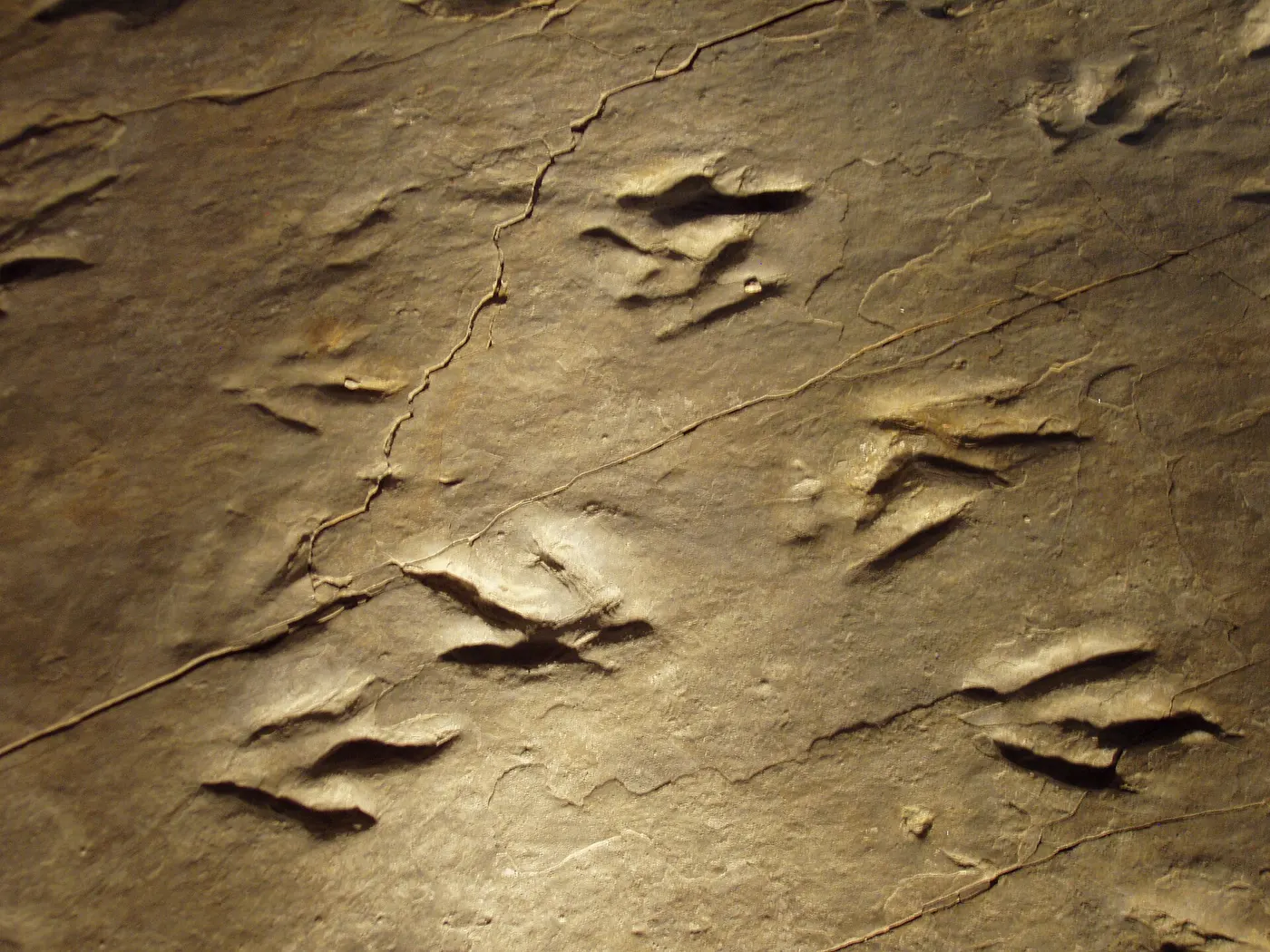
Long, pointy, three toes

Meat-eaters (theropods) like T. rex and Allosaurus

Narrow, V-shaped toes, often with sharp claw marks at the tips. It looks a lot like a giant bird's footprint, because birds are their relatives!

Short, round, three toes

Plant-eaters like duck-billed dinosaurs and Iguanodon

Wide, chunky toes with blunt, rounded tips and a big heel pad, a bit like a clover leaf.

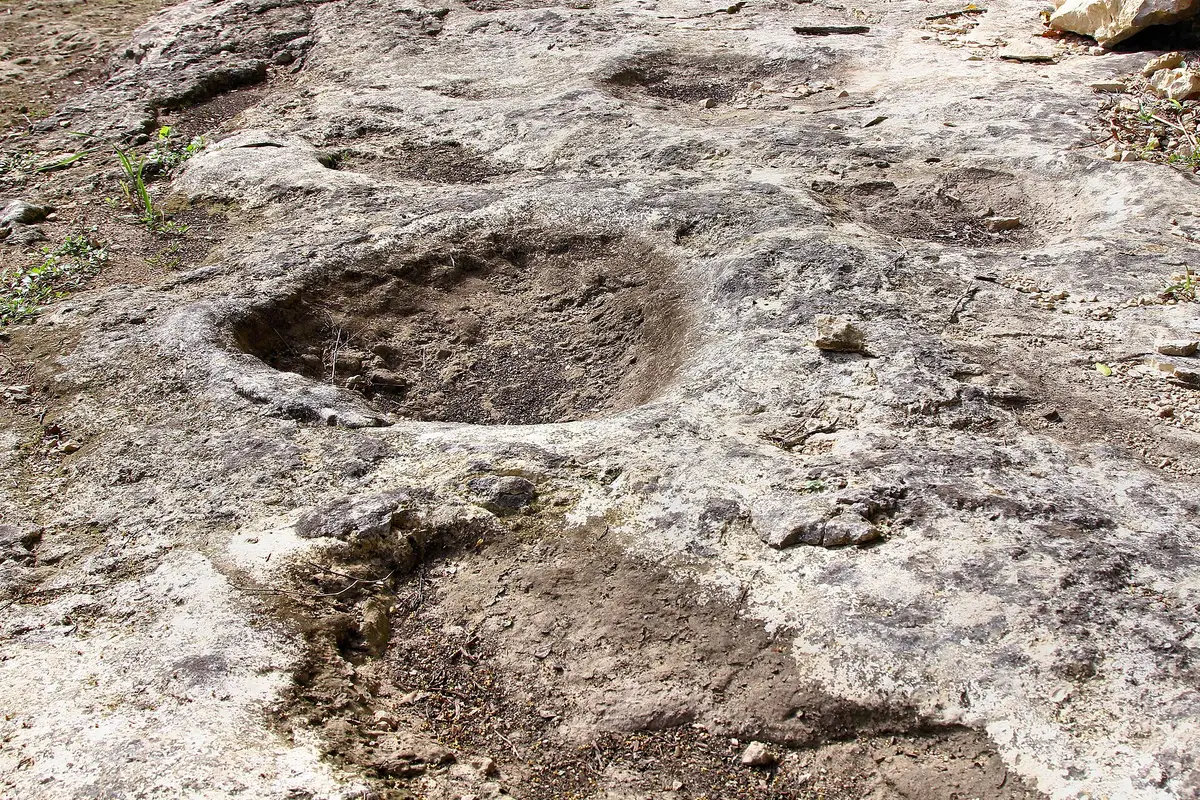
Big and round, like a tub

Long-neck dinosaurs (sauropods) like Brachiosaurus

A huge round or oval dent with stubby toes. Their front โ€œhandโ€ prints are smaller and shaped like a horseshoe.

Several sharp three-toed meat-eater footprints pressed into reddish rock
Pointy three-toed tracks of a meat-eating dinosaur at Dinosaur State Park, Connecticut. Can you see the claw marks?
A big round long-neck dinosaur footprint, like a shallow tub in the rock
A giant round footprint of a long-neck dinosaur at Government Canyon, Texas. It could hold a whole bucket of water!

Because the exact maker is a mystery, footprints get their own names. The famous three-toed Connecticut tracks are called Eubrontes (say it: you-BRON-teez), which means โ€œtrue thunder.โ€

What Can Dinosaur Footprints Tell Us?

How fast they moved

The longer the steps, the faster the dinosaur was going. Tracks in Spain show a meat-eater running about 45 km/h (28 mph), as fast as a car in town!

Whether they lived in groups

Lots of trackways side by side, all heading the same way, show that some dinosaurs, like long-necks, walked together in herds.

Whether they swam

Some tracks are only scratch marks from toe tips. They were made by dinosaurs paddling in shallow water, just touching the bottom.

How they held their tails

Tail drag marks are very rare. That tells scientists most dinosaurs held their tails up off the ground, not dragging behind like old pictures showed.

Where the babies were

Tiny footprints next to big ones show where young dinosaurs walked with grown-ups, and some baby prints are smaller than a coin.

Where dinosaurs lived

Footprints often turn up where no bones have been found. They show us dinosaurs lived in places we'd never have guessed.

How Do Footprints Show How Fast a Dinosaur Ran?

Think about your own feet. When you walk, your steps are short. When you run, you take giant leaps and your footprints land far apart. Dinosaurs were the same!

Scientists use a simple trick. First they measure one footprint. A dinosaur's hip height was about 4 times the length of its footprint. Then they measure a stride: the distance from one footprint to the next print of the same foot.

If the stride is less than 2 times the hip height, the dinosaur was walking. Between 2 and 3 times, it was trotting. More than 3 times, it was running!

Scientists also say these are only rough guesses. A study of birds walking through mud found the math can sometimes make animals look faster than they really were.

๐Ÿงฎ Try it: Walk, trot or run?

A meat-eater left a footprint 40 cm long, and its stride was 4 meters.

  1. Hip height = 40 cm ร— 4 = 160 cm (1.6 m)
  2. Stride รท hip height = 4 รท 1.6 = 2.5
  3. 2.5 is between 2 and 3, so it was trotting!

Your turn: On wet sand or with wet feet on a sidewalk, walk, then run. Measure your footprint and the gap between your steps. Is your running stride more than 3 times your hip height?

Famous Dinosaur Footprints Around the World

Dinosaur tracks have been found in deserts, riverbeds, coal mines, quarries and on sea cliffs. Here are some of the most amazing places to see them.

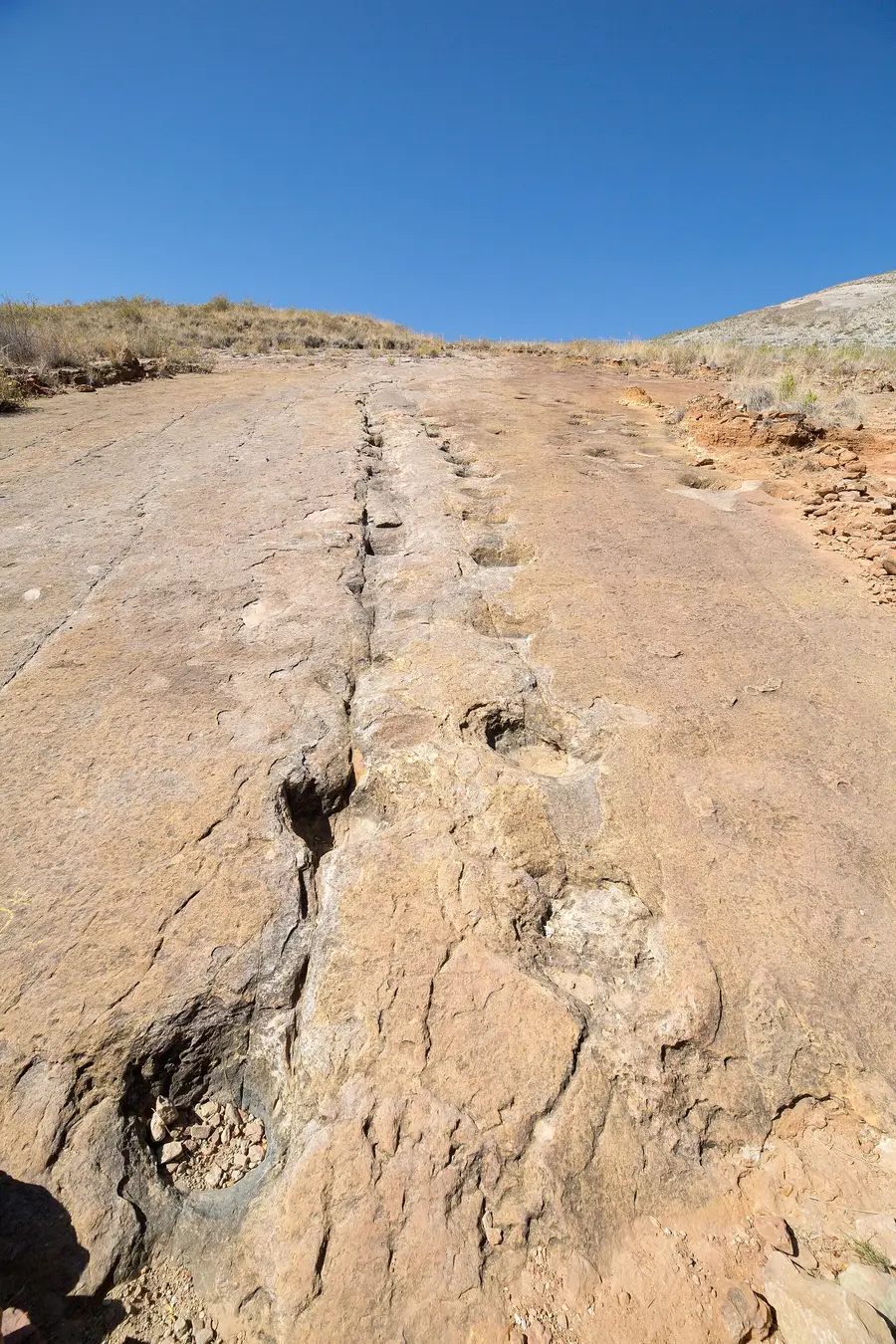
A long line of deep dinosaur footprints climbing up a sloping rock in Torotoro National Park, Bolivia

Carreras Pampa, Bolivia

๐Ÿ† Most dinosaur footprints in one place

In Torotoro National Park, scientists counted more than 16,600 footprints made by three-toed meat-eating dinosaurs along an old shoreline. The rock also has swim tracks and tail drag marks. A study published in 2025 called it the biggest tracksite in the world.

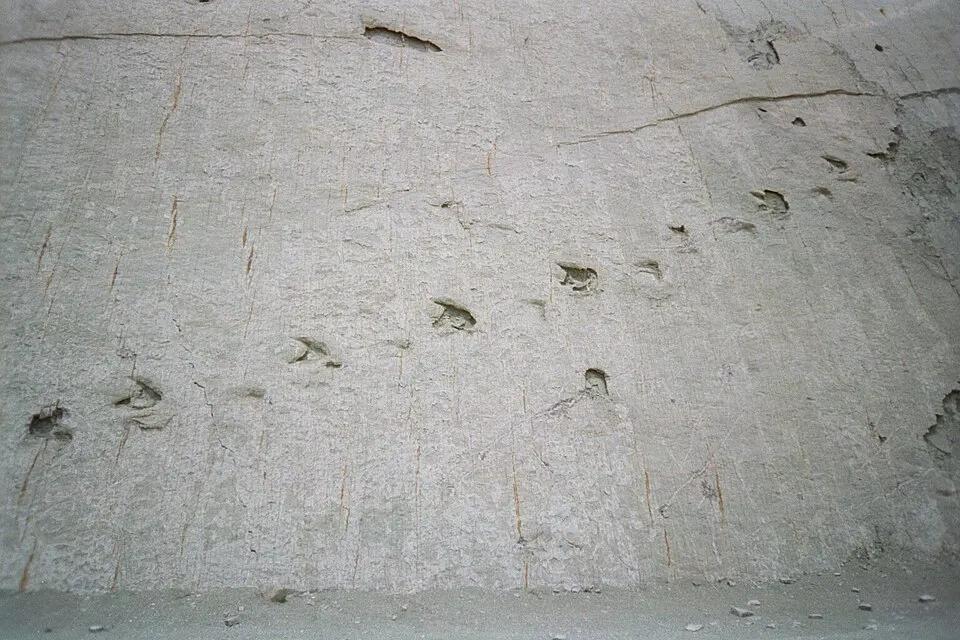
Dinosaur footprints running across a tall, steep rock wall at Cal Orck'o near Sucre, Bolivia

Cal Orck'o, Bolivia

๐Ÿ† Footprints that walk up a wall

Near the city of Sucre, a cement quarry uncovered a cliff about 80 meters tall covered in more than 5,000 footprints. The dinosaurs didn't walk up a wall, of course! They walked on flat mud, and later the Earth's crust slowly tipped the rock up on its side.

A man standing next to big three-toed dinosaur footprints in the dry bed of the Paluxy River, Texas

Dinosaur Valley, Texas, USA

๐Ÿ† Footprints in a river

In the Paluxy River at Glen Rose, you can walk right next to footprints of giant meat-eaters and long-necks when the water is low. Kids today can visit Dinosaur Valley State Park and look for them.

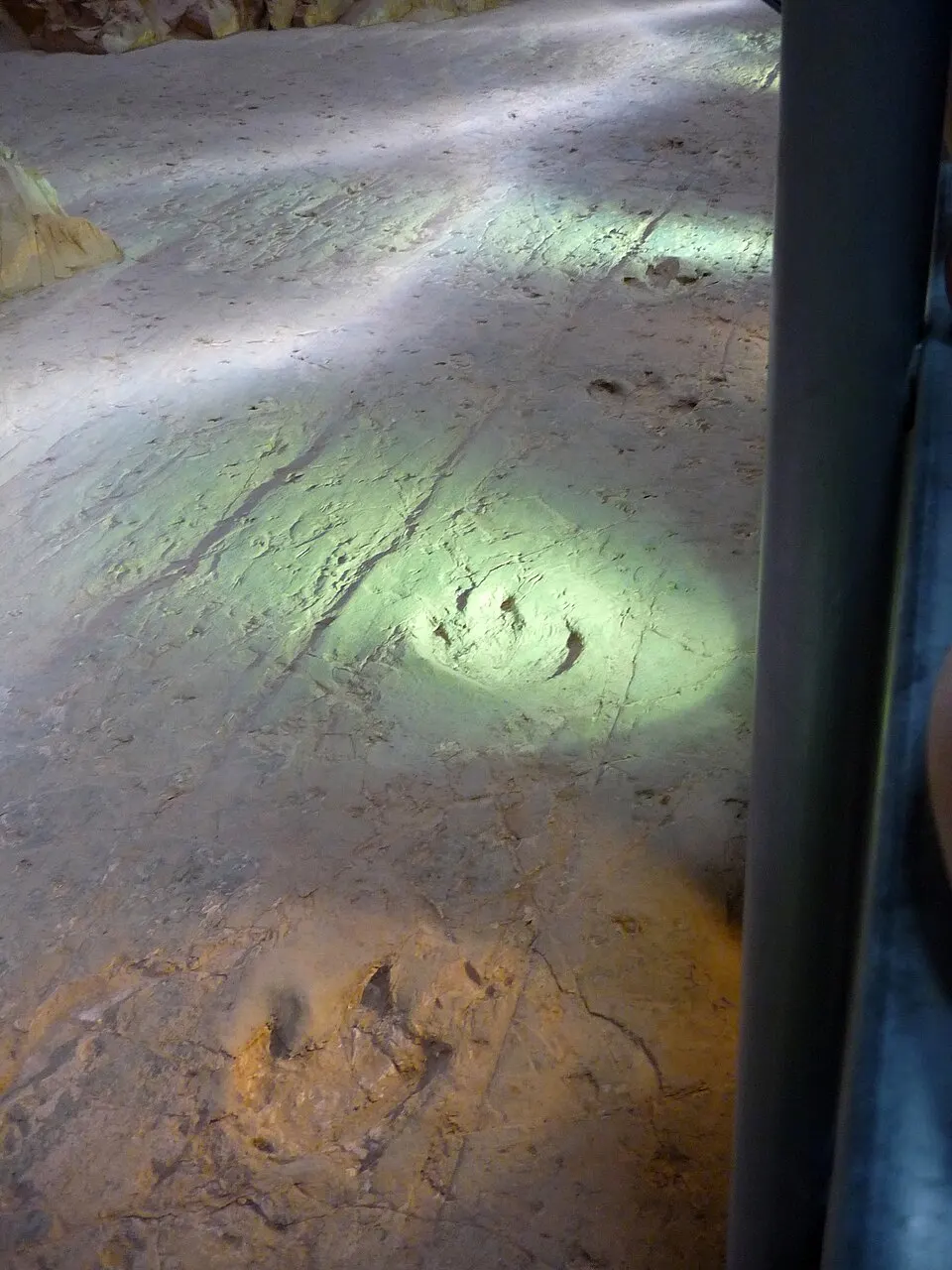
Small three-toed dinosaur footprints lit up by sunlight on the floor of the Lark Quarry building in Queensland

Lark Quarry, Australia

๐Ÿ† The โ€œdinosaur stampedeโ€ mystery

About 3,300 small footprints, 95 million years old, are kept under a roof in Queensland. Scientists first thought small dinosaurs were running away from a big predator. Newer studies suggest many were swimming or wading in a river instead. Scientists are still debating it!

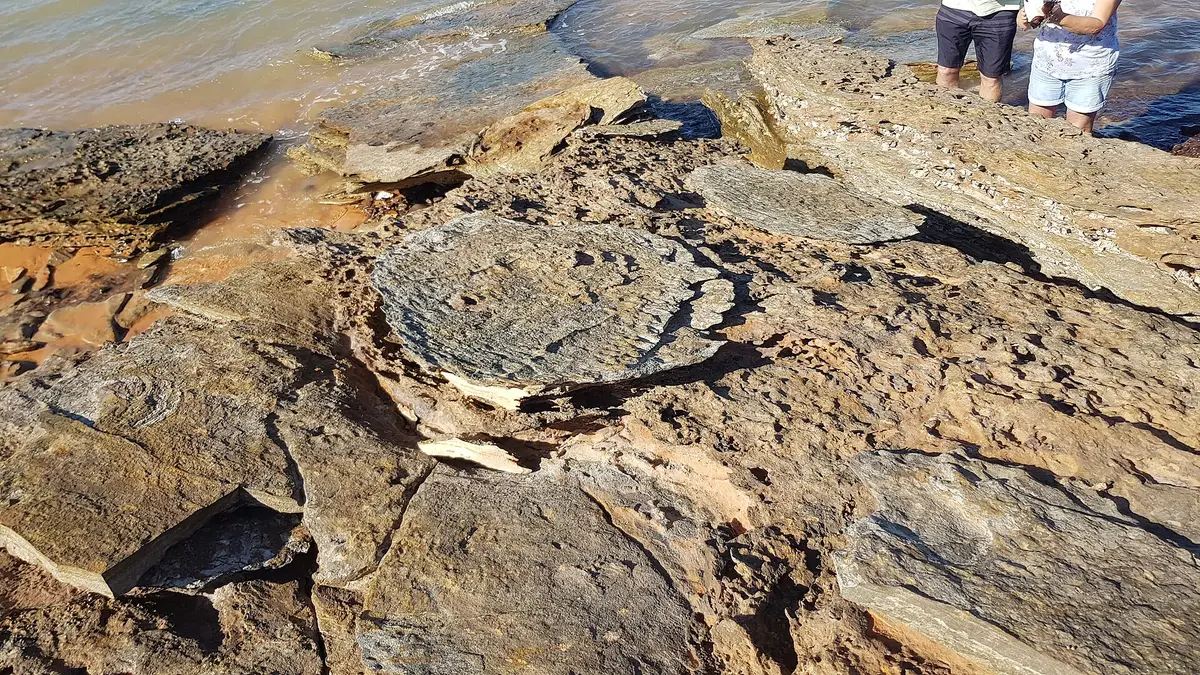
A huge round sauropod footprint in the rocks at the seashore near Broome, Western Australia

Broome, Western Australia

๐Ÿ† The biggest dinosaur footprints ever found

On the rocky coast of the Dampier Peninsula, some long-neck footprints are about 1.7 meters (5 ft 7 in) long. A grown-up could lie down inside one! The rocks hold 21 different kinds of dinosaur tracks and only show up at low tide.

Sharp three-toed Eubrontes dinosaur footprints in reddish rock at Dinosaur State Park, Connecticut

Dinosaur State Park, Connecticut, USA

๐Ÿ† Found by a bulldozer

In 1966 a bulldozer driver digging for a new building hit about 2,000 three-toed footprints. Around 500 of them are now shown under a giant dome, and the rest were buried again to keep them safe.

Dewars Farm, England: the โ€œDinosaur Highwayโ€

๐Ÿ† A brand-new discovery

In 2024, a quarry worker in Oxfordshire noticed strange bumps in the rock. More than 100 scientists and volunteers dug them out and found about 200 footprints, 166 million years old, in five long trackways. One trackway runs for more than 150 meters! Four were made by giant long-necks, and one by the sharp-clawed meat-eater Megalosaurus. In one spot the two kinds of tracks cross, and scientists are wondering if the dinosaurs met.

The Mystery of the Dinosaur Chase

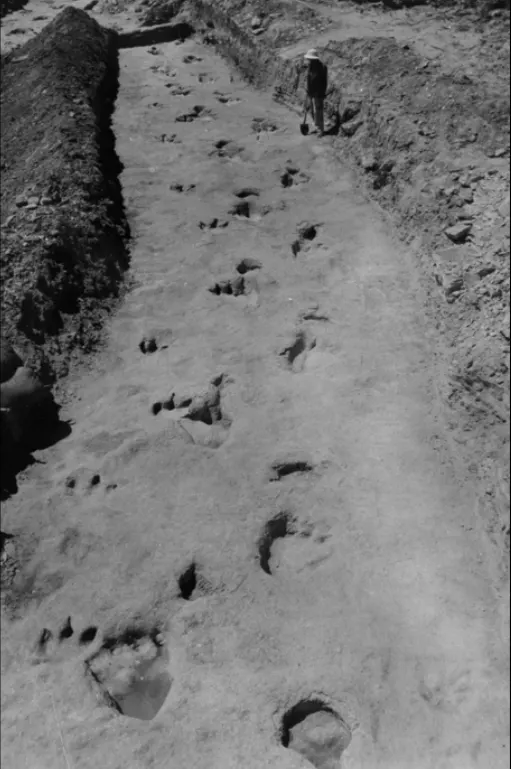
In 1940, a fossil hunter named Roland T. Bird dug out a long trackway from the Paluxy River in Texas. It showed a giant long-neck dinosaur walking along, and right beside it, the three-toed tracks of a big meat-eater going the same way.

Was the meat-eater hunting the long-neck? At one spot, both trackways turn the same way, and the meat-eater seems to skip a step. Some people imagined a pounce! Other scientists think the two may simply have walked the same muddy path at different times.

Nobody knows for sure. That's the fun of footprints: they're clues, and scientists have to be detectives. Part of this trackway is now on show at the American Museum of Natural History in New York.

Old black-and-white photo of a long trackway of big round long-neck footprints and three-toed meat-eater footprints in a riverbed
Roland T. Bird's 1940 photo of the โ€œchaseโ€ trackway. Round long-neck prints and three-toed meat-eater prints walk side by side.

More Wow Footprint Facts

  • ๐ŸŒ Matching footprints on two continents: In 2024, scientists matched dinosaur tracks in Brazil and Cameroon in Africa, now an ocean apart. About 120 million years ago, those two places were joined, so dinosaurs could walk between them!
  • ๐Ÿ” Bird-like tracks: Meat-eater footprints look so much like giant chicken tracks that people in the 1800s thought they were made by huge ancient birds. They weren't totally wrong: birds are dinosaurs!
  • ๐Ÿ๏ธ Scotland's Isle of Skye is full of dinosaur footprints from about 170 million years ago, left by long-necks wading in shallow lagoons.
  • ๐Ÿฆ– T. rex footprints are super rare. Only a few have ever been found, including one in New Mexico and one in Montana, even though we have many T. rex skeletons.

Activity: Make Your Own Fossil Footprint

Turn your kitchen into a dinosaur tracksite:

  1. Mix 1 cup flour, ยฝ cup salt and about ยฝ cup water into a soft dough. This is your โ€œmud.โ€
  2. Flatten it on a tray and walk a toy dinosaur across it, pressing its feet in. Try a running dinosaur with big gaps, and a walking one with small steps.
  3. Let it dry for a day or two (or bake at a low heat with a grown-up) so it turns hard, like real fossil footprints did in the sun.
  4. Swap tracks with a friend and play detective: was the dinosaur walking or running? Three toes or round feet?

Tip for parents: use toys with clear feet, and keep little ones from eating the salty dough. Want more dinosaurs to stomp around? See our best dinosaur toys.

Frequently Asked Questions

How are dinosaur footprints preserved?

A dinosaur stepped in soft mud or sand. The print dried hard in the sun, then got covered by a new layer of sand or mud before it could be washed away. Over millions of years the layers turned into rock. When wind and water wear the top layers away, the footprints show up again.

Where can I see real dinosaur footprints?

Some famous places you can visit are Dinosaur Valley State Park in Texas, Dinosaur State Park in Connecticut, Dinosaur Ridge in Colorado, Lark Quarry in Queensland, Australia, the Cal Orck'o wall near Sucre, Bolivia, and the Isle of Skye in Scotland. Many natural history museums also have footprints on display.

How do scientists know which dinosaur made a footprint?

Usually they can't say the exact species. Instead they look at the shape: three long pointy toes mean a meat-eater (theropod), three short rounded toes mean a plant-eater like a duck-bill, and big round prints mean a long-neck (sauropod). Then they check how old the rock is and which dinosaurs lived nearby at that time.

How do footprints show how fast a dinosaur ran?

Scientists measure the footprint to estimate how tall the dinosaur's hip was (about 4 times the footprint length). Then they compare that to the distance between steps. If the steps are much longer than the leg, the dinosaur was running. Tracks in Spain show one meat-eating dinosaur running about 45 km/h (28 mph).

What is the biggest dinosaur footprint ever found?

The biggest known dinosaur footprints are long-neck (sauropod) prints from near Broome in Western Australia, about 1.7 meters (5 ft 7 in) long. That's taller than many grown-ups!

Where is the most dinosaur footprints in one place?

Carreras Pampa in Torotoro National Park, Bolivia, holds the record. A 2025 study counted more than 16,600 footprints there, plus swim tracks and tail drag marks.

Are dinosaur footprints fossils?

Yes! Footprints are called trace fossils. They aren't part of the dinosaur's body like bones or teeth, but a trace of something it did while it was alive. Nests, eggs and even fossil poop are trace fossils too.

Can footprints show dinosaurs living together?

Yes. When scientists find many trackways running side by side in the same direction, it suggests the dinosaurs traveled as a group. Long-neck dinosaur trackways in Texas and elsewhere show herds, sometimes with young ones walking in the middle.

Keep exploring: meet the types of dinosaurs, find out when dinosaurs went extinct, or print a free dinosaur coloring page.

Image credits (via Wikimedia Commons): Paluxy River tracks with person for scale by Tom Dill (CC BY 2.0); Torotoro trackway by Havardtl (CC BY 4.0); Cal Orck'o wall by John Martin Perry (CC BY-SA 4.0); Lark Quarry footprints by Carole Mackinney (CC0); Broome sauropod footprint by Sixcherries (CC BY-SA 4.0); Dinosaur State Park close-up by Daderot (CC BY-SA 3.0); Government Canyon sauropod trackway by Larry D. Moore (CC BY 4.0); Paluxy River chase trackway, 1940 photo by Roland T. Bird, from Falkingham, Bates & Farlow (2014), PLOS ONE (CC BY 4.0). Images were resized for the web. Footprint shape drawings by Puffsaurus.

Does your little one love dinosaurs? ๐Ÿฆ•

Explore our dinosaur-themed nursery rhymes and kids' songs!