Dive into the prehistoric seas with the water dinosaurs! Meet the giant reptiles that ruled the oceans, from long-necked Elasmosaurus to mighty Mosasaurus, and find out which real dinosaurs loved to swim.
✅
Quick Answer
The “aquatic dinosaurs” or “water dinosaurs” most people think of, like Mosasaurus, Elasmosaurus and dolphin-shaped ichthyosaurs, were really sea reptiles that lived at the same time as dinosaurs. They were dinosaur neighbors, not dinosaurs. But some real dinosaurs did love the water, like Spinosaurus, a giant fish-eater with a paddle-shaped tail!
What Were the Aquatic Dinosaurs?
While dinosaurs stomped around on land, the oceans were full of their own giant reptiles. Their great-great-grandparents lived on land, but over millions of years their legs turned into flippers and they made the sea their home. They breathed air, so they swam up to the surface to breathe, just like whales and dolphins do today.
There were four big groups. Mosasaurs were giant sea lizards. Plesiosaurs had long necks and four flippers. Their cousins the pliosaurs had short necks and huge heads. And ichthyosaurs looked like dolphins or sharks. Many of them even gave birth to live babies in the water instead of laying eggs!
Wait, Sea Reptiles Weren't Dinosaurs?
It's okay if you called them dinosaurs. Lots of grown-ups do too! Here's how scientists tell them apart:
🦵
Dinosaurs had legs
Dinosaurs walked on land with their legs straight underneath their bodies. Sea reptiles had flippers for swimming instead.
🦎
Different family branches
Mosasaurs were giant lizards, cousins of today's monitor lizards and snakes. Plesiosaurs and ichthyosaurs were on their own separate branches.
🏘️
Dinosaur neighbors
They lived at the same time as dinosaurs, like neighbors on the same street, but they weren't part of the dinosaur family.
💡 Same in the sky: the flying pterosaurs weren't dinosaurs either. Dinosaurs were land animals!
7 Amazing Sea Reptiles
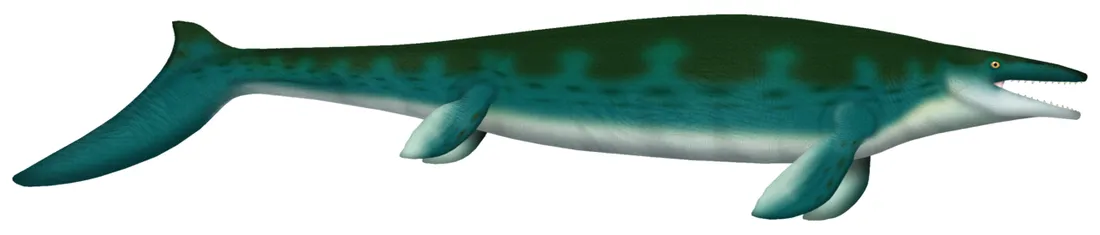
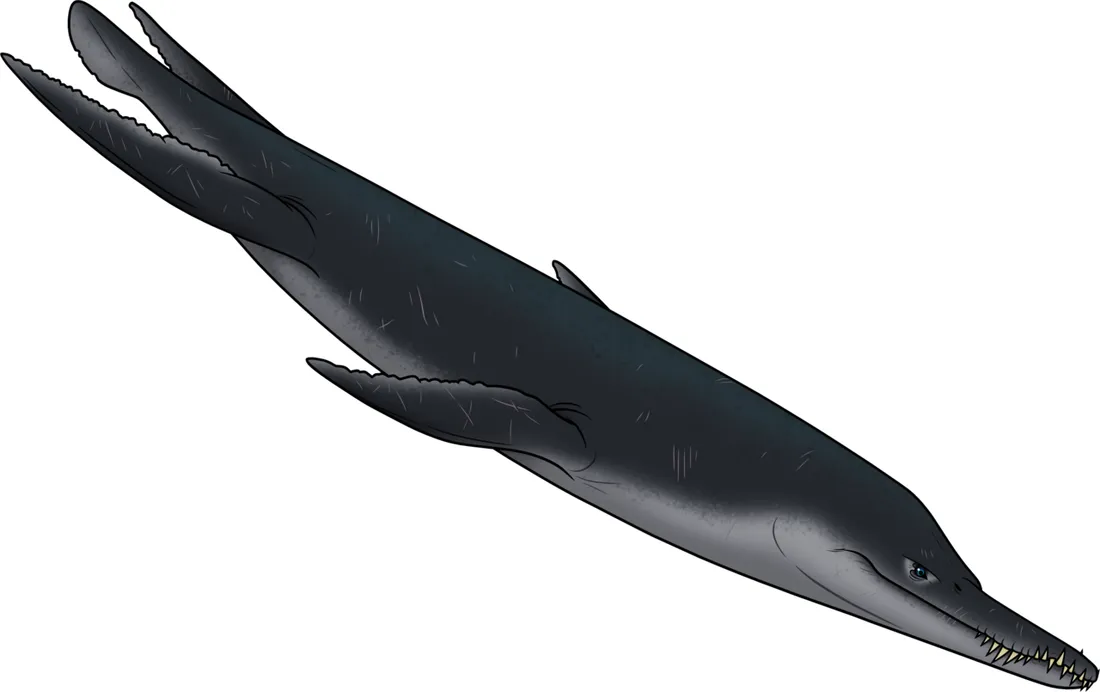
Mosasaur
1. Mosasaurus
Say it: MOH-zah-SORE-us · Means: “Lizard of the Meuse River”
Length
About 40 ft (12 m), as long as a school bus
When
About 70–66 million years ago
Where
Oceans worldwide (first found in the Netherlands)
⭐ The king of the late dinosaur-age seas. It was a giant sea lizard, more closely related to today's monitor lizards and snakes than to T. rex!
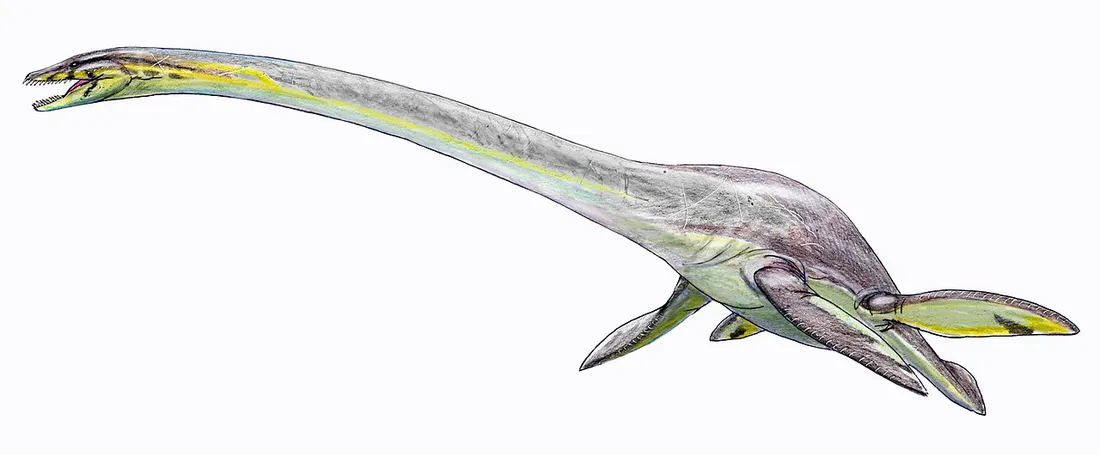
Plesiosaur
2. Elasmosaurus
Say it: eh-LAZ-moh-SORE-us · Means: “Thin-plate lizard”
Length
About 34 ft (10 m)
When
About 80 million years ago
Where
North America (Kansas)
⭐ Its neck was half its whole body, with 72 neck bones (you have 7!). The scientist who first rebuilt it accidentally put the head on the end of the tail.
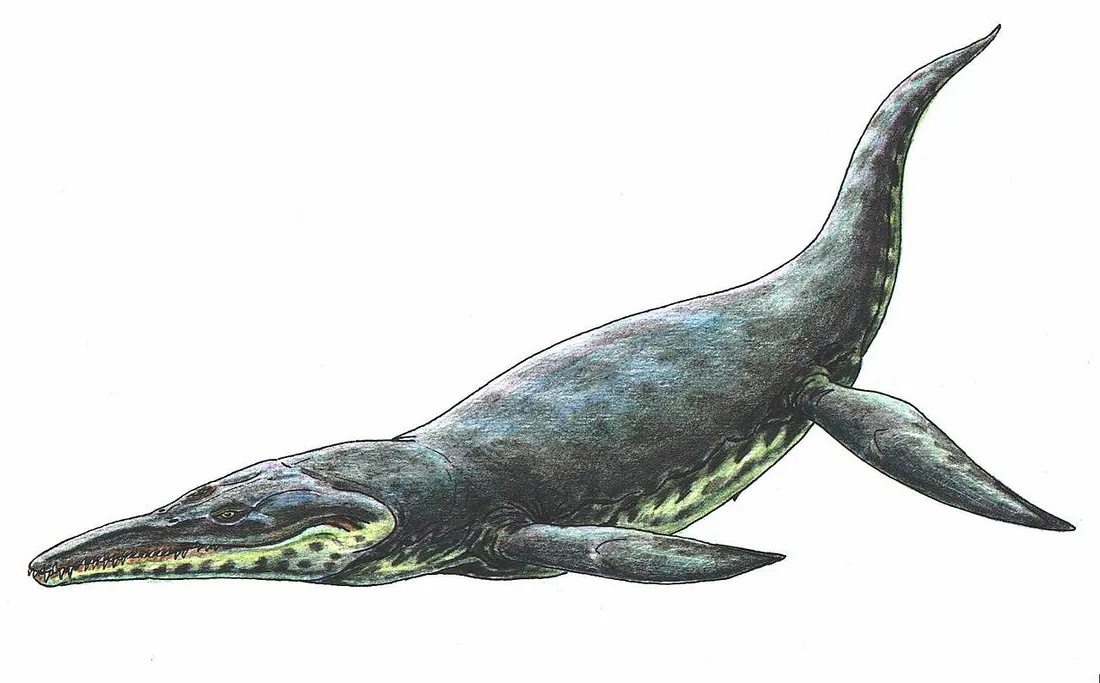
Pliosaur
3. Kronosaurus
Say it: KROH-noh-SORE-us · Means: “Kronos lizard (a giant from Greek myths)”
Length
About 30–33 ft (9–10 m)
When
About 110 million years ago
Where
Australia (Queensland)
⭐ A short-necked cousin of the plesiosaurs with a gigantic head. Its skull was longer than a grown-up is tall, full of big cone-shaped teeth.
Pliosaur
4. Liopleurodon
Say it: LYE-oh-PLOOR-oh-don · Means: “Smooth-sided tooth”
Length
About 20–23 ft (6–7 m)
When
About 165 million years ago
Where
Europe (England and France)
⭐ A TV show once made it look 80 feet long, but real fossils show it was about the size of a killer whale. Still a fearsome hunter!
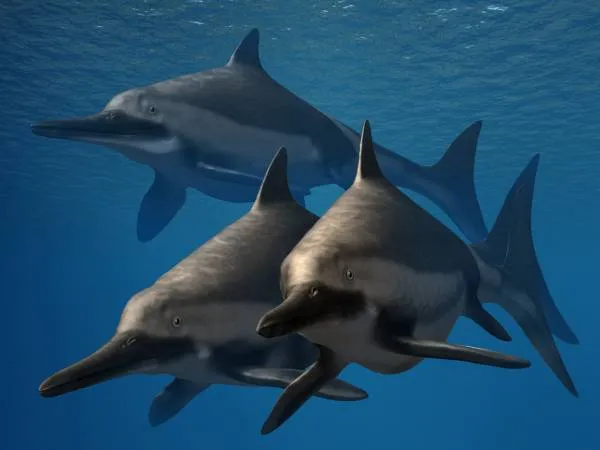
Ichthyosaur
5. Ichthyosaurus
Say it: IK-thee-oh-SORE-us · Means: “Fish lizard”
Length
About 6.5 ft (2 m)
When
About 200 million years ago
Where
Europe (England)
⭐ Shaped just like a dolphin, with huge eyes for seeing in the dark sea. A girl named Mary Anning helped find one of the first skeletons when she was about 12!
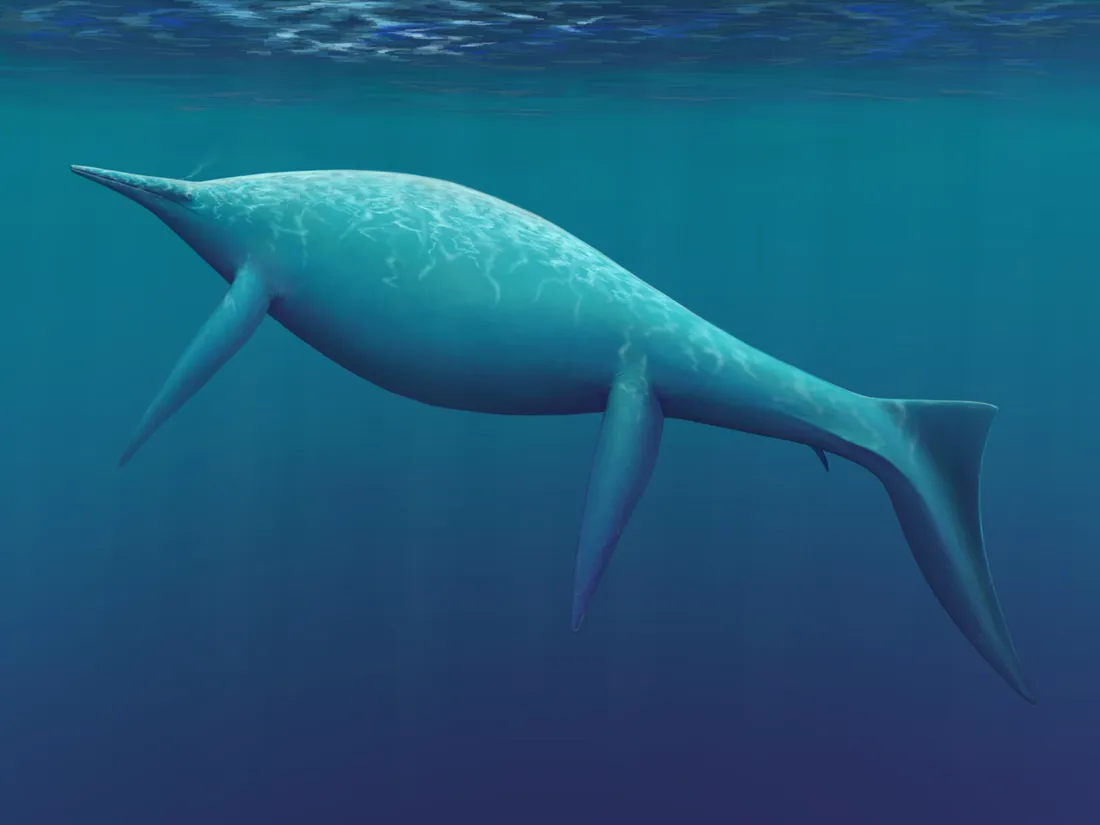
Ichthyosaur
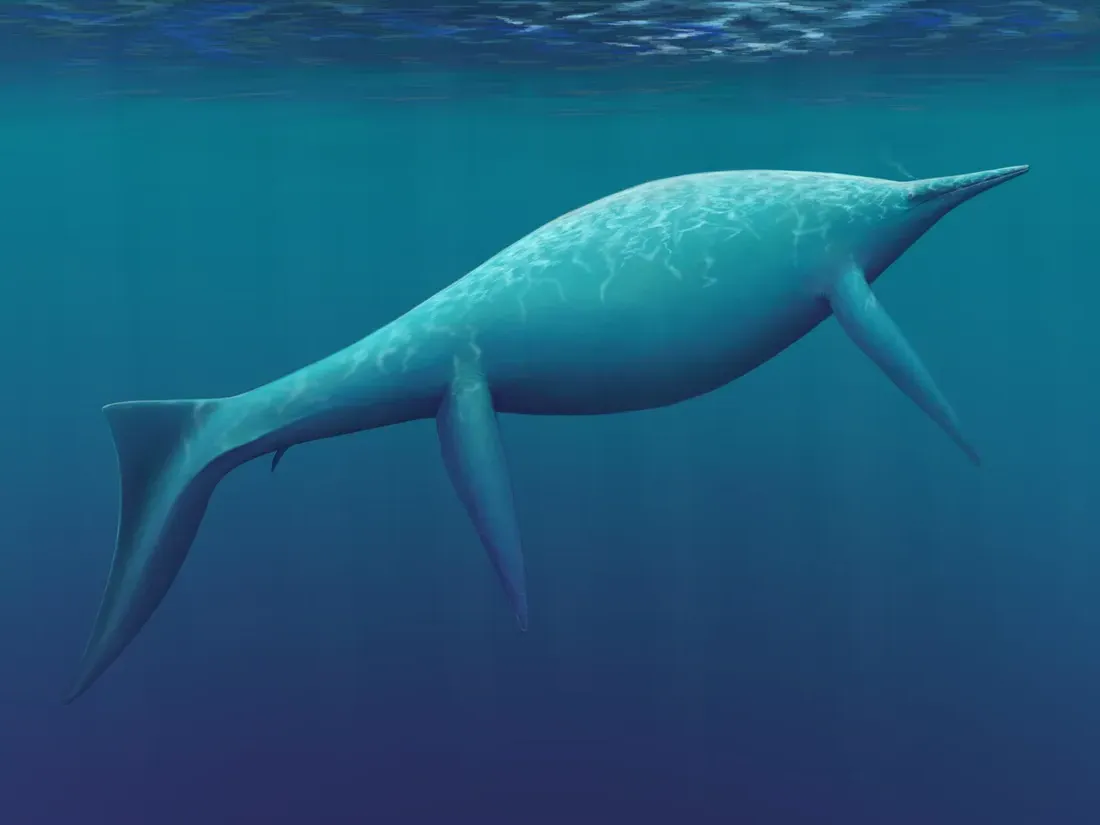
6. Shonisaurus
Say it: SHOH-nee-SORE-us · Means: “Shoshone Mountains lizard”
Length
About 50 ft (15 m)
When
About 215 million years ago
Where
North America (Nevada)
⭐ A whale-sized ichthyosaur and the official state fossil of Nevada. It lived even before most of the famous dinosaurs!
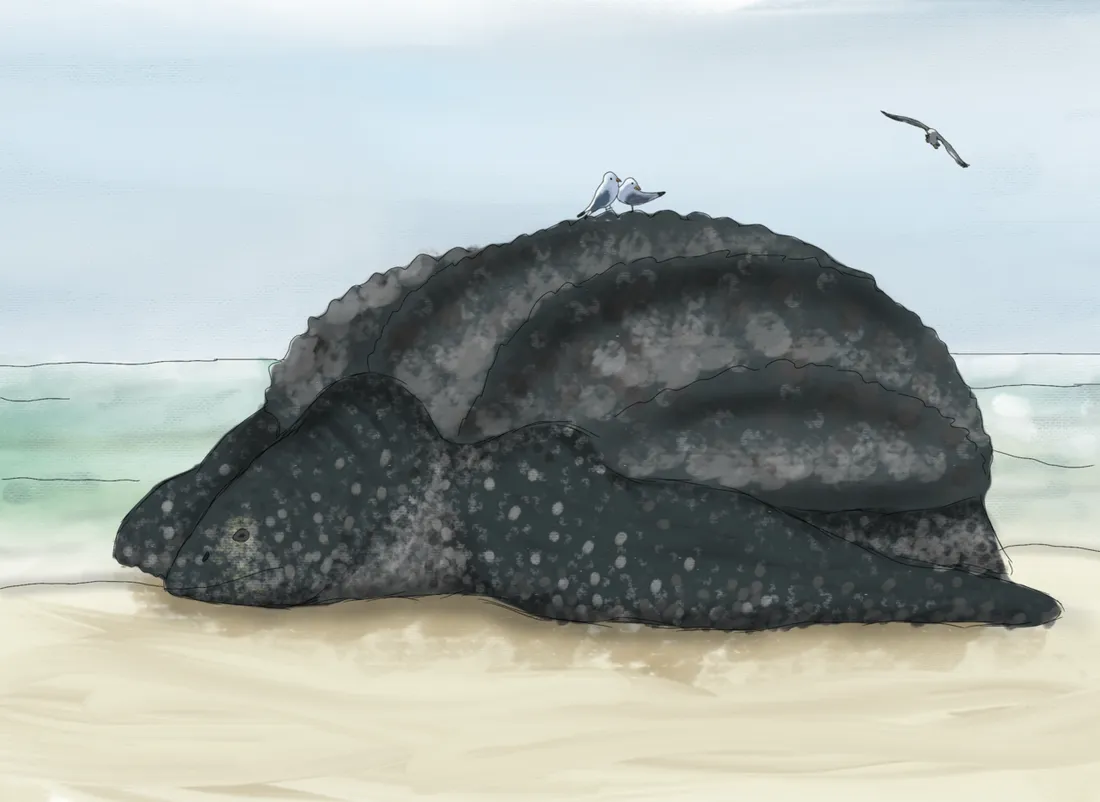
Sea turtle
7. Archelon
Say it: AR-keh-lon · Means: “Ruler turtle”
Length
About 15 ft (4.6 m), as long as a car
When
About 75 million years ago
Where
North America (South Dakota)
⭐ The biggest sea turtle ever found. Its shell was leathery, a bit like today's leatherback turtle, which is its living relative.
Real Aquatic Dinosaurs That Could Swim
Most dinosaurs stayed on dry land, but a few loved the water. They waded in rivers, snapped up fish, and some even dived! Scientists are still learning how well each one swam, which makes these some of the most exciting dinosaur discoveries today.
Spinosaur
1. Spinosaurus
Say it: SPY-noh-SORE-us · Means: “Spine lizard”
Length
About 46–50 ft (14–15 m), longer than T. rex
When
About 95 million years ago
Where
North Africa (Morocco and Egypt)
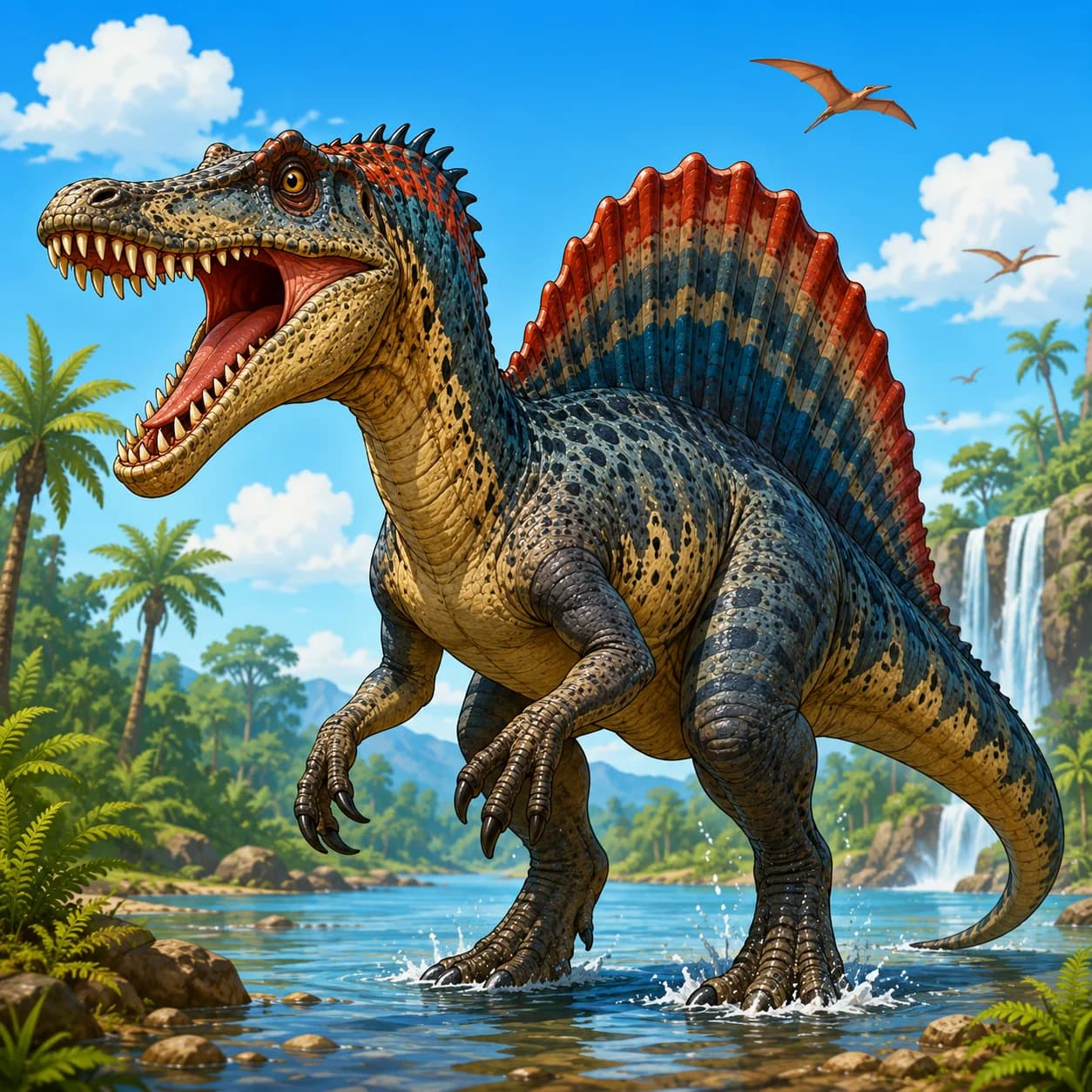
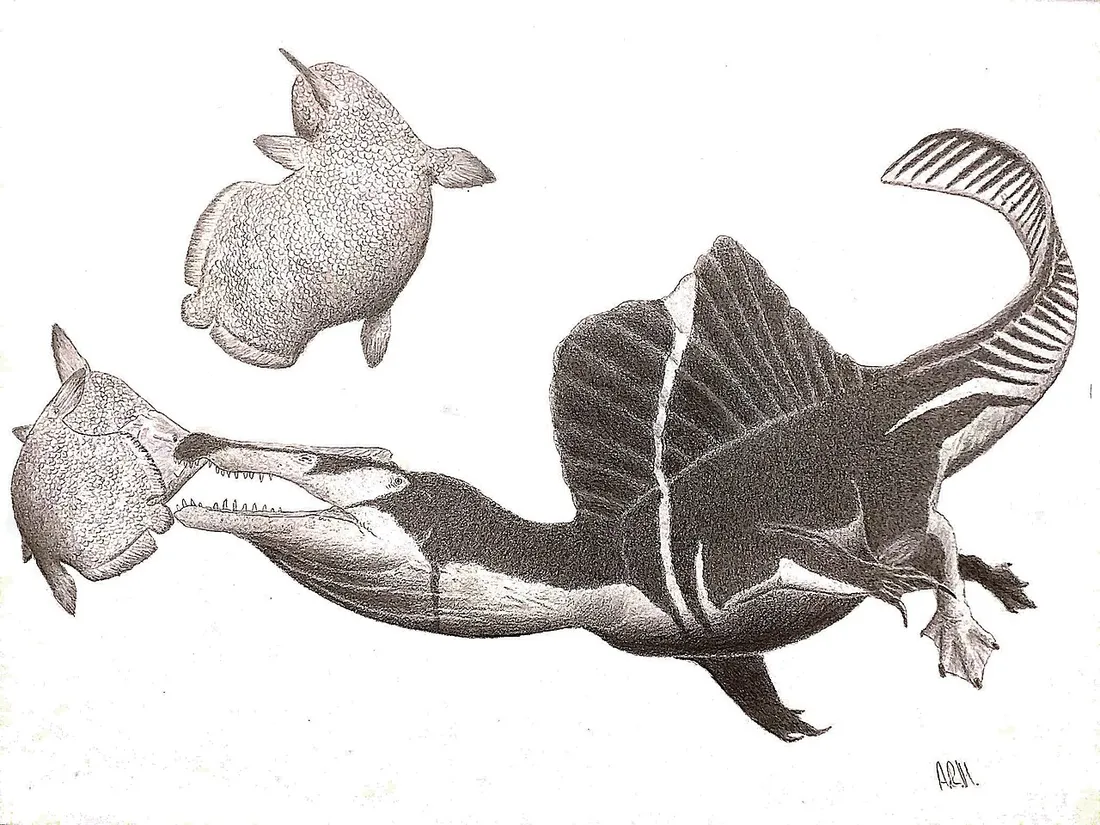
⭐ The most famous swimming dinosaur! It had a paddle-shaped tail, heavy bones for sinking like a hippo, and crocodile-like jaws for grabbing giant fish.
Spinosaur
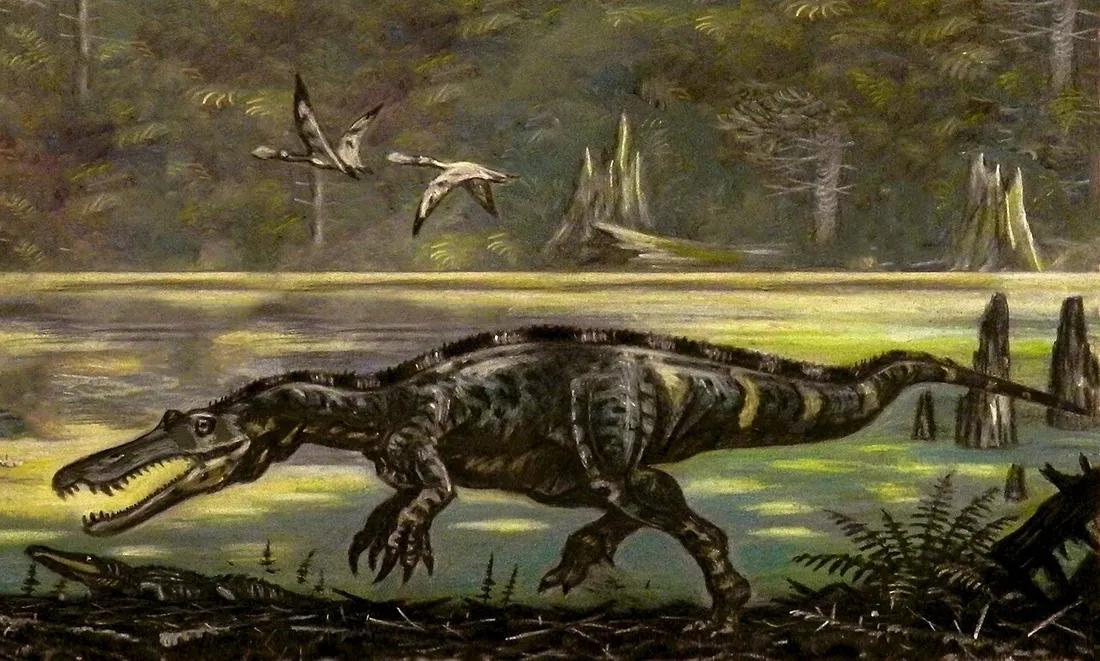
2. Baryonyx
Say it: BAR-ee-ON-ix · Means: “Heavy claw”
Length
About 25–30 ft (7.5–9 m)
When
About 125 million years ago
Where
Europe (England)
⭐ Scientists found fish scales inside its belly, real proof that this dinosaur ate fish! It had a huge thumb claw, maybe for hooking them out of the water.
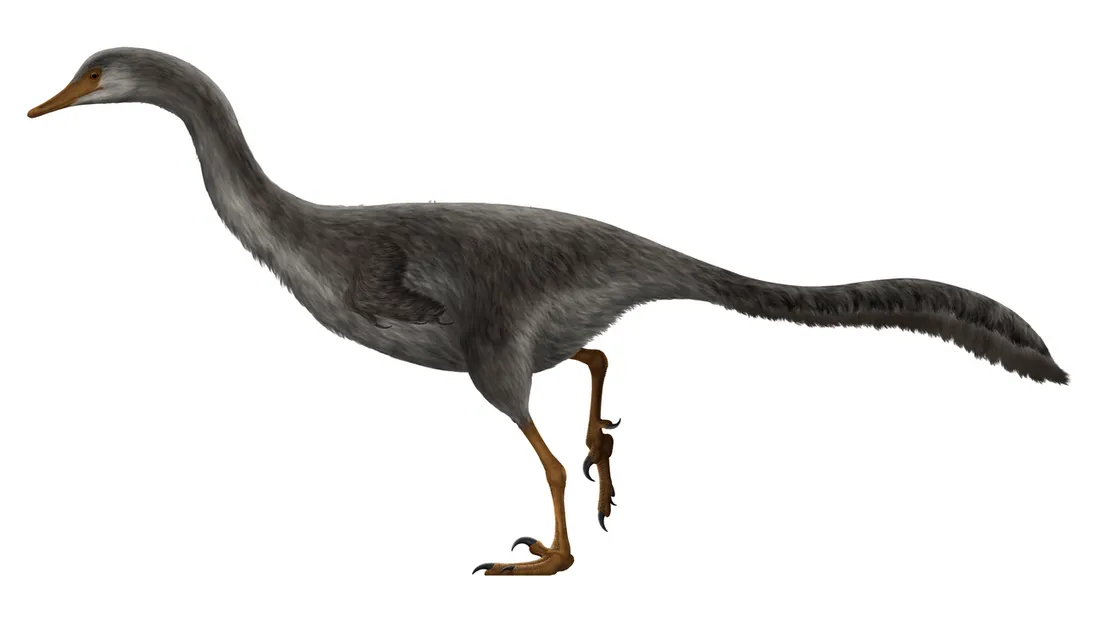
⭐ A little raptor with a swan-like neck and flipper-shaped arms. Scientists think it may have dived after fish a bit like a penguin or a duck.
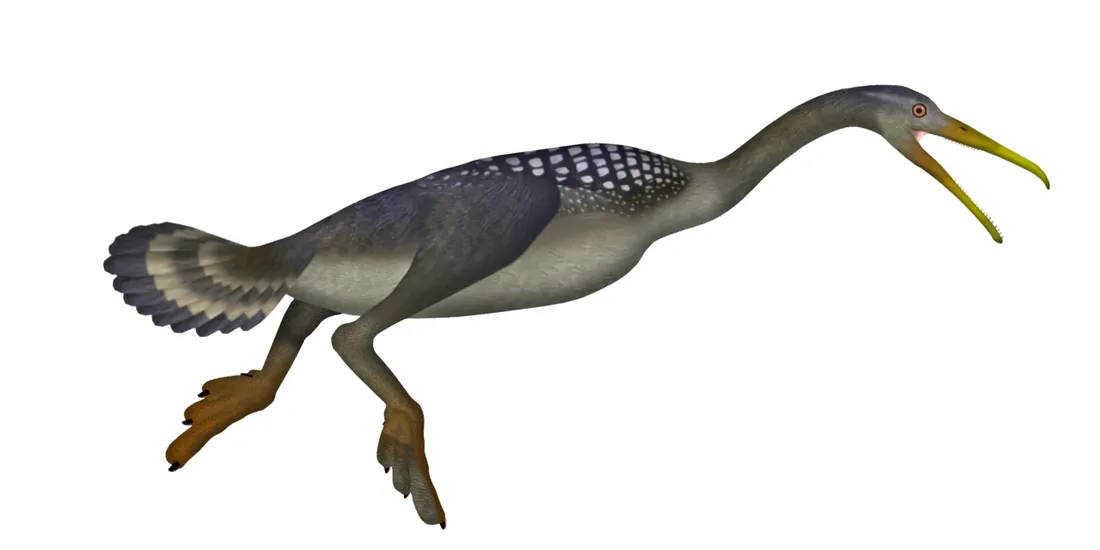
Bird (a living-dinosaur family!)
4. Hesperornis
Say it: HES-per-OR-nis · Means: “Western bird”
Length
About 5–6 ft (1.5–1.8 m)
When
About 85 million years ago
Where
North America (Kansas)
⭐ A diving bird with teeth! It couldn't fly, but it zoomed through the sea using its big feet, like a giant loon. Birds are dinosaurs, so this is a true water dinosaur.
🐧 Water dinosaurs are still here! Penguins, ducks and pelicans are birds, and birds are dinosaurs.
Spinosaurus: The Swimming Giant
🌊 Paddle tail: In 2020, scientists found its tail was tall and flat like a fin, great for pushing through water.
🦛 Heavy bones: Its bones were thick and dense, like a hippo's or a penguin's, which helps an animal stay underwater.
🐊 Crocodile snout: Long jaws and cone-shaped teeth were perfect for grabbing slippery fish, some as big as a car!
🤔 Still a mystery: Some scientists think it was a strong swimmer. Others think it waded like a giant heron. Either way, it loved the water!
How Big Were They?
Here's how long these swimmers were, from nose to tail, compared with a grown-up and a school bus. Sizes are scientists' best estimates.
Halszkaraptor
2 ft
🧍 Grown-up
5.5 ft
Hesperornis
5.5 ft
Ichthyosaurus
6.5 ft
Archelon
15 ft
Liopleurodon
22 ft
Baryonyx
28 ft
Kronosaurus
32 ft
Elasmosaurus
34 ft
Mosasaurus
40 ft
🚌 School bus
40 ft
Spinosaurus
48 ft
Shonisaurus
50 ft
Life in the Prehistoric Ocean
🫁
Breathing air
Sea reptiles had lungs, not gills. Like whales today, they swam up to the surface to take a big breath before diving again.
👶
Babies in the sea
Ichthyosaurs, plesiosaurs and mosasaurs gave birth to live babies right in the water, so they never had to crawl onto land.
🦑
Seafood menu
They ate fish, squid-like animals, ammonites (shellfish with curly shells) and sometimes even each other!
Frequently Asked Questions
What are aquatic dinosaurs called?+
Most of the giant aquatic or “water dinosaurs” were marine reptiles (sea reptiles). The main groups are mosasaurs like Mosasaurus, plesiosaurs like Elasmosaurus, pliosaurs like Kronosaurus, and dolphin-shaped ichthyosaurs. They lived at the same time as dinosaurs but were not dinosaurs themselves.
Was Mosasaurus a dinosaur?+
No. Mosasaurus was a giant sea lizard. Its closest living relatives are monitor lizards and snakes, not dinosaurs. It ruled the oceans at the end of the dinosaur age, about 70 to 66 million years ago.
Why aren't sea reptiles dinosaurs?+
Dinosaurs were land animals that stood with their legs straight underneath their bodies. Sea reptiles had flippers instead of legs and come from different branches of the reptile family tree. Think of them as dinosaur neighbors, not dinosaur family.
Could any dinosaurs swim?+
Yes! Spinosaurus had a paddle-like tail and spent lots of time in rivers catching fish. Baryonyx ate fish, little Halszkaraptor may have dived like a duck, and diving birds like Hesperornis, which are dinosaurs too, swam through ancient seas.
What was the biggest water dinosaur?+
The biggest sea reptiles were giant ichthyosaurs. Shonisaurus grew to about 50 feet (15 meters), and some of its relatives may have been even longer, nearly the size of a blue whale. The biggest swimming true dinosaur was Spinosaurus, at about 46 to 50 feet long.
Are there water dinosaurs alive today?+
The big sea reptiles like Mosasaurus and plesiosaurs all died out 66 million years ago. But some living dinosaurs still swim: water birds like penguins, ducks and pelicans are dinosaurs! And sea turtles, relatives of Archelon, still swim in the oceans today.
Image credits (via Wikimedia Commons): Shonisaurus by Tetori66ma (CC BY 4.0); Mosasaurus by UnexpectedDinoLesson (CC BY 4.0); Elasmosaurus by Dmitry Bogdanov (CC BY-SA 4.0); Kronosaurus by Dmitry Bogdanov (public domain); Liopleurodon by Cody Lake (CC BY 4.0); Ichthyosaurus by Nobu Tamura (CC BY-SA 4.0); Archelon by PaleoEquii (CC BY-SA 4.0); Baryonyx by Andrey Belov (CC BY 3.0); Halszkaraptor by PaleoNeolitic (CC BY 4.0); Hesperornis by TotalDino (CC BY-SA 4.0); swimming Spinosaurus by Antonio Rares Mihaila (CC BY-SA 4.0). Cartoon Spinosaurus by Puffsaurus.
Does your little one love dinosaurs? 🦕
Explore our dinosaur-themed nursery rhymes and kids' songs!