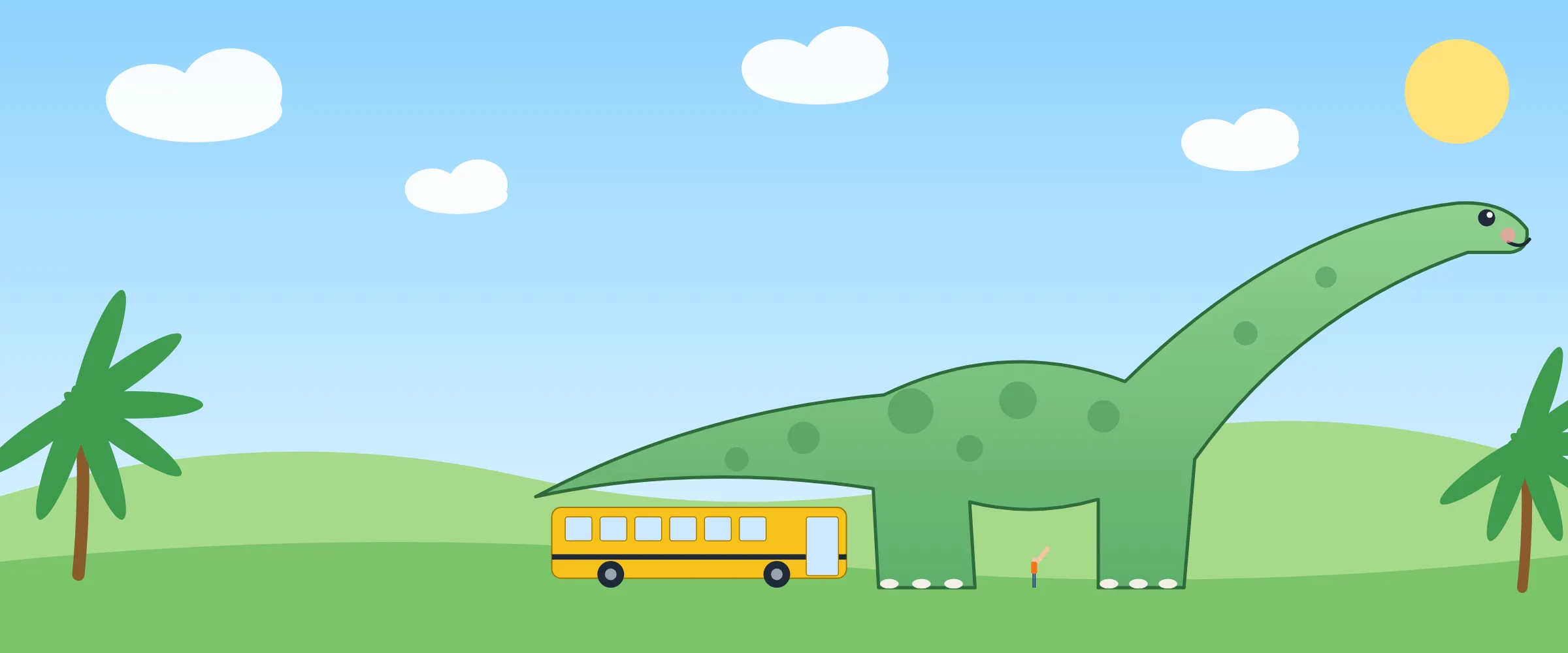
Some dinosaurs were so big that a school bus could park under their tail! Meet the biggest dinosaurs ever found and see how you measure up.
🔍
Quick Answer
The biggest dinosaurs were giant long-necked titanosaurs from South America. Argentinosaurus was probably the heaviest, at about 70 tonnes (as heavy as 10 to 12 elephants), and Patagotitan was about 122 feet long, longer than three school buses. They were the biggest animals ever to walk on land.
Why Is It Hard to Name Just One?
You might think scientists would just measure the biggest skeleton. But giant dinosaurs almost never leave a whole skeleton behind. Here's why the answer keeps changing:
🦴
Only a few bones
Big bodies take a long time to get buried, so most giants are known from just a few bones. Scientists fill in the rest by comparing them with smaller cousins.
⚖️
Biggest how?
The heaviest dinosaur, the longest dinosaur and the tallest dinosaur are three different animals. So “biggest” depends on what you measure.
⛏️
New finds every year
Brachiosaurus was once called the biggest, then Supersaurus, and now the titanosaurs. A bigger giant could be waiting in the ground right now!
The Biggest Dinosaurs Ever Found
🏆 Heaviest dinosaur
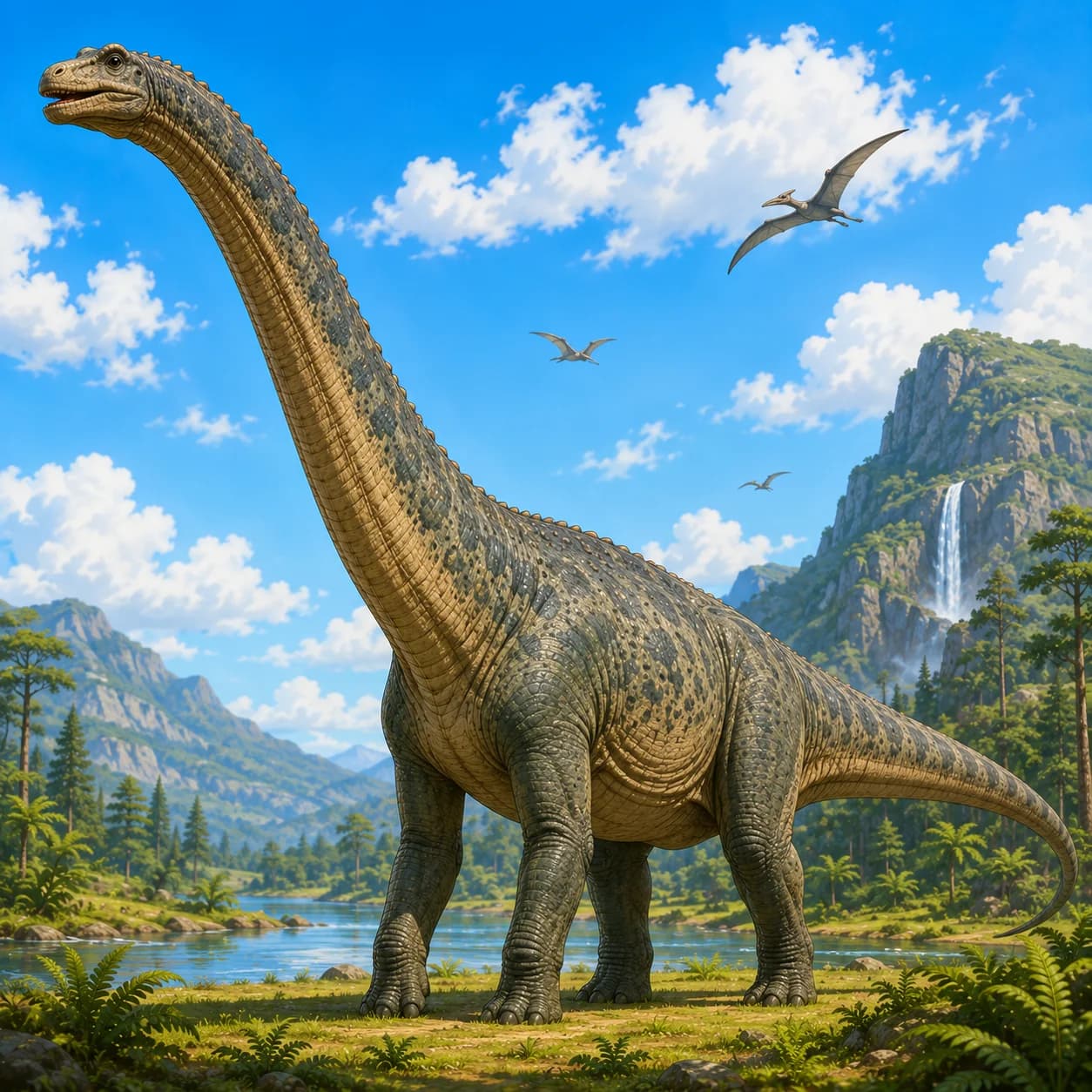
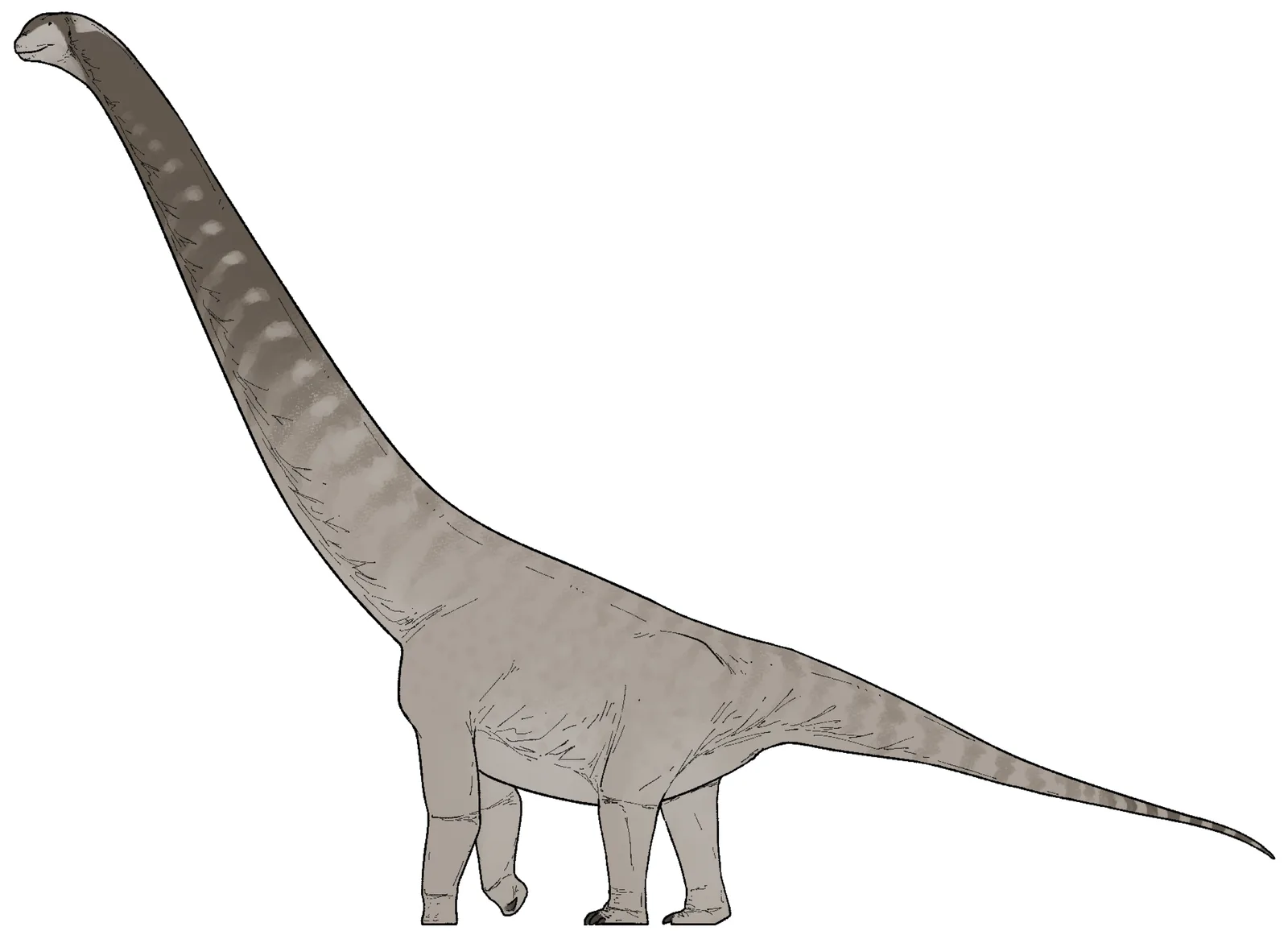
1. Argentinosaurus
Say it: AR-jen-TEEN-oh-SORE-us
🐘 That's like: 10 to 12 elephants on a scale
📏 Length: About 115 feet (35 m)
⚖️ Weight: About 70 tonnes (77 tons), maybe more
🗺️ 95 million years ago, Argentina
⭐ A rancher found one of its giant leg bones in 1987 and thought it was a piece of a fossil tree! Only a few bones have been found, but one of its backbones is about as tall as a grown-up.
📏 Biggest dinosaur we know well
2. Patagotitan
Say it: PAT-ah-go-TIE-tan
🐘 That's like: 9 elephants
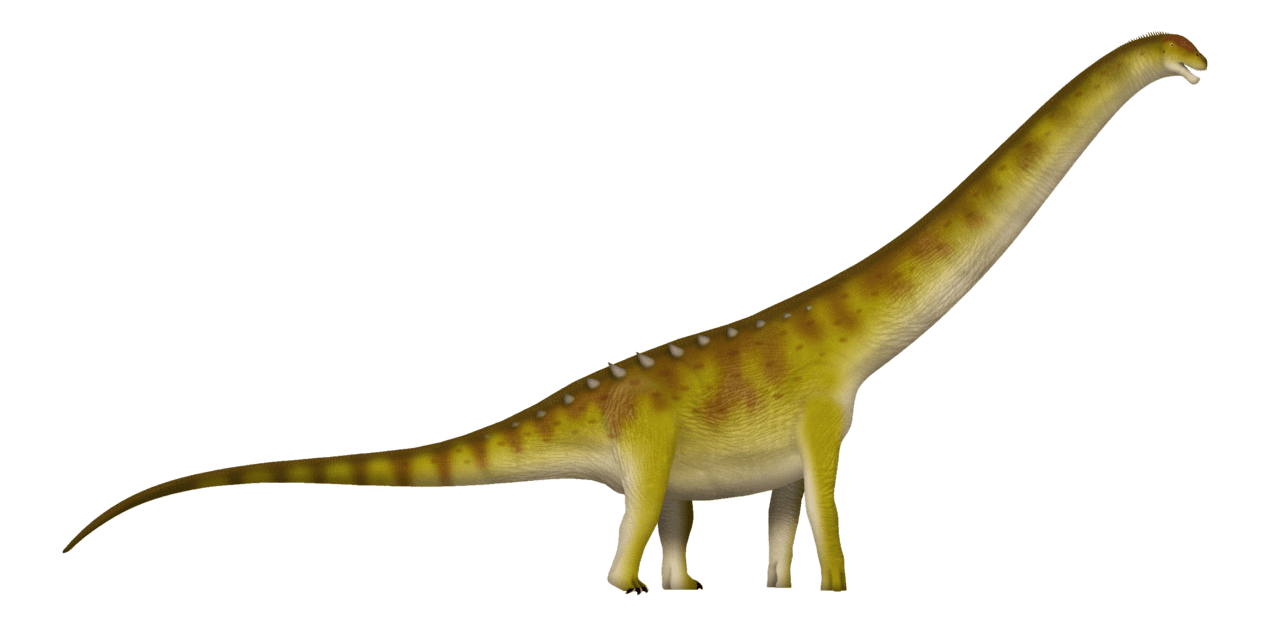
📏 Length: About 122 feet (37 m)
⚖️ Weight: About 57 tonnes (63 tons)
🗺️ 101 million years ago, Argentina
⭐ Scientists dug up bones from six of these giants at one farm. A cast of its skeleton at the American Museum of Natural History in New York is so long that its head pokes out of the room!
🐍 Maybe the longest
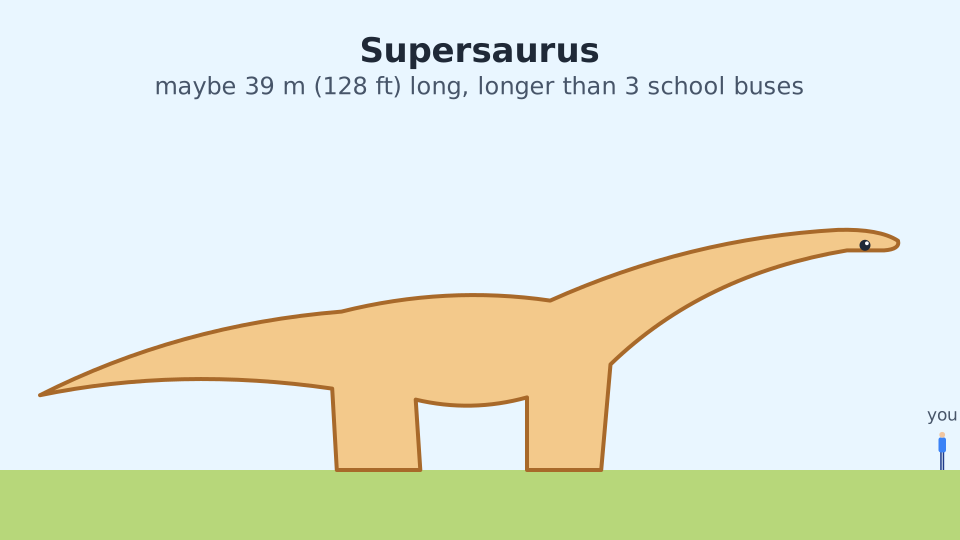
3. Supersaurus
Say it: SOO-per-SORE-us
🐘 That's like: More than 3 school buses in a row
📏 Length: Maybe 128 feet (39 m) or more
⚖️ Weight: About 35 to 40 tonnes
🗺️ 150 million years ago, Colorado and Wyoming, USA
⭐ A long, skinny cousin of Diplodocus. It was lighter than the titanosaurs, but a 2021 study suggests its super-long neck and whip-like tail may have made it the longest dinosaur of all.
❓ The mystery giant
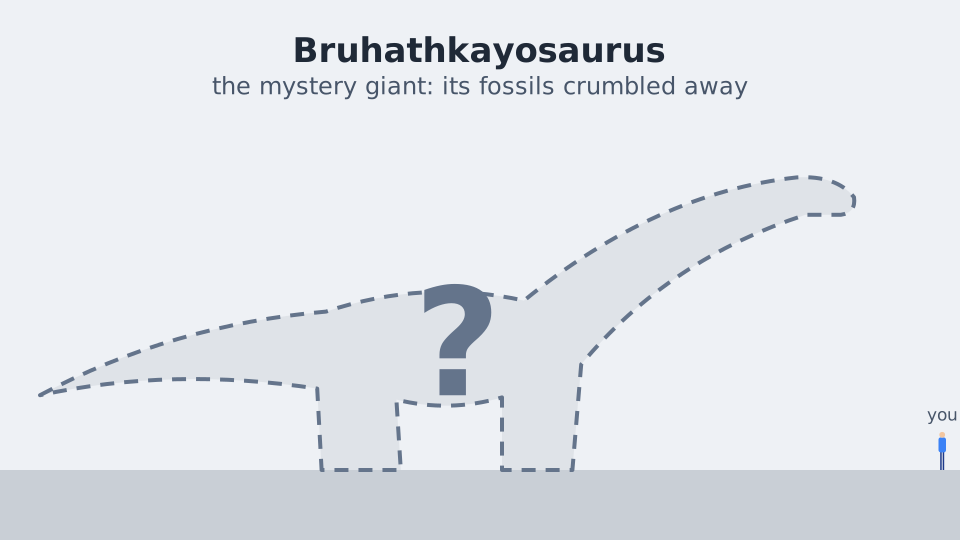
4. Bruhathkayosaurus
Say it: broo-HATH-kay-oh-SORE-us
🐘 That's like: Nobody knows for sure!
📏 Length: Maybe 120 to 145 feet (37 to 45 m)
⚖️ Weight: Guesses go from 30 to over 100 tonnes
🗺️ 70 million years ago, India
⭐ Its name means “huge-body lizard.” If the measurements are right, it could be the biggest dinosaur ever. But its fossils crumbled to pieces before other scientists could study them, so we can't check.
🦒 Tallest dinosaur
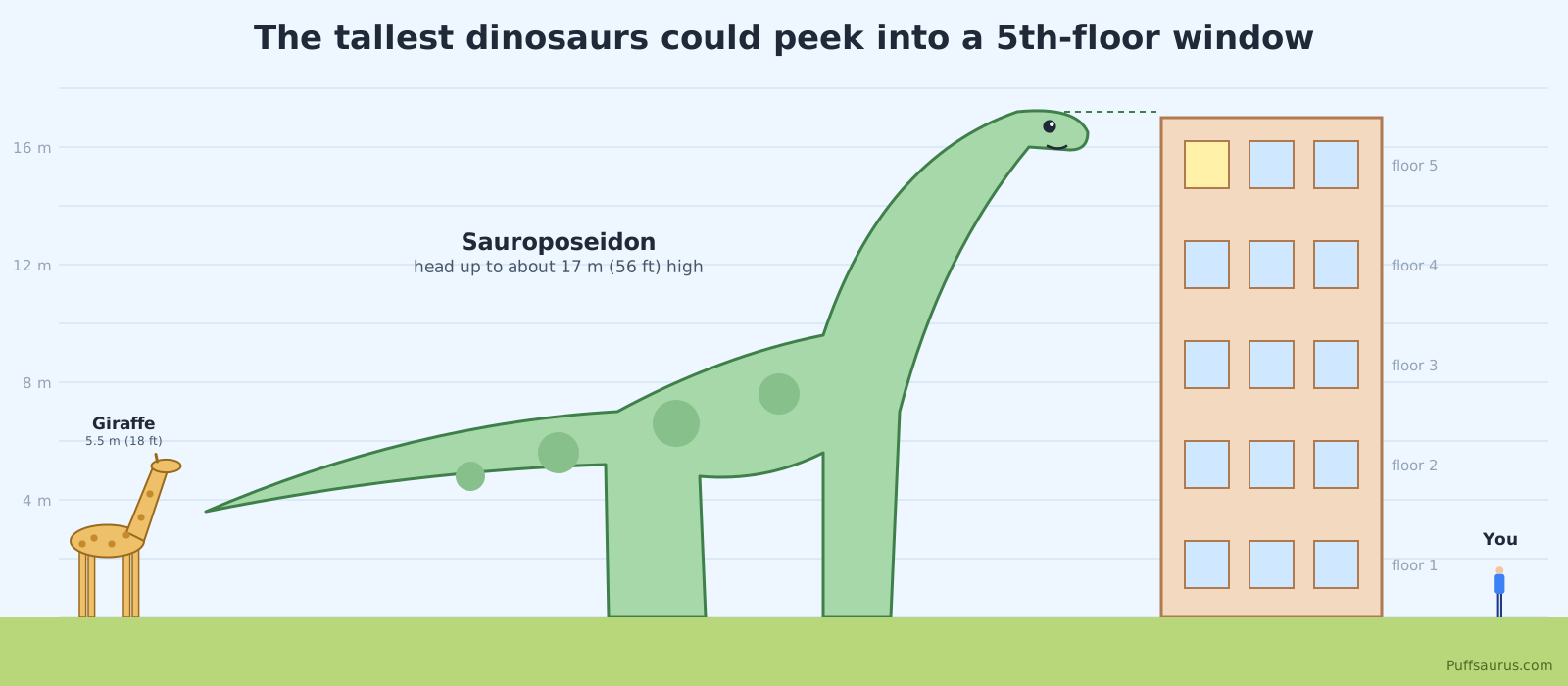
5. Sauroposeidon
Say it: SORE-oh-po-SIDE-on
🐘 That's like: 3 giraffes standing on each other
📏 Length: About 90 to 110 feet (27 to 34 m)
⚖️ Weight: About 40 to 60 tonnes
🗺️ 110 million years ago, Oklahoma and Texas, USA
⭐ When its neck bones were found, they were so big that people first thought they were fossil tree trunks. With its head held up, it could look into a 5th-floor window.
🆕 Brand-new giant
6. Nagatitan
Say it: NAH-gah-TIE-tan
🐘 That's like: 9 Asian elephants
📏 Length: About 89 feet (27 m)
⚖️ Weight: About 27 tonnes
🗺️ 113 million years ago, Thailand
⭐ Announced in 2026, it is the biggest dinosaur ever found in Thailand and Southeast Asia. Its upper arm bone alone is taller than most grown-ups!
Sizes are scientists' best estimates, and different studies give different numbers. 1 tonne is 1,000 kilograms, about 2,200 pounds.
How Big Was the Biggest Dinosaur Next to You?
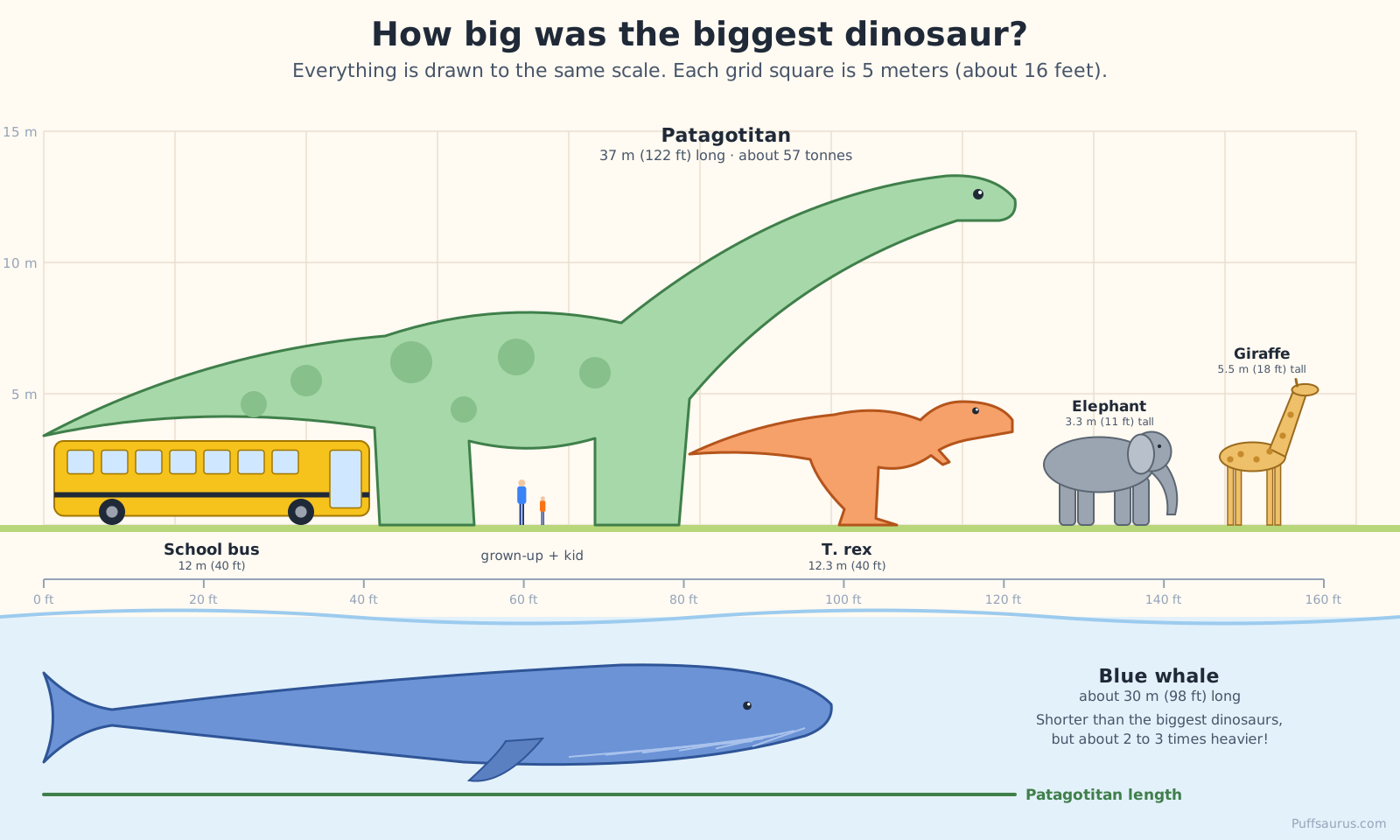
Here is Patagotitan drawn to scale next to a school bus, a T. rex, an elephant, a giraffe and a grown-up with a kid. Can you find the people? They could walk right under its belly!
Try it at home: a big step is about 2½ feet. Patagotitan was about 50 big steps long from nose to tail. Count them out at the park!
Dinosaur Size Records
⚖️
Heaviest
Argentinosaurus
About 70 tonnes, as heavy as 10 to 12 elephants.
📏
Longest
Supersaurus or Patagotitan
About 122 to 128 feet long. That's longer than a basketball court!
🦒
Tallest
Sauroposeidon
Could lift its head about 56 feet (17 m) off the ground.
🦕
Longest neck
Mamenchisaurus
Its neck was about 49 feet (15 m) long, longer than a school bus. That's the longest neck of any animal ever.
🦖
Biggest meat-eater
Spinosaurus
About 46 feet (14 m) long, even longer than T. rex.
Was the Biggest Dinosaur Bigger Than a Blue Whale?
Longer? Yes. A blue whale grows to about 98 feet (30 m). Patagotitan, Argentinosaurus and Supersaurus were all longer than that, mostly thanks to their long necks and tails.
Heavier? No way! A big blue whale can weigh more than 150 tonnes, two to three times as much as the heaviest dinosaur. Water holds up its huge body. On land, a giant has to carry all its weight on its legs, so there's a limit to how heavy it can get.
That makes the blue whale the biggest animal that has ever lived, and the titanosaurs the biggest animals ever to walk on land.
How Did Dinosaurs Get So Big?
🫁 Bones full of air. Like birds, long-necks had air pockets inside their bones, which made their giant necks much lighter.
🌿 No chewing. They gulped plants down whole and let their giant tummies do the work, so they could eat all day without stopping.
🦕 A long neck reaches lots of food. Standing in one spot, they could sweep their heads around and eat a whole patch of plants without taking a step.
🥚 Small eggs, fast growing. Even the biggest giants hatched from eggs no bigger than a soccer ball, then grew super fast, sometimes gaining several pounds a day.
Length: Scientists measure the bones they have, then use a more complete skeleton of a close cousin to figure out the missing parts. If a giant's thigh bone is twice as long as its cousin's, the whole animal was probably about twice as long too.
Weight: Thick legs hold up heavy bodies, so measuring around a leg bone gives a clue to weight. Scientists also build 3D computer models of the skeleton, add muscles and skin, and work out how heavy the whole thing would be.
The Biggest of Each Dinosaur Family
The long-necks were the true giants, but every dinosaur family had its own big champion:
Meat-eaters
Spinosaurus
About 46 feet (14 m) long
A giant fish-eater with a tall sail on its back. T. rex and Giganotosaurus were close behind.
Duck-billed dinosaurs
Shantungosaurus
About 50 feet (15 m) long
The biggest plant-eater that wasn't a long-neck, about as heavy as 2 or 3 elephants.
Horned dinosaurs
Triceratops
About 30 feet (9 m) long
Its head, frill and all, was more than 6 feet long, taller than most grown-ups.
Plated dinosaurs
Stegosaurus
About 30 feet (9 m) long
As long as a school bus, with a brain about the size of a lime.
Armored dinosaurs
Ankylosaurus
About 20 to 26 feet (6 to 8 m) long
A walking tank about as heavy as an elephant, with a bony club on its tail.
Birds (extinct)
Elephant bird
About 10 feet (3 m) tall
A giant bird from Madagascar that couldn't fly. It was heavier than a horse and laid the biggest eggs of any dinosaur, bigger than a football.
Curious about the biggest hunters? See how Spinosaurus, T. rex and Giganotosaurus compare on our biggest meat-eating dinosaurs page.
🐝 From giant to teeny-tiny
The heaviest dinosaur weighed as much as about 35 million of the smallest! The smallest dinosaur, the bee hummingbird, weighs less than a penny.
Giant dinosaurs are a great way to practice measuring. Take a long piece of string or a tape measure outside and mark out 122 feet, the length of Patagotitan, then have kids lie down head to toe to see how many of them it takes. It's also a chance to talk about how science works: the “biggest dinosaur” is a best guess from the bones we have, and it changes when new fossils are found.
Frequently Asked Questions
What is the biggest dinosaur ever?+
The biggest dinosaurs were titanosaurs, giant long-necked plant-eaters. Argentinosaurus was probably the heaviest, at about 70 tonnes, and Patagotitan was about 122 feet (37 m) long. Both lived in what is now Argentina about 100 million years ago. Because most giant dinosaurs are known from only a few bones, the winner could change with the next discovery.
What is the biggest dinosaur alive today?+
Birds are dinosaurs, so the biggest dinosaur alive today is the ostrich. It can stand about 9 feet (2.7 m) tall and weigh around 300 pounds (140 kg), and it can run about 40 miles per hour.
Which is bigger, Argentinosaurus or Patagotitan?+
They were about the same length, around 115 to 122 feet. Argentinosaurus was probably heavier, but only a few of its bones have been found. Patagotitan is known from six skeletons, so scientists are more sure about its size. That's why many museums call Patagotitan the biggest dinosaur we know well.
What is the biggest meat-eating dinosaur?+
Spinosaurus was the longest meat-eating dinosaur, at about 46 feet (14 m). Tyrannosaurus rex and Giganotosaurus were about 40 to 43 feet long and may have been just as heavy. Even the biggest meat-eaters were tiny next to the giant long-necks.
Was any dinosaur bigger than a blue whale?+
Some dinosaurs were longer than a blue whale, which grows to about 98 feet (30 m). But no dinosaur was heavier. A big blue whale can weigh over 150 tonnes, two to three times more than the heaviest dinosaur, so the blue whale is the biggest animal that has ever lived.
Was Brachiosaurus the biggest dinosaur?+
For many years, yes! Brachiosaurus, about 85 feet long, was called the biggest dinosaur after it was found in 1900. Since then, scientists have found even bigger long-necks, mostly titanosaurs from South America.
How heavy was the biggest dinosaur in pounds?+
Argentinosaurus weighed about 70 tonnes, which is roughly 154,000 pounds. That's about as much as 10 to 12 African elephants or 40 cars.
Image credits: the hero picture, size charts, Supersaurus and Bruhathkayosaurus drawings and the Argentinosaurus illustration are original Puffsaurus artwork. Via Wikimedia Commons: Patagotitan by UnexpectedDinoLesson (CC BY 4.0); Nagatitan by Connor Ashbridge (CC BY 4.0).
Think big, sing loud! 🦕
Sing along with our dinosaur nursery rhymes and kids' songs, or print a free dinosaur coloring page.