PuffsaurusPuffsaurus
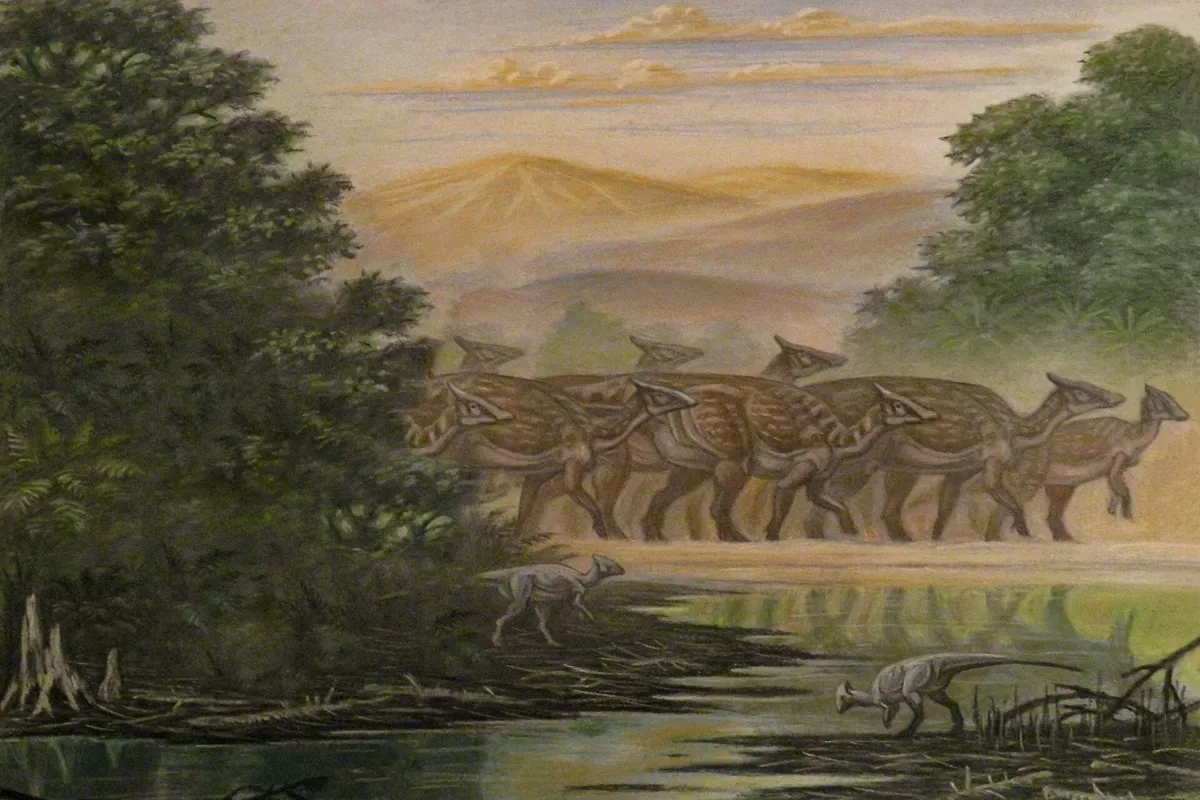
Duck-billed dinosaurs (hadrosaurs) with head crests gathered in a prehistoric landscape
Types of Dinosaurs

Duck-Billed Dinosaurs

Meet the hadrosaurs! These plant-eaters had beaks like a duck, hundreds of teeth, and some wore amazing head crests that honked like trumpets.

Quick Answer

Duck-billed dinosaurs are called hadrosaurs (family Hadrosauridae). They were big plant-eaters with a wide, flat beak like a duck's bill and hundreds of grinding teeth. Many had fancy head crests they used to honk and show off. They lived about 100 to 66 million years ago, and famous ones include Parasaurolophus, Edmontosaurus and Maiasaura.

What Is a Duck-Billed Dinosaur?

Duck-billed dinosaurs, or hadrosaurs (say HAD-roh-sores), were one of the most common kinds of dinosaurs at the end of the dinosaur age. Scientists have found so many of their bones, eggs, footprints and even skin that we know more about them than almost any other dinosaur!

They were herbivores, which means they ate plants. Most were about as long as a bus and walked on all fours while they munched, but they could rise up on their strong back legs to run away from danger. Their family name comes from Hadrosaurus, one of the first dinosaur skeletons ever dug up, way back in 1858 in New Jersey.

Hadrosaurs lived all over the world, in North America, Asia, Europe, South America and even Antarctica. Their older cousin Iguanodon had a beak too, but hadrosaurs took the duck-bill look to a whole new level.

How to Spot a Duck-Billed Dinosaur

A duck bill

A wide, flat, toothless beak at the front for snipping leaves and twigs, like a pair of garden clippers.

Hundreds of teeth

Rows and rows of teeth in the back of the jaws ground plants into mush. New teeth grew in as old ones wore out.

Head crests

Many had crests of bone on their heads: tubes, helmets, hatchets and spikes. Some were hollow and made sounds.

Two legs or four

Strong back legs and smaller front legs with hoof-like fingers. They walked on four legs and ran on two.

Crested or Flat-Headed? The Two Hadrosaur Groups

Lambeosaurines: the hollow crests

These hadrosaurs had big, hollow crests with twisty air tubes inside that connected to their noses. Think Parasaurolophus, Corythosaurus and Lambeosaurus. They were the trumpet players of the dinosaur world!

Saurolophines: flat heads and solid crests

These hadrosaurs had flatter heads, or small solid crests made of bone, and often the widest duck bills. Think Edmontosaurus, Maiasaura and Saurolophus. Some may have had floppy skin on their noses for calling out.

10 Duck-Billed Dinosaur Names

Here are 10 of the most famous hadrosaurs, with how to say their names and what the names mean.

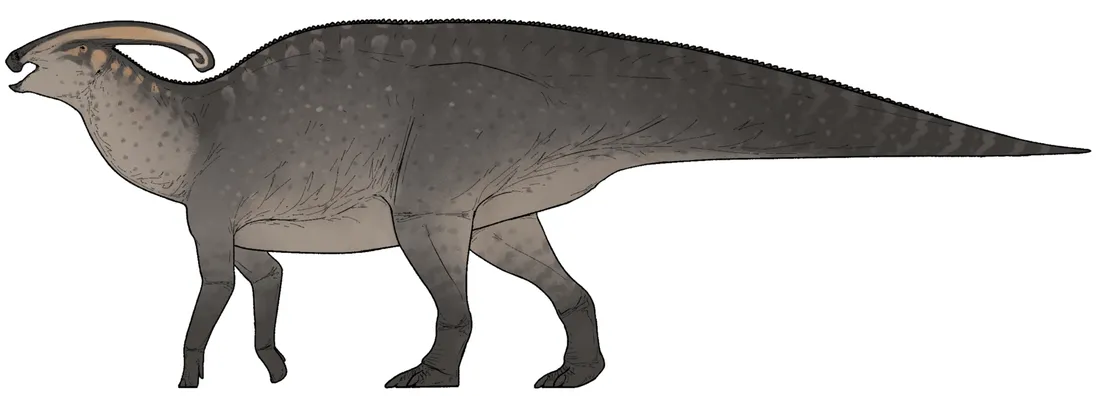
Parasaurolophus, a duck-billed dinosaur with a long tube-shaped crest sweeping back from its head

Hollow crest

1. Parasaurolophus

Say it: PAR-ah-SORE-oh-LOAF-us ยท Means: โ€œNear crested lizardโ€

Length
About 31 ft (9.5 m)
When
About 76โ€“73 million years ago
Where
North America (Canada, Utah, New Mexico)

โญ Its long, hollow head crest worked like a trombone. Air blowing through the tubes inside made a deep, booming honk that could carry a long way!

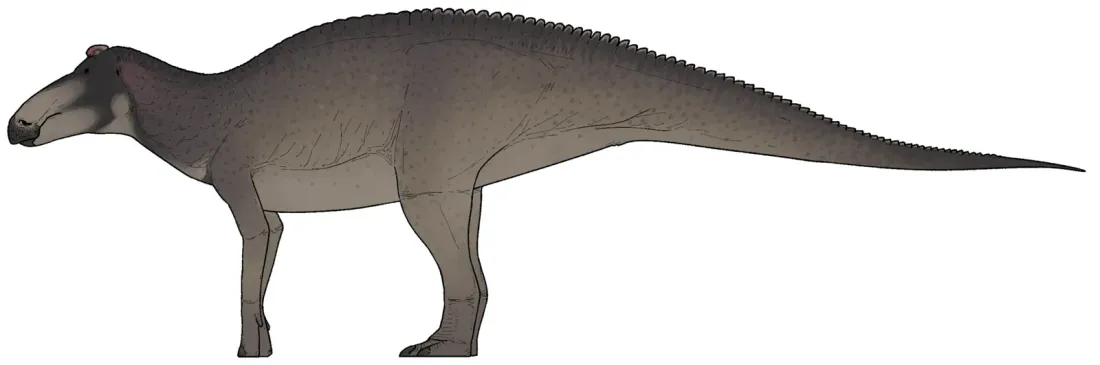
Life restoration of Edmontosaurus, a big duck-billed dinosaur with a wide flat beak

Flat head

2. Edmontosaurus

Say it: ed-MON-toe-SORE-us ยท Means: โ€œEdmonton lizardโ€

Length
About 40 ft (12 m), as long as a school bus
When
About 68โ€“66 million years ago
Where
North America (Canada and the USA)

โญ One of the last and biggest duck-bills, and a neighbor of T. rex. Some fossils are 'mummies' with skin still preserved!

Read all about Edmontosaurus โ†’
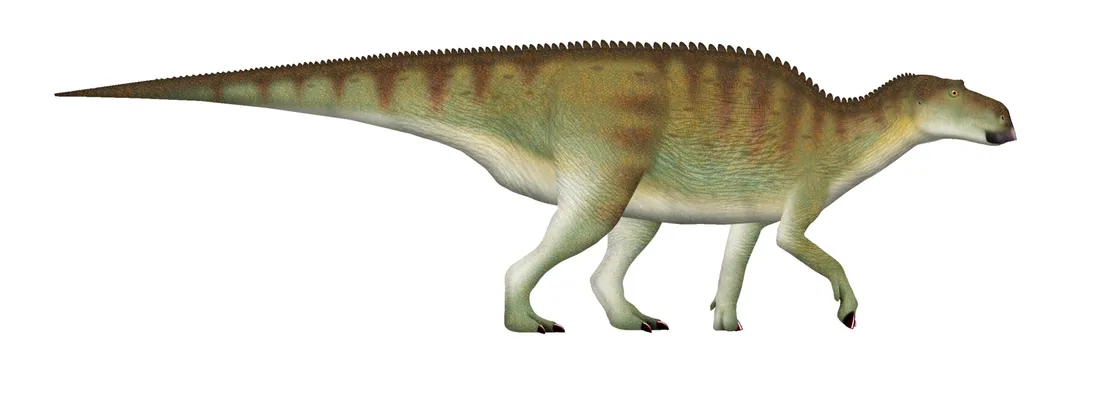
Illustration of Maiasaura, a duck-billed dinosaur standing on four legs

Flat head

3. Maiasaura

Say it: MY-ah-SORE-ah ยท Means: โ€œGood mother lizardโ€

Length
About 30 ft (9 m)
When
About 76 million years ago
Where
North America (Montana)

โญ Found with nests full of eggs and babies, so scientists think the parents cared for their young. A piece of Maiasaura bone even flew into space in 1985!

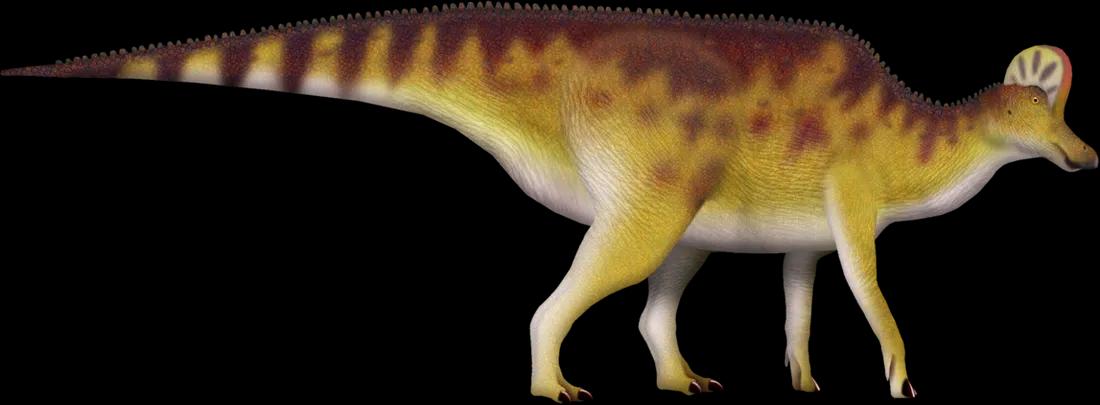
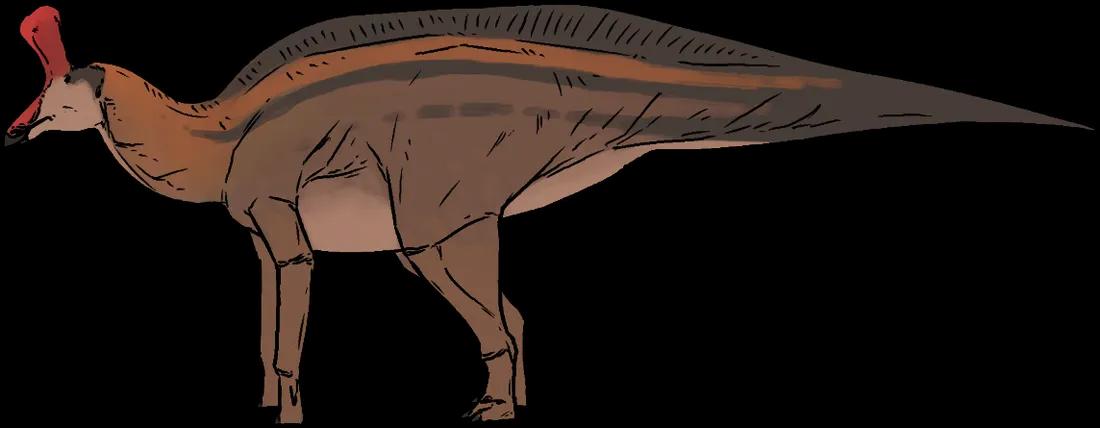
Corythosaurus, a duck-billed dinosaur with a tall rounded crest shaped like a helmet

Hollow crest

4. Corythosaurus

Say it: koh-RITH-oh-SORE-us ยท Means: โ€œHelmet lizardโ€

Length
About 30 ft (9 m)
When
About 77โ€“75 million years ago
Where
North America (Alberta, Canada)

โญ Its tall, round crest looks like the helmet of an ancient Greek soldier. Fossils with skin show it was covered in small, bumpy scales.

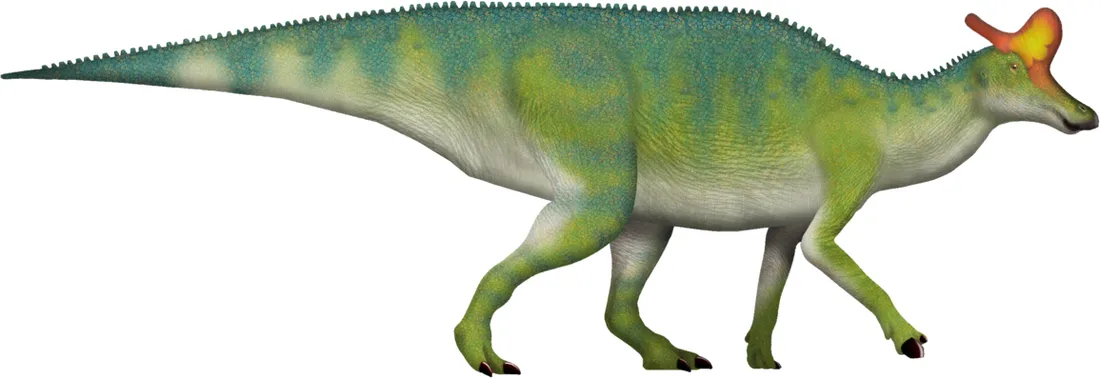
Lambeosaurus, a duck-billed dinosaur with a hatchet-shaped crest on its head

Hollow crest

5. Lambeosaurus

Say it: LAM-bee-oh-SORE-us ยท Means: โ€œLambe's lizard (after scientist Lawrence Lambe)โ€

Length
About 30 ft (9 m)
When
About 76โ€“75 million years ago
Where
North America (Alberta, Canada)

โญ Its crest was shaped like a hatchet, with a big front part and a spike pointing backward. Babies had tiny crests that grew as they got older.

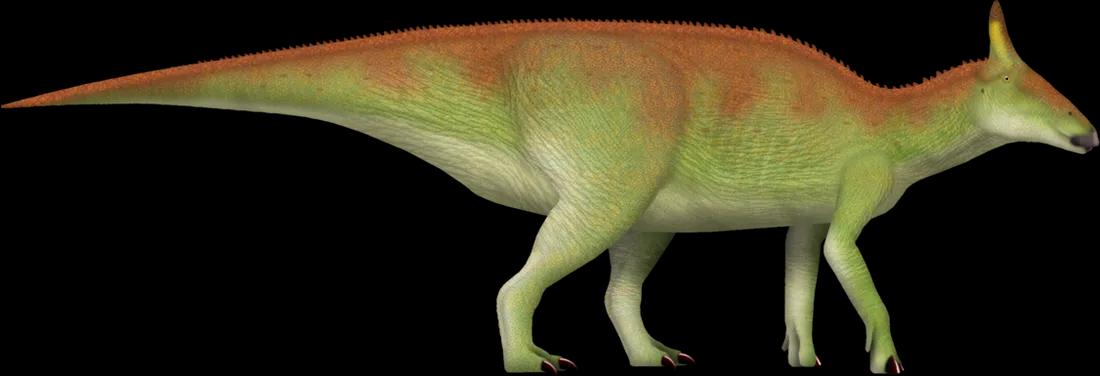
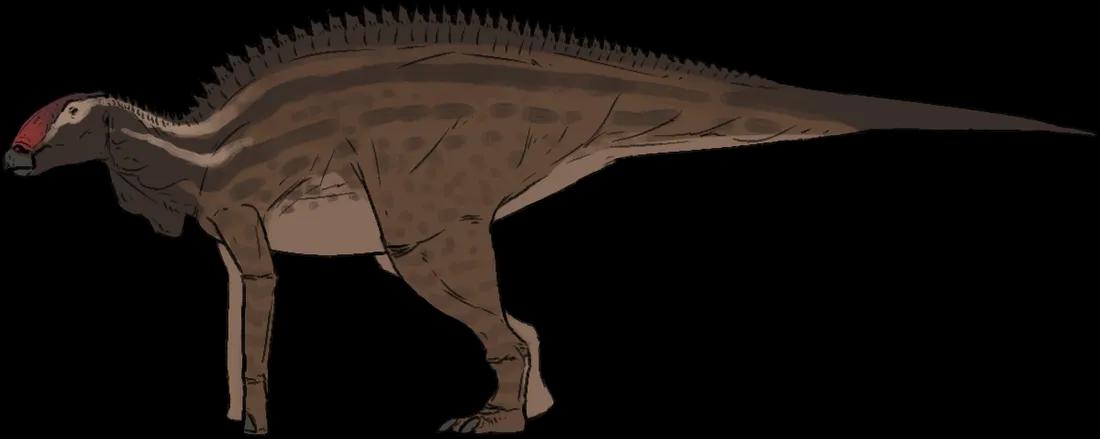
Saurolophus, a duck-billed dinosaur with a solid spike-shaped crest pointing back from its head

Solid crest

6. Saurolophus

Say it: SORE-oh-LOAF-us ยท Means: โ€œRidged lizardโ€

Length
About 33โ€“40 ft (10โ€“12 m)
When
About 70โ€“68 million years ago
Where
North America (Canada) and Asia (Mongolia)

โญ One of the only dinosaurs found on two continents! Its crest was a solid spike of bone, and it may have puffed up a balloon of skin on its nose to call out.

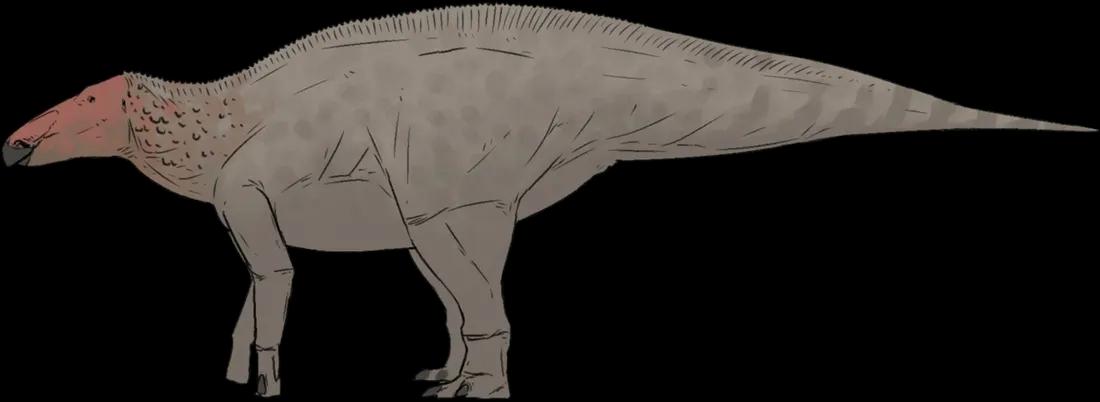
Shantungosaurus, a giant duck-billed dinosaur walking on four legs

Flat head

7. Shantungosaurus

Say it: shan-TUNG-oh-SORE-us ยท Means: โ€œShandong lizardโ€

Length
About 50 ft (15 m), longer than a school bus
When
About 72 million years ago
Where
Asia (Shandong, China)

โญ The biggest duck-billed dinosaur ever found. It weighed about as much as three elephants, and its skull alone was about as long as a grown-up is tall!

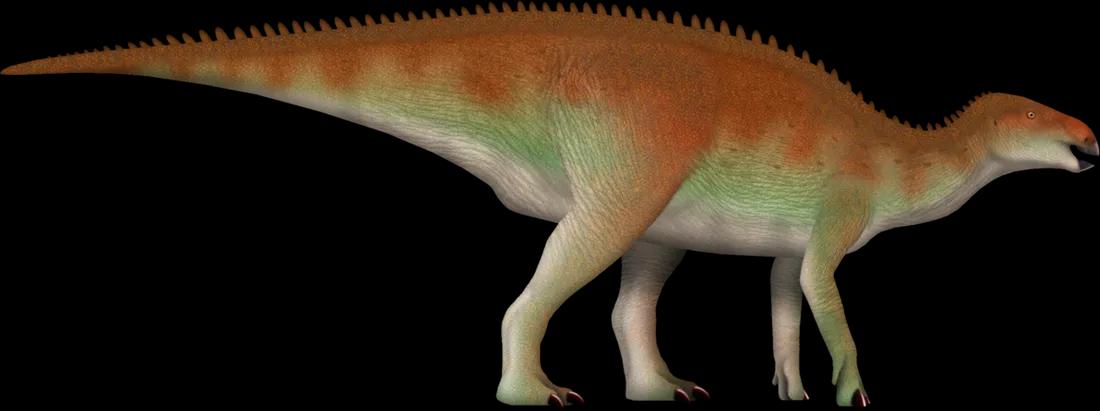
Hadrosaurus, a duck-billed dinosaur, walking on its back legs

The first one found

8. Hadrosaurus

Say it: HAD-roh-SORE-us ยท Means: โ€œSturdy lizardโ€

Length
About 26 ft (8 m)
When
About 80 million years ago
Where
North America (New Jersey)

โญ The whole hadrosaur family is named after it! Found in 1858, it was one of the first dinosaur skeletons ever discovered, and it's the state dinosaur of New Jersey.

Brachylophosaurus, a duck-billed dinosaur with a short flat crest on top of its head

Solid crest

9. Brachylophosaurus

Say it: BRACK-ee-LOAF-oh-SORE-us ยท Means: โ€œShort-crested lizardโ€

Length
About 30 ft (9 m)
When
About 77 million years ago
Where
North America (Montana and Alberta)

โญ A famous mummy nicknamed 'Leonardo' still has skin and maybe even its last meal of leaves and ferns inside its belly.

Tsintaosaurus, a duck-billed dinosaur with a tall fan-shaped crest on its head

Hollow crest

10. Tsintaosaurus

Say it: CHING-dow-SORE-us ยท Means: โ€œQingdao lizard (a city in China)โ€

Length
About 27 ft (8 m)
When
About 70 million years ago
Where
Asia (Shandong, China)

โญ It used to be called the 'unicorn dinosaur' because people thought it had one horn. Newer fossils show the 'horn' was part of a big, fan-shaped crest!

Why Did Hadrosaurs Have Crests?

  • ๐ŸŽบ To make sounds: Air from the nose traveled through long loops inside hollow crests. Scientists built a computer model of Parasaurolophus's crest and it made a low, rumbling foghorn sound!
  • ๐Ÿ‘€ To know who's who: Each kind of hadrosaur had its own crest shape, so they could spot their own herd from far away.
  • ๐Ÿฆš To show off: Big, colorful crests may have helped grown-ups impress each other, like a peacock's tail. Babies had tiny crests that grew as they did.

๐ŸŽถ Try it: hum with your mouth closed, then cup your hands into a long tube in front of your mouth and hum again. Hear how the sound changes? That's a little bit like a hadrosaur crest!

How Duck-Billed Dinosaurs Lived

Caring parents

Maiasaura laid eggs in bowl-shaped nests in big nesting colonies. Babies stayed in the nest while parents brought them food.

More about dinosaur eggs โ†’

Huge herds

Thousands of hadrosaur footprints found together in Alaska and Canada show they walked in big herds, which kept them safer from T. rex.

More about dinosaur footprints โ†’

Plant munchers

They ate leaves, twigs, pine needles, ferns and even rotting wood, grinding everything up with their teeth.

Meet more plant-eaters โ†’

๐Ÿฆด Dinosaur mummies! Some hadrosaurs were buried so fast that their skin turned to stone too. The best ones belong to Edmontosaurus, which even had hoof-like toes.

How Big Were Duck-Billed Dinosaurs?

Here's how long these hadrosaurs were, from beak to tail, compared with a grown-up and a school bus. Sizes are scientists' best estimates.

๐Ÿง Grown-up
5.5 ft
Hadrosaurus
26 ft
Tsintaosaurus
27 ft
Maiasaura
30 ft
Corythosaurus
30 ft
Lambeosaurus
30 ft
Parasaurolophus
31 ft
Saurolophus
36 ft
๐ŸšŒ School bus
40 ft
Edmontosaurus
40 ft
Shantungosaurus
50 ft

Frequently Asked Questions

What is a duck-billed dinosaur called?

Duck-billed dinosaurs are called hadrosaurs. Scientists put them in a family called Hadrosauridae, named after Hadrosaurus, one of the first dinosaurs ever found in North America. Famous hadrosaurs include Parasaurolophus, Edmontosaurus, Maiasaura and Corythosaurus.

Why are they called duck-billed dinosaurs?

The front of their mouth was a wide, flat beak that looks a lot like a duck's bill. They used it to snip and pull leaves, twigs and ferns. Unlike a duck, they had hundreds of teeth packed into the back of their jaws for grinding plants.

What did duck-billed dinosaurs eat?

Hadrosaurs were herbivores, which means they ate plants. They munched leaves, twigs, conifer needles, ferns, horsetails and even rotting wood. Their rows of grinding teeth turned tough plants into mush.

How many teeth did a duck-billed dinosaur have?

Hundreds! Hadrosaur teeth were stacked in tight columns called dental batteries. Counting the new teeth waiting underneath, some hadrosaurs like Edmontosaurus had more than 1,000 teeth. When an old tooth wore down, a new one moved up to replace it.

What was the biggest duck-billed dinosaur?

Shantungosaurus from China was the biggest known hadrosaur. It was about 50 feet (15 meters) long and weighed around 15 tons, about as much as three elephants.

Why did hadrosaurs have crests?

Many hadrosaurs, like Parasaurolophus and Corythosaurus, had hollow crests with air tubes inside. Scientists think they used them to make loud honking calls, to recognize each other, and to show off, a bit like a peacock's tail.

Did duck-billed dinosaurs live with T. rex?

Some did! Edmontosaurus lived at the same time and place as T. rex, and one Edmontosaurus fossil has a healed T. rex bite on its tail, which means it got away.

Keep exploring: read all about Edmontosaurus, meet all the herbivore dinosaurs, the giant long neck dinosaurs, or see all the types of dinosaurs.

Image credits (via Wikimedia Commons): Saurolophus herd by ABelov2014 (CC BY 3.0); Corythosaurus by TotalDino (CC BY 4.0); Lambeosaurus by TotalDino (CC BY-SA 4.0); Saurolophus by TotalDino (CC BY-SA 4.0); Shantungosaurus by Connor Ashbridge (CC BY-SA 4.0); Hadrosaurus by TotalDino (CC BY 4.0); Brachylophosaurus by Connor Ashbridge (CC BY-SA 4.0); Tsintaosaurus by Connor Ashbridge (CC BY-SA 4.0); Parasaurolophus by Connor Ashbridge (CC BY-SA 4.0); Edmontosaurus by Connor Ashbridge (CC BY 4.0); Maiasaura by TotalDino (CC BY 4.0).

Does your little one love dinosaurs? ๐Ÿฆ•

Explore our dinosaur-themed nursery rhymes and kids' songs!