
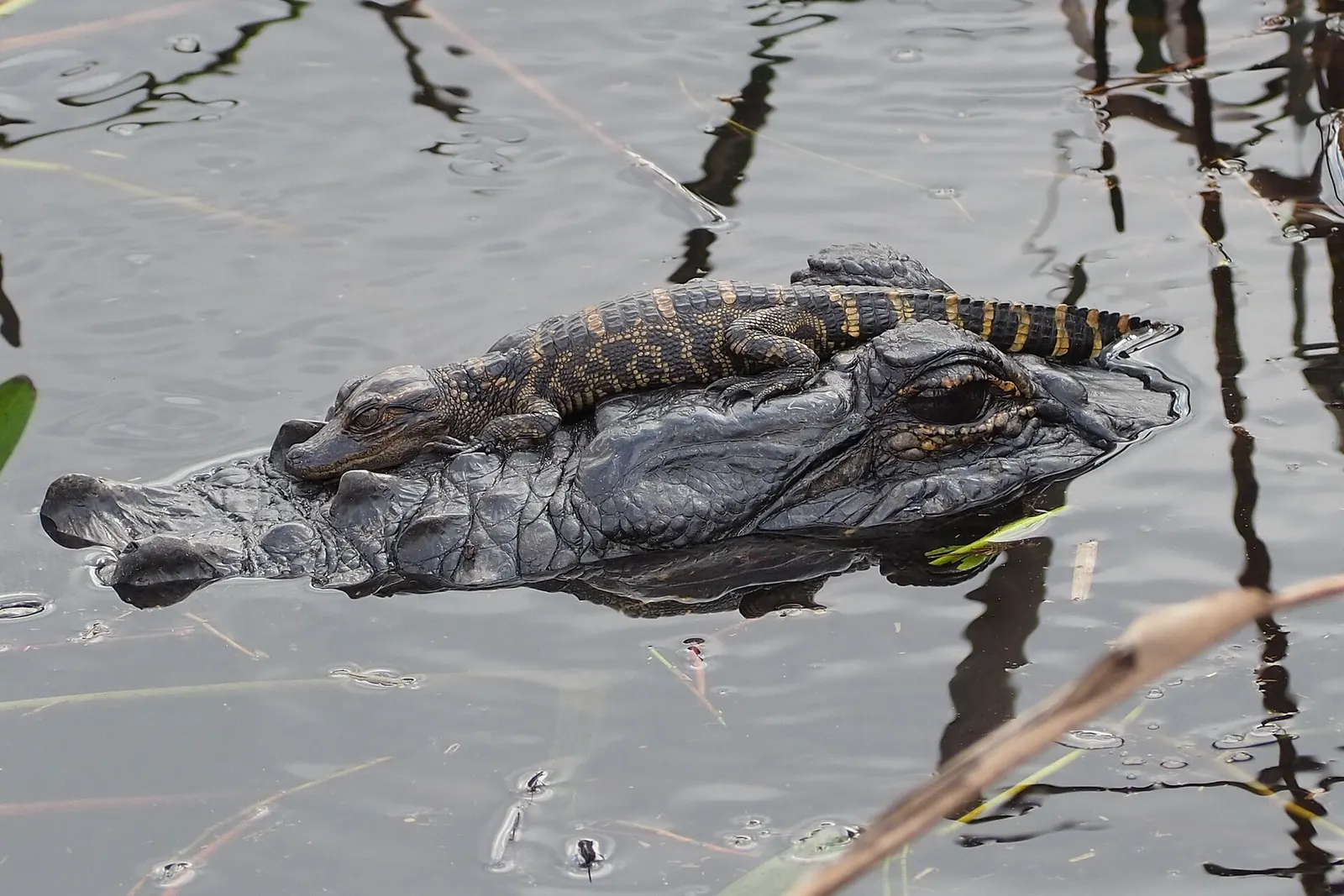
Are Alligators and Crocodiles Dinosaurs?
They look like they walked right out of the dinosaur days, and their family really did! Find out why alligators and crocodiles are dinosaur cousins, not dinosaurs, and how to tell them apart.
Quick Answer
No, alligators and crocodiles are not dinosaurs. They are the dinosaurs' close cousins. Both families come from the same reptile ancestors, called archosaurs, but they went separate ways about 250 million years ago. Here's the surprise: after birds (which are dinosaurs), crocodiles and alligators are the closest living relatives of dinosaurs on Earth.
The Archosaur Family Tree
Think of a big family with two branches. About 250 million years ago, a group of reptiles called archosaurs (say it: AR-koh-sorz, meaning “ruling lizards”) split into two sides. One side led to crocodiles and alligators. The other side led to dinosaurs, and later to birds.
So alligators and dinosaurs are like cousins, not parent and child. They share great, great (lots of greats!) grandparents, but neither one came from the other.
🦎 Archosaurs
the “ruling reptiles,” about 250 million years ago
🐊 Crocodile branch
- Postosuchus and other early hunters
- SuperCroc and Deinosuchus
- Alligators, crocodiles, caimans and gharials (still alive!)
🦖 Bird and dinosaur branch
- Pterosaurs, the flying reptiles
- Dinosaurs like T. rex and Triceratops
- Birds (still alive, and still dinosaurs!)
That's why scientists say an alligator is more closely related to a robin than to a lizard!
The Leg Test: How Scientists Tell Them Apart
Crocodiles have scales, sharp teeth and long tails, just like a lot of dinosaurs. So how do scientists decide what counts as a dinosaur? They look at the legs and hips.
- Dinosaurs stood tall. Their legs went straight down under their bodies, like a horse's or a person's. Their hip socket even had a hole in the middle, which no other reptile has.
- Crocodiles and alligators sprawl. When they rest or crawl, their legs stick out to the sides, elbows bent, like you doing a push-up. They can lift up into a “high walk” when they hurry, but their hips and ankles are built differently from a dinosaur's.
| Feature | 🐊 Alligators & crocs | 🦖 Dinosaurs |
|---|---|---|
| Part of the archosaur family | ✅ Yes | ✅ Yes |
| Lays hard-shelled eggs | ✅ Yes | ✅ Yes |
| Builds a nest and guards it | ✅ Yes | ✅ Many did |
| Scaly skin | ✅ Yes | ✅ Yes, plus feathers on many |
| Legs | ↔️ Stick out to the sides | ⬇️ Straight under the body |
| Hip socket | ⚫ Solid bowl | ⭕ Has a hole in the middle |
| Feathers | ❌ Never | ✅ Lots of them |
| Survived the asteroid | ✅ Yes | 🐦 Only the birds |
Giant Crocodiles That Lived With Dinosaurs
Crocodiles' family shared the world with dinosaurs for more than 150 million years, and some of them were enormous. These weren't dinosaurs, but some were big enough to eat one!
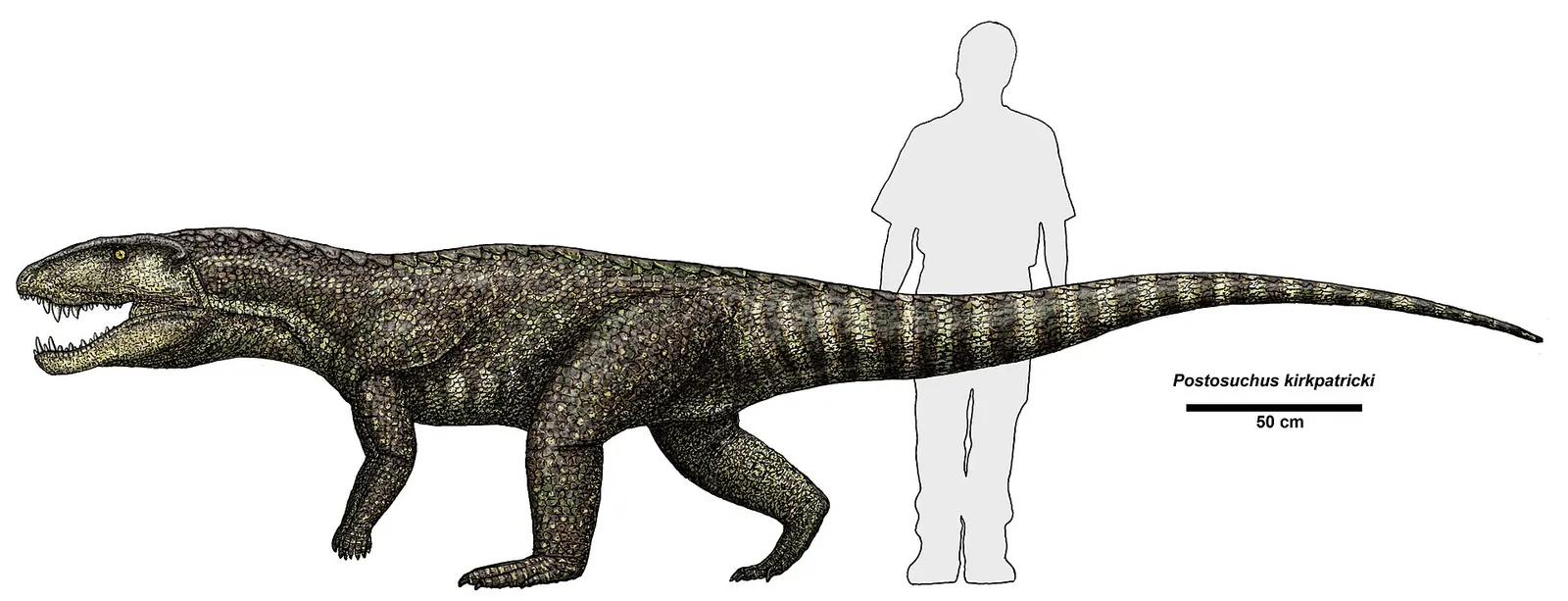
Postosuchus (POST-oh-SOO-kuss)
A crocodile-line hunter from the very start of the dinosaur days. It walked with its legs tucked under its body like a dinosaur, and back then dinosaurs were small and had to watch out for it!
Sarcosuchus (SAR-koh-SOO-kuss)
Nicknamed “SuperCroc.” It had a long snout and lived in rivers, where it probably grabbed fish and any dinosaur that came too close to the water.
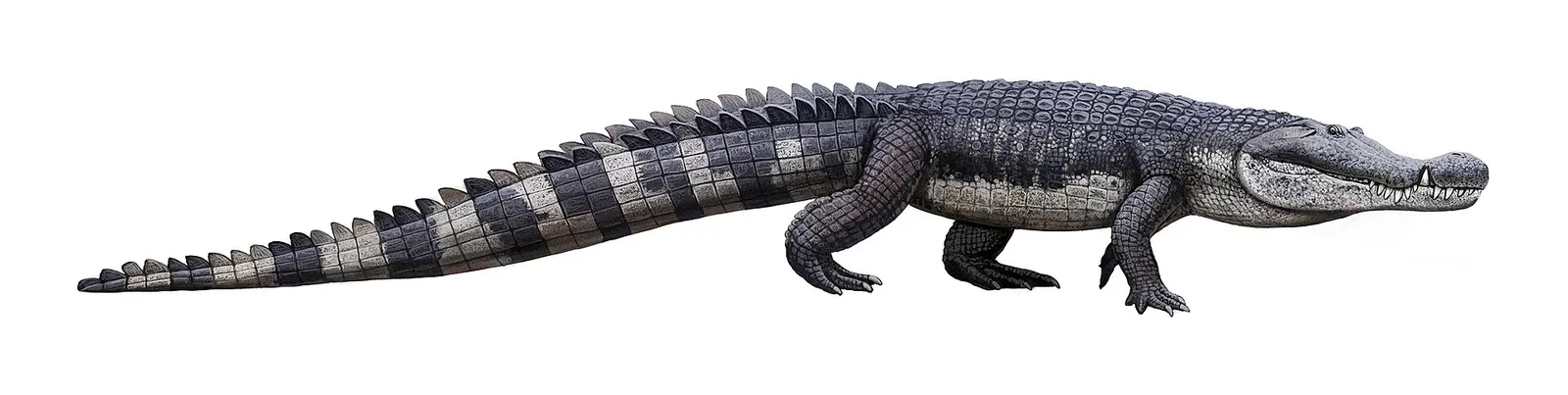
Deinosuchus (DY-no-SOO-kuss)
A giant cousin of today's alligators. Scientists have found its tooth marks on dinosaur bones, including a duck-billed dinosaur and a tyrannosaur. It may have hunted dinosaurs at the water's edge.
Some ancient crocodile cousins even moved into the ocean and grew flippers and a fish-like tail. They swam alongside giant sea reptiles like Mosasaurus, which (just like crocodiles) weren't really dinosaurs either.
How Crocodiles Survived the Asteroid
About 66 million years ago, a giant asteroid hit Earth and wiped out the big dinosaurs. (Read the whole story in When Did Dinosaurs Go Extinct?) Crocodiles and alligators made it through. Scientists think a few things helped:
- They can go a long time without food. A big crocodile can survive for months on one meal.
- They live in water. Rivers, lakes and swamps stayed calmer and kept some food around when land plants died.
- They're not picky. Fish, frogs, turtles, birds, even dead animals: a crocodile will eat it.
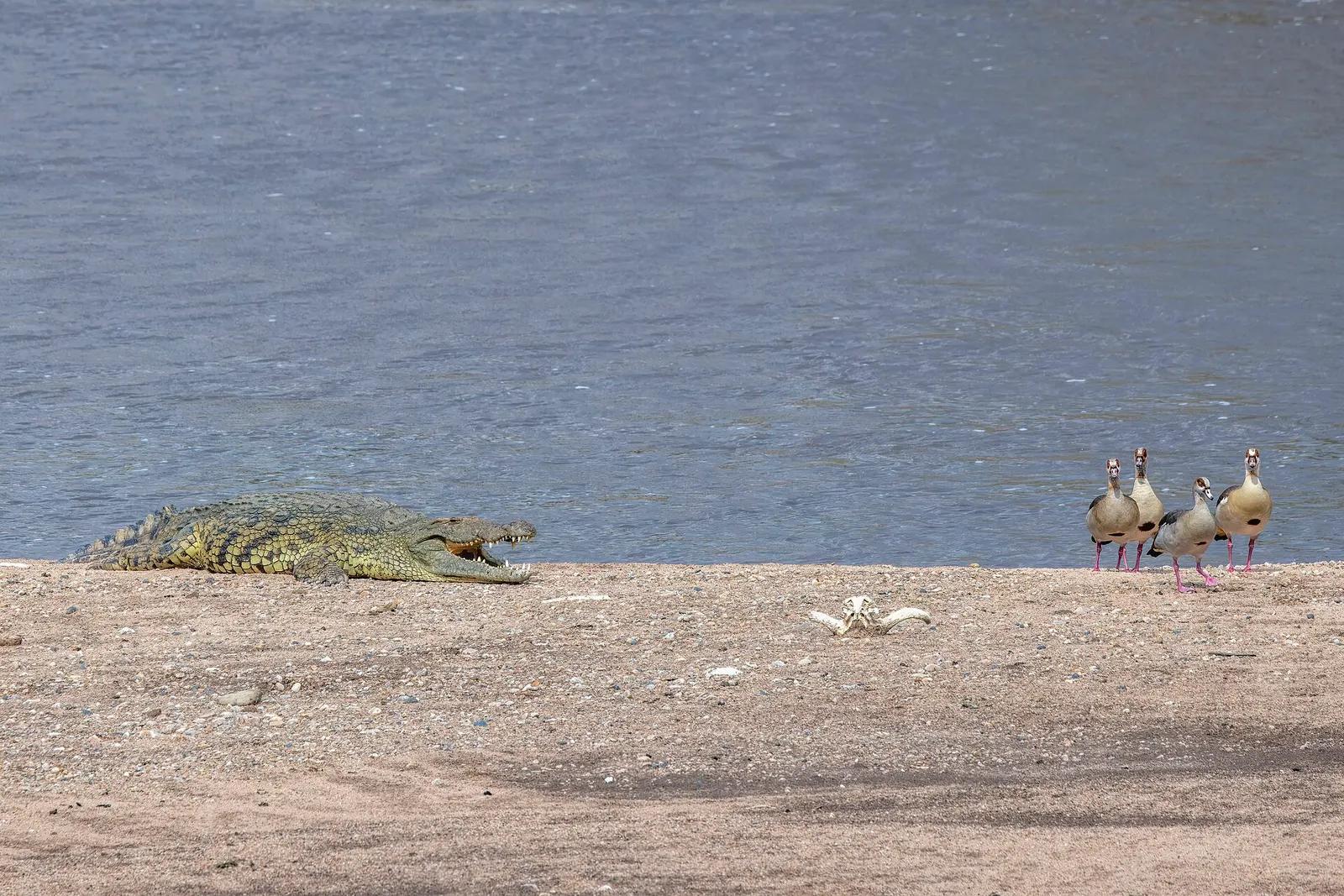
Birds survived too, which is why we still have dinosaurs today. So when you see a crocodile sunning itself next to a flock of geese, you're looking at the last two branches of the archosaur family, side by side.
What Crocodiles Share With Birds
Because birds are dinosaurs, scientists study alligators and birds to figure out what dinosaurs were like. Anything both of them have, dinosaurs probably had too. Here are some things crocodiles and birds share:
A four-room heart
Crocodiles and alligators have a heart with four chambers, just like birds. Lizards, snakes and turtles don't.
Babies that call from the egg
Baby alligators chirp and squeak from inside their eggs to tell Mom it's time to hatch. Baby birds peep from inside their eggs too.
One-way breathing
In 2010 scientists found that air flows through an alligator's lungs in a loop, mostly one way, like it does in birds. Dinosaurs probably breathed this way too.
Stones in the tummy
Crocodiles swallow stones, and birds have a gizzard that grinds food. Some dinosaurs swallowed stones as well!
Want to meet a dinosaur that's even closer to home? Find out why the chicken is a living dinosaur and a distant cousin of T. rex.
Alligator or Crocodile? How to Tell
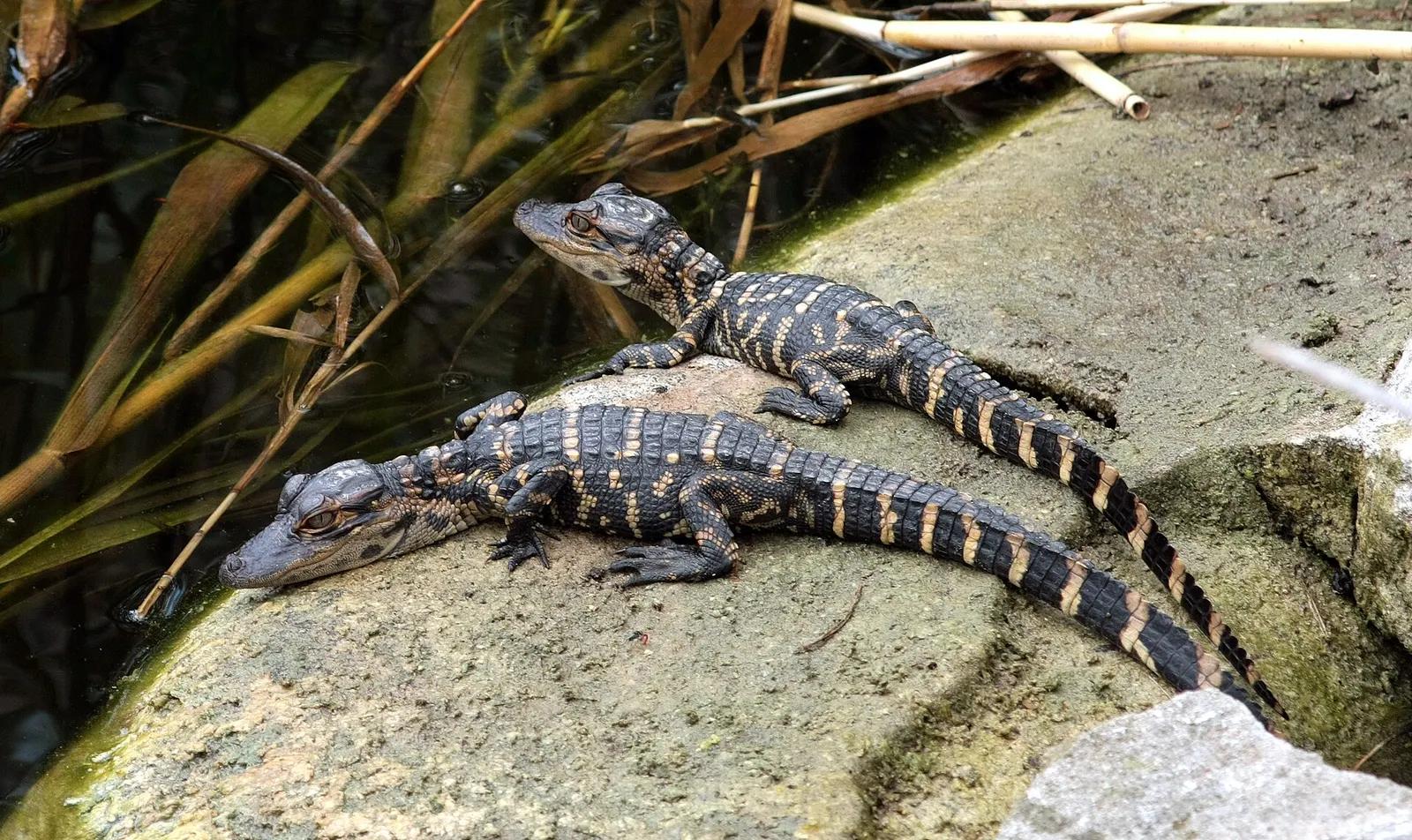
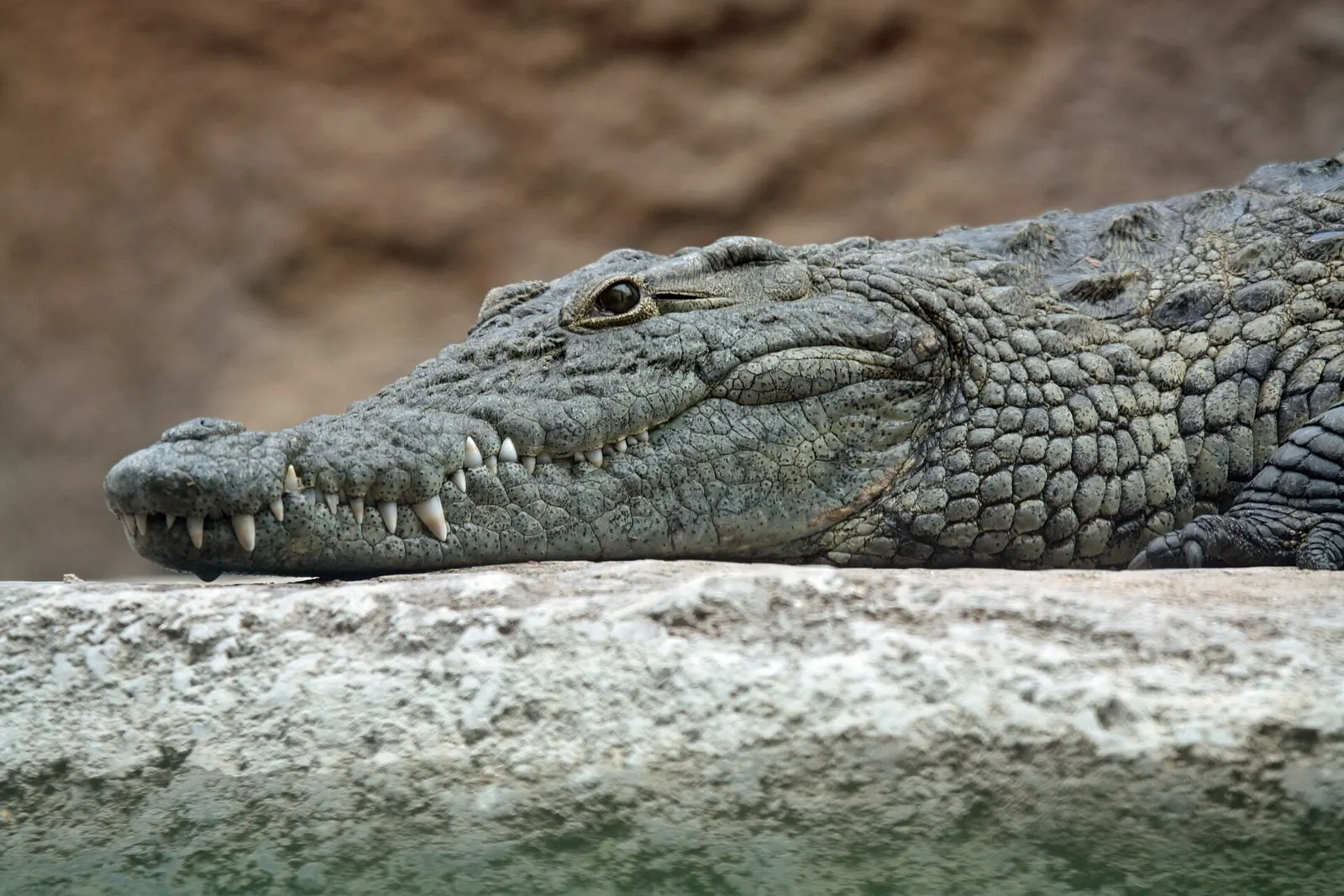
| Look for | Alligator | Crocodile |
|---|---|---|
| Snout shape | Wide and round, like a U | Narrow and pointy, like a V |
| Teeth when mouth is shut | Mostly hidden (top teeth only) | Big lower tooth pokes out: a toothy grin |
| Color | Dark gray to black | Lighter olive or tan |
| Water | Mostly fresh water | Fresh and salty water |
| Where they live | Southeast USA and China | Warm places all over the world |
Fun fact: South Florida is the only place in the world where wild alligators and crocodiles live side by side.
Activity: Walk Like a Croc, Walk Like a Dino
Feel the difference between a crocodile and a dinosaur with your own body!
- Croc crawl: get on your hands and knees and push your elbows out to the sides. Now try to crawl across the room. Feels low and wobbly, right? That's a sprawl.
- Croc high walk: straighten your arms under your shoulders and lift your tummy higher. Crocodiles do this when they want to move faster.
- Dino stomp: stand up tall with your legs straight under you and stomp like a T. rex. Your legs hold you up easily. That's how every dinosaur stood!
- Race each way across the room. Which one is faster?
Tip for parents: clear a little floor space first, and try it on a rug or carpet to save little knees.
Frequently Asked Questions
Are alligators dinosaurs?
No. Alligators are not dinosaurs, but they are close cousins. Alligators and dinosaurs both belong to a big reptile family called the archosaurs. Their family lines split apart about 250 million years ago, before the first dinosaurs appeared.
Are crocodiles dinosaurs?
No. Crocodiles are not dinosaurs, even though they look prehistoric and lived alongside dinosaurs. Crocodiles are on the crocodile branch of the archosaur family tree, and dinosaurs (including birds) are on the other branch.
What is the closest living relative of an alligator or crocodile?
Birds! Alligators and crocodiles are more closely related to birds than they are to lizards, snakes or turtles. Since birds are dinosaurs, crocodiles and alligators are the closest living relatives of dinosaurs after birds themselves.
Did crocodiles live with dinosaurs?
Yes. Crocodiles' family lived alongside dinosaurs for more than 150 million years. Some, like Deinosuchus and Sarcosuchus, grew big enough to hunt dinosaurs.
Are crocodiles older than dinosaurs?
Their family line is about as old. The crocodile branch and the dinosaur branch split from each other around 250 million years ago, so both lines started at the same time. Today's alligators and crocodiles are newer, though. The alligator group we know today is about 37 million years old.
Why did crocodiles survive when the dinosaurs died out?
Scientists think it helped that crocodiles can go many months without eating, live in rivers and lakes that stayed calmer after the asteroid, and eat almost anything. Birds survived too, which is why we still have dinosaurs today.
What's the difference between an alligator and a crocodile?
Look at the snout and the teeth. Alligators have a wide, U-shaped snout and their teeth mostly hide when the mouth is shut. Crocodiles have a narrow, V-shaped snout and a big lower tooth that sticks out, so they look like they're grinning.
Image credits (via Wikimedia Commons): Alligator mother and baby by Zygy (CC0); Nile crocodile and Egyptian geese by Charles J. Sharp (CC BY-SA 4.0); Young alligators by Ianaré Sévi (CC BY-SA 3.0); Nile crocodile head by Leigh Bedford (CC BY 2.0); Deinosuchus by Andrey Atuchin (CC BY-SA 4.0); Postosuchus by Petrified Forest National Park (public domain).
Does your little one love dinosaurs? 🦕
Explore our dinosaur-themed nursery rhymes and kids' songs!